Integrated Pest Management
110 likes | 228 Views
Integrated Pest Management (IPM) is crucial for sustainable agriculture in the Northeast. This guide covers a range of pests, including insects, weeds, animals, fungus, and viruses. We discuss various control methods such as mechanical, biological, cultural, and chemical approaches. It's vital to understand the role of beneficial insects like ladybugs and honeybees, as well as the challenges posed by pests that can resurge due to resistance. Learn about niche dynamics, pest control techniques, and how to implement IPM for effective crop management.


Integrated Pest Management
E N D
Presentation Transcript
Integrated Pest Management Northeastern Agricultural Education Mr. Caffee
Pests • Insects • Weeds • Animals • Fungus • Virus
Pest Control • Stomp ‘em • Chemicals • Mother Nature • Traps • Hunting
Chemicals may not be enough!!! • Resistance • Resurgence • Public Outcry • Urban Sprawl • Secondary pests will fill that niche.
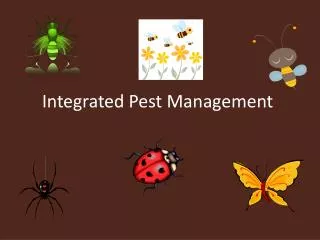
What is a niche? • A niche is a specific organism’s role in the environment. • Example: A ladybug’s niche is to eat aphids and thrips. • A honey bee produces honey and pollinates flowers. • A mosquito has a rotten niche! They feed on mammals, like us!
Beneficial Insects • Walking Sticks • Praying Mantis • Ladybugs • Honey Bees
Pest Control Methods • Mechanical • Biological • Cultural • Genetic Enhancement • Chemical
Mechanical Control of Pests • Tillage • Rotary Hoe • Cultivator • Disc • Slash & Burn • Hand Weeding
Beneficial Insects Parasites Predators Sex Attractants Irradiation of males Fungal Control Selective Breeding Biological Pest Control
Plant Population Row width Fertility Planting Date Crop Rotation Surface Residue Mixed Cropping Scarecrows Drainage Smother Techniques Burial of Garbage Cultural Pest Control
Genetic Enhancements • Round-up Ready • Soybeans • Corn • Alfalfa • STS • Liberty Link • Bt Corn • Potato Leaf Hopper Resistant Alfalfa