Download
1 / 3
0 likes | 1 Views
Diversity in leadership is another growing focus, as organizations with inclusive leadership teams often outperform competitors through better innovation and decision-making.<br><br>If you want to explore detailed data and insights, visit:<br>https://market.biz/leadership-statistics/<br><br>Understanding these Leadership Statistics can help businesses strengthen management strategies, build engaged teams, and drive sustainable long-term success.

E N D
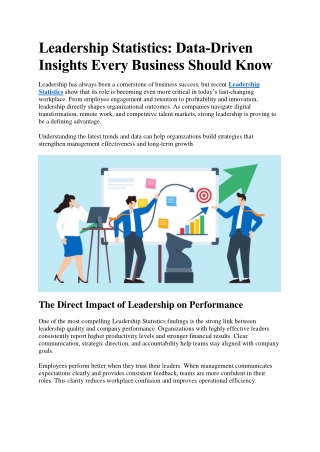
Leadership Statistics: Data-Driven Insights Every Business Should Know Leadership has always been a cornerstone of business success, but recent Leadership Statisticsshow that its role is becoming even more critical in today’s fast-changing workplace. From employee engagement and retention to profitability and innovation, leadership directly shapes organizational outcomes. As companies navigate digital transformation, remote work, and competitive talent markets, strong leadership is proving to be a defining advantage. Understanding the latest trends and data can help organizations build strategies that strengthen management effectiveness and long-term growth. The Direct Impact of Leadership on Performance One of the most compelling Leadership Statistics findings is the strong link between leadership quality and company performance. Organizations with highly effective leaders consistently report higher productivity levels and stronger financial results. Clear communication, strategic direction, and accountability help teams stay aligned with company goals. Employees perform better when they trust their leaders. When management communicates expectations clearly and provides consistent feedback, teams are more confident in their roles. This clarity reduces workplace confusion and improves operational efficiency.
In contrast, ineffective leadership often results in disengagement, low morale, and missed targets. Data consistently shows that leadership quality influences not only employee satisfaction but also overall business outcomes. Employee Engagement and Leadership Connection Employee engagement is one of the most discussed workplace metrics, and Leadership Statistics highlight how closely it is tied to management style. Leaders who practice transparency, empathy, and recognition tend to build stronger relationships with their teams. Engaged employees are more productive, more innovative, and less likely to leave their jobs. They feel valued and understand how their work contributes to larger business objectives. Strong leadership creates a culture where employees feel heard and supported. Poor leadership, on the other hand, leads to communication gaps and frustration. When employees lack direction or recognition, engagement drops quickly. This demonstrates why leadership training is often viewed as an essential investment rather than an optional expense. Rising Investment in Leadership Development Another key trend emerging from Leadership Statistics is the increase in global spending on leadership development programs. Businesses are allocating significant resources toward coaching, executive training, and skill-building workshops. The reason behind this investment is clear: leadership demands are evolving. Today’s leaders must manage remote teams, integrate new technologies, and adapt to rapid market changes. Emotional intelligence, adaptability, and digital literacy have become essential skills. Organizations that develop internal leadership pipelines are better prepared for succession planning and long-term stability. Structured leadership programs help identify high-potential employees and prepare them for greater responsibilities. This proactive approach reduces disruption and strengthens overall business resilience. Diversity and Inclusive Leadership Trends Leadership Statistics also reveal growing attention toward diversity in leadership roles. Companies with diverse management teams tend to demonstrate stronger innovation and improved decision-making. Different perspectives lead to more balanced strategies and creative problem-solving. Inclusive leadership practices foster a sense of belonging among employees. When team members see representation at the leadership level, trust and engagement often improve. Diverse leadership teams are also better positioned to understand and serve broader customer bases.
Although progress has been made, many industries continue to work toward greater representation at senior levels. Businesses that actively promote diversity in leadership often experience long-term cultural and financial benefits. Leadership Challenges and Burnout While leadership brings opportunities, it also comes with challenges. Modern leaders face increasing pressure due to economic uncertainty, workforce expectations, and technological disruption. Leadership Statistics indicate that many managers report experiencing stress and burnout. Balancing productivity goals with employee well-being requires emotional resilience and strong decision-making skills. Leaders must manage complex situations while maintaining morale and performance standards. Organizations that support their leaders through mental health resources, flexible policies, and professional development programs are more likely to maintain sustainable performance. Supporting leaders ensures they can effectively guide their teams. The Future of Leadership The future of leadership will likely focus on adaptability and people-centered management. Leadership Statistics suggest that businesses are shifting away from rigid hierarchical structures toward more collaborative and transparent leadership models. Successful leaders will combine data-driven strategies with empathy and strong interpersonal communication. The ability to manage change effectively will be one of the most valuable leadership traits in the coming years. As workplaces continue to evolve, leadership will remain at the heart of organizational success. Conclusion The latest Leadership Statistics confirm that leadership is not just a management function — it is a strategic driver of growth. Strong leaders enhance engagement, improve retention, encourage innovation, and strengthen financial performance. At the same time, organizations must address leadership challenges such as burnout and representation gaps. Companies that prioritize leadership development, invest in diversity, and foster supportive workplace cultures are positioning themselves for long-term success. In a competitive and rapidly changing business environment, effective leadership remains one of the most powerful tools for achieving sustainable growth.