Download
1 / 26
260 likes | 382 Views
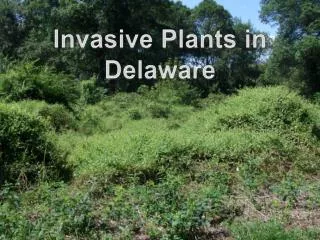
Invasive plants are non-native species that disrupt local ecosystems, posing threats to native flora and fauna. They often thrive due to a lack of natural predators, growing aggressively and out-competing local plants for resources. Common examples in Delaware include English Ivy, Japanese Honeysuckle, and Multiflora Rose. These invaders can alter soil chemistry and hydrology, create fire hazards, and diminish biodiversity. It's crucial to understand their origins, spread mechanisms, and ecological impacts to effectively manage and mitigate their effects on our cherished landscapes.

E N D
What is an invasive plant? Not native – does not naturally occur in a specific area Aggressive, creates problems for native plants, animals and natural communities Has very few, often no predators in its new location
45o 30o 30o 45o Where do they come from?
What makes a plant invasive? Usually non-native Hardy, out-competes natives Grows quickly Produces many seeds and/or spreads by underground root systems (rhizomes) Produces biological toxins that suppress the growth of other plants Few predators
How do they get here? ornamental landscapes and gardens conservation projects, erosion control pallets and packing material crop seed
Why should we be concerned? Ecological Impacts fire hazards alter hydrology alter soil chemistry changes in plant communities and biodiversity competition with native plants
English Ivy Hedera helix
Japanese Honeysuckle Lonicera japonica
Multiflora Rose Rosa multiflora Photo by David Cappaert
Phragmites Phragmitesaustralis