Exception Handling in Java_ Mastering the Art
This article covers key concepts like Checked and Unchecked Exceptions, efficient Try-Catch blocks, custom exceptions, Nested Try-Catch, Java IO, Finally block, and best practices. It emphasizes avoiding common mistakes, considering performance, and staying updated on future trends. Practical examples, including handling network issues, database connections, file processing, and multithreading, illustrate real-world application. By following these insights, developers can create reliable and maintainable Java code.

Exception Handling in Java_ Mastering the Art
E N D
Presentation Transcript
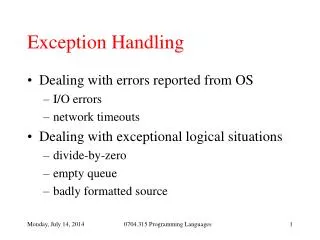
Exception Handling in Java: Mastering the Art Introduction Delving into the intricate world of Java programming, understanding Exception Handling is paramount for robust applications. This article
explores the nuances of Exception Handling in Java, offering a rich tapestry of knowledge and practical insights. Exception Handling in Java is a pivotal concept that ensures graceful handling of unforeseen errors during program execution. Whether it's dealing with runtime errors or exceptional conditions, Java provides a robust mechanism to manage and recover from such situations. Common Types of Exceptions It is essential to comprehend the distinction between Checked and Unchecked Exceptions. Unchecked exceptions happen at runtime and provide developers greater leeway than checked exceptions, which are validated during build time and need explicit treatment. Try-Catch Blocks: The Guardian Shield Try-catch blocks serve as a buffer in the context of exception handling, catching and handling exceptions. Discover how to create efficient Try-Catch structures and handle many exceptions with ease. Throwing and Catching Custom Exceptions By generating and overseeing bespoke exceptions, you may improve your Exception Handling abilities. Examine the best approaches for creating and putting into practice unique exceptions that make sense for your application's logic. Exception Handling in Java: Nested Try-Catch
Discover the levels of intricacy by utilizing Nested Try-Catch blocks. Examine the benefits and drawbacks of layering and learn how to handle complex exception circumstances without sacrificing code clarity. Handling Exceptions in Java IO Java IO operations present a unique set of difficulties. Discover efficient methods for managing file operation exceptions to make sure your apps can withstand input and output problems. Exception Handling in Java: Finally Block Learn the significance of the Finally block in the context of handling exceptions. Examine how this block promotes resource efficiency by guaranteeing essential cleaning activities even when there are exceptions. Exception Propagation The process by which exceptions are sent along through method calls is known as "exception propagation." Learn about the best practices for handling propagated exceptions and gain insight into how Java handles exception flow management. Exception Handling in Java: Best Practices Discover the Java exception handling best practices. A thorough approach to developing reliable and maintainable code is provided in this section, covering everything from appropriate logging to selecting the best exception classes.. Common Mistakes in Exception Handling
Steer clear of the mistakes made in Exception Handling. Examine typical errors made by developers and learn how to avoid them to keep your codebase robust. Performance Considerations Exception Handling affects performance in addition to functionality. Examine the performance factors related to exception handling and find the ideal ratio between efficiency and resilience. Exception Handling in Java: Future Trends Investigate the next developments in Exception Handling to stay ahead of the curve. Adjust your coding techniques to the changing environment, taking into account anything from new best practices to developments in language features. Coding Standards for Exception Handling To ensure readability and consistency in your code, use the exception-handling coding guidelines. Take note of industry-standard procedures and make sure your codebase is easy to maintain in addition to being functional. Exception Handling in Java: Community Insights Participate in the larger Java community by offering your experiences and thoughts on exception handling. Gain insights from the combined experience of other developers and deepen your grasp of industry best practices.
Mastering Exception Handling: Practical Examples Use what you've learned in practical situations. Examine real-world examples that demonstrate efficient Exception-handling techniques in action to ensure you understand this important Java subject. Real-world Scenarios In this section, we'll delve into real-world examples that highlight the effective application of Exception Handling in Java. Handling Network Exceptions Consider a scenario where your application interacts with external APIs. Network exceptions, such as timeouts or connection issues, are inevitable. Employ robust Try-Catch blocks to gracefully handle these exceptions and provide meaningful error messages to users. Database Connection Issues Exception Handling becomes crucial when dealing with database operations. Whether it's a connection failure or a SQL exception, anticipate potential issues and implement strategies to handle them seamlessly. This ensures the reliability and integrity of your database interactions. File Processing Challenges File processing can result in a number of exceptions, such as permission problems and file not-found errors. Your program may overcome these obstacles with careful Exception Handling, guaranteeing seamless file operations and a satisfying user experience.
Multithreading Exception Management Tracing and managing exceptions can be difficult in multithreading systems. By adding Try-Catch blocks to key places in your codebase, you can detect and handle exceptions and keep them from interfering with the operation of the entire program. Conclusion Exception Handling in Java is a dynamic and evolving aspect of programming. By mastering the art of Exception Handling, developers ensure the resilience and reliability of their applications. From foundational concepts to advanced strategies, this article serves as a comprehensive guide, equipping you to navigate the complexities of Exception Handling in Java with confidence. If you're seeking to enhance your skills further, consider enrolling in Uncodemy which provides the best Java training course in Delhi to gain hands-on experience and expert guidance in mastering Exception Handling and other crucial Java concepts. Source Link: https://www.tipsearth.com/exception-handling-in-java-mastering-the-a rt/