Understanding Fractures: Causes, Types, and Prevention
Fractures can affect anyone, from young children with incomplete calcification to older adults experiencing calcium loss. They occur due to factors like poor nutrition, infections, and physical accidents. Fractures are classified as simple (closed) or compound (open), with variations including hairline and comminuted fractures. Stress fractures, common in sports, arise from overuse or inadequate footwear. Osteoporosis, a silent disease, weakens bones and increases fracture risk, especially in menopausal women. Prevention strategies focus on a calcium-rich diet, weight-bearing exercises, and healthy lifestyle choices.

Understanding Fractures: Causes, Types, and Prevention
E N D
Presentation Transcript
FRACTURES Who suffers from fractures?? And why??
Young children – calcification not complete • Older people – loss of calcium • Anyone – nutrition, infection, physical accidents
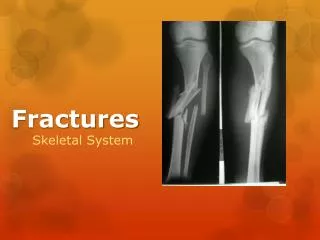
SIMPLE OR CLOSED FRACTURES • Broken bone without disruption of skin • Hairline fracture
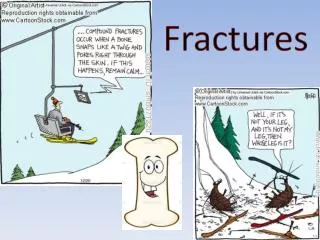
COMPOUND / OPEN • Broken bone involving a break in the skin • Transverse fracture • Muscle and ligament damage
COMMINUTED FRACTURE • A fracture in which the bone is shattered or crushed
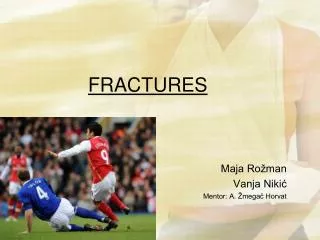
What is the most common sports injury? • STRESS FRACTURE • Muscles are too fatigues to absorb the force placed on them – transfer force to bone • Example: continual pounding of long- distance running • Causes: switching to a new playing/training surface and or poor footwear • Healing: 6 – 8 weeks
OSTEOPOROSIS • Low bone mass and deterioration of bone tissue (silent disease) • It leads to bone fragility – increase of fractures (hip, spine, wrist) • Women can lose up to 20% of their bone mass in 5 to 7 years following memopause • Prevention: during childhood and adolescence • Balanced diet rich in calcium and vitamin D • Weight-bearing exercises • No smoking or excessive alcohol • NO CURE