Native Plant Selection for Bioretention in the Central Coast: Guidelines & Considerations
This technical memo by Melanie Mills provides comprehensive guidelines for plant selection in bioretention areas specific to the Central Coast region. It emphasizes the need for plants that are tolerant of varying moisture and soil conditions, low-maintenance, non-invasive, and visually appealing. The memo outlines environmental considerations, irrigation strategies for establishment, and the proper placement of trees. It also lists preferred native species and includes resources for sourcing them from local nurseries, ensuring a sustainable and effective approach to bioretention landscaping.

Native Plant Selection for Bioretention in the Central Coast: Guidelines & Considerations
E N D
Presentation Transcript
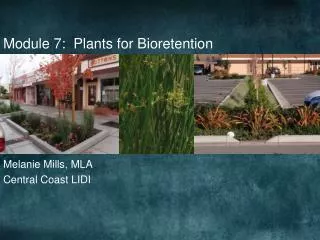
Module 7: Plants for Bioretention Melanie Mills, MLA Central Coast LIDI
Bioretention Area Type and Plant Selection • Surface grade and ponding area • uniform surface grades (Zone A only) • sloped surface area (Zones A and B) • a third planting area
Central Coast Plant List for Bioretention Tolerant of varied moisture conditions (wet and dry) Tolerant of varied soil types and growing conditions pesticides/herbicides Available in Central Coast plant nurseries Low maintenance requirements Not invasive weeds Do not have aggressive/invasive root systems Exhibit an attractive appearance
Plant Selection • Environmental site considerations • high and low temps • coastal influence • winds • fire hazard • Project specific considerations • project type and user expectations • ROW height limits • approved street and parking lot trees • anticipated maintenance level
Native vs. Non-native • List provides primarily native species • wide range of benefits (food and forage for native wildlife, adaptation to local conditions, low/no water use) • do not specify non-native plants in proximity to natural areas • be aware of invasives (California Invasive Plant council, www.cal-ipc.org)
Irrigation • 2-3 years for establishment • Supplemental for periods of extreme drought • Consider accepting a “dry” look • Weather-based controller to avoid watering during wet weather • Proper design of application rates to avoid overwatering
Trees in Bioretention • Provide sufficient landscape width (8’ preferred) • Locate trees on side slopes* • Select trees that tolerate seasonally wet soils • Do not specify trees with invasive roots • Provide extra support on slopes • stake securely (during establishment) • inspect 2x/year and after storm • Locate trees on slopes min. 5’ from inlets to avoid erosion around root ball
Incorporating Existing Trees Location Species Anticipated disturbance
Guidelines for Municipalities • RFPs and/or bid packages for public bioretention projects should clearly define expectations • bioretention soil mix specification • provide guidance for plant species selection • require appropriate plant zone placement • operations and maintenance protocols
Finding the Plants • Some Central Coast nurseries that regularly grow the plants on this list • Central Coast Wilds, Santa Cruz • Last Pilitas, Santa Margarita • Native Sons, Arroyo Grande • Rana Creek, Carmel Valley • San Marcos Growers, Santa Barbara • Santa Barbara Natives, Santa Barbara