ENDOCRINE SYSTEM
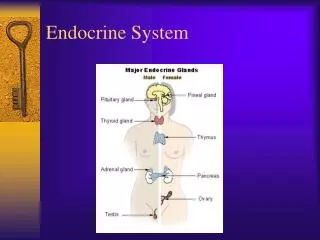
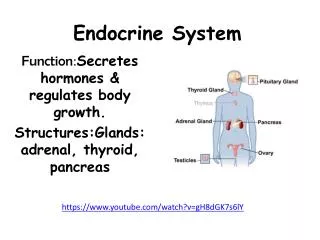
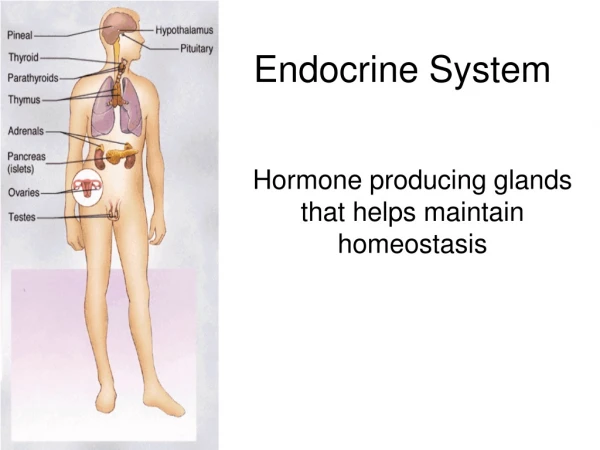
The endocrine system comprises numerous glands that release hormones into body fluids like blood and lymph. It is a slower communication system compared to the nervous system, regulating bodily functions over longer durations. Hormones can be classified as peptides or steroids, and their transport often requires carrier proteins. Notable glands like the pineal gland produce melatonin, which regulates sleep-wake cycles influenced by light. This system also plays a role in various health conditions, such as circadian rhythm disorders, Alzheimer’s, and obesity.

ENDOCRINE SYSTEM
E N D
Presentation Transcript
ENDOCRINE SYSTEM Exocrine vs endocrine – 2 dozen glands discharge product into fluids (blood, CSF, lymph) Oldest system – even single cells communicate, pheromones, allomones Slower and longer lasting effects than e.g. nervous system Hormones either derived from amino acids - peptides (epithelial organs) or steroids from cholesterol (mesodermal organs). If not soluble in water, transported bound to carrier proteins. Concentration v. low – 10 -12M
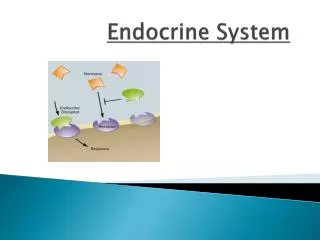
If water soluble won’t get through membrane so need receptor. Also ensures specificity. Steroid hormones pass through membrane and bind to cytoplasmic receptor, also ensures specificity
Pinealocytes produce MELATONIN (derived from tryptophan, serotonin is intermediate).
Melatonin output is cyclical and it is produced at night Cyclical production controlled by cyclical regulation of AANAT (100-fold higher at night) variation.
Regulation of AANAT controlled by suprachiasmatic nucleus in hypothalamus
SCN activity entrained by light from eye. Thus duration of night-time melatonin synthesis is flexible and dictated by night length. Thus seasonal variation is controlled by this way too. Fig. 15.6
What is entrainment? What happens in constant dark? – 24hrs 11 mins – free-running, need external cues to entrain it. SCN has endogenous oscillator – biological clock CLOCK and PER genes oscillate So pineal/melatonin regulates sleep (newborn baby irregular), levels dcrease with age (sleep less) hormone levels, appetite (leptin), excretion (ADH), diurnal and seasonal cycles, gonad development and reproductive cycles suppresses libido (FSH & LH), camouflage, skin colouration. Delayed sleep phase syndrome, advanced sleep phase syndrome, non-24
Lampreys have 2 extra eyes, pineal and parietal. Strong light inhibits neuronal activity, no light AANAT activity induced, melatonin produced
Tadpoles and frogs have a frontal organ = epiphysis = pineal Sphenodon & squamates well developed including cornea and lens = parietal eye
In these animals e.g. frogs melatonin production in dark causes the skin to blanch by concentrating the melanin pigment in melanophores. How it’s effects was discovered in 1917. Treatment for: circadian rhythm disorders, jet lag, Alzheimer’s, SAD, headache, fertility, ADHD, cancer (night workers), gallstones, ALS, obesity.