The Civil Rights Movement: Key Concepts and Events
This resource explores the critical vocabulary and concepts related to the Civil Rights Movement in the United States, detailing its impact on government and society. Key topics include boycotts, affirmative action, judicial activism, and significant court cases such as Miranda v. Arizona and Brown v. Board of Education. The document also highlights influential figures like Dr. Martin Luther King Jr. and Jackie Robinson, and discusses essential legislation like the Civil Rights Act of 1964 and the Equal Pay Act. Ideal for students and educators seeking to understand the evolution of civil rights.

The Civil Rights Movement: Key Concepts and Events
E N D
Presentation Transcript
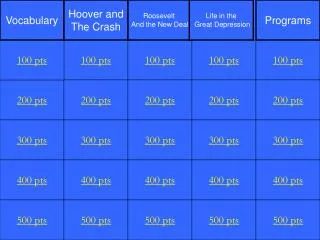
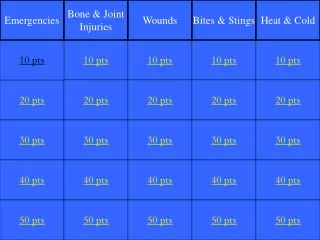
Vocabulary An expanding Role in Government The Civil Rights Movement cont Beginning of the Civil Rights Movement Other Americans Seeking Rights 100 pts 100 pts 100 pts 100 pts 100 pts 200 pts 200 pts 200 pts 200 pts 200 pts 300 pts 300 pts 300 pts 300 pts 300 pts 400 pts 400 pts 400 pts 400 pts 400 pts 500 pts 500 pts 500 pts 500 pts 500 pts
Organized campaign to refuse to use or buy different goods or services
Poor run-down neighborhood where one group of people live due to poverty or prejudice
Policy that requires people to stop working at a certain age
Program to provide more job and education opportunity for people who faced discrimination in the past
Miranda Rights, an arrested person needs to be informed of their legal rights
Laws were overturned if they were unfair, past decisions did not matter
Set out to the South to integrate bus stations before being attacked in Alabama
Who was the first baseball player to cross the Color barrier?
Separate but equal is not legal and schools were being forced to integrate
Who had to intervene in Little Rock when the governor would not let students into the school?