Evaluating Relaxin in Acute Heart Failure: Impact on Dyspnea and Mortality
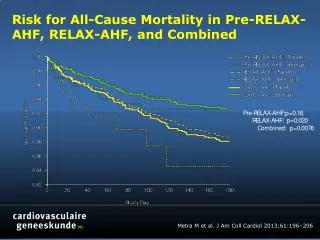
This study examines the effects of intravenous relaxin on dyspnea improvement in patients with acute heart failure (HF). Patients were randomized to receive one of four doses of relaxin (10 µg, 30 µg, 100 µg, or 250 µg) or a placebo for 48 hours. Results showed that 30 µg/day relaxin significantly improved dyspnea by 40% (p=0.044), while other doses did not show substantial effects. Mortality rates at 180 days varied by dose but did not achieve statistical significance. The findings suggest that relaxin may effectively alleviate symptoms in decompensated HF.

Evaluating Relaxin in Acute Heart Failure: Impact on Dyspnea and Mortality
E N D
Presentation Transcript
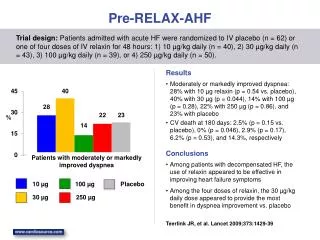
Pre-RELAX-AHF Moderately or markedly improved dyspnea: 28% with 10 µg relaxin (p = 0.54 vs. placebo), 40% with 30 µg (p = 0.044), 14% with 100 µg (p = 0.28), 22% with 250 µg (p = 0.86), and 23% with placebo CV death at 180 days: 2.5% (p = 0.15 vs. placebo), 0% (p = 0.046), 2.9% (p = 0.17), 6.2% (p = 0.53), and 14.3%, respectively Trial design: Patients admitted with acute HF were randomized to IV placebo (n = 62) or one of four doses of IV relaxin for 48 hours: 1) 10 µg/kg daily (n = 40), 2) 30 µg/kg daily (n = 43), 3) 100 µg/kg daily (n = 39), or 4) 250 µg/kg daily (n = 50). Results 40 28 22 23 % 14 Conclusions Patients with moderately or markedly improved dyspnea • Among patients with decompensated HF, the use of relaxin appeared to be effective in improving heart failure symptoms • Among the four doses of relaxin, the 30 µg/kg daily dose appeared to provide the most benefit in dyspnea improvement vs. placebo 100 µg 10 µg Placebo 30 µg 250 µg Teerlink JR, et al. Lancet 2009;373:1429-39