ULP capability representation
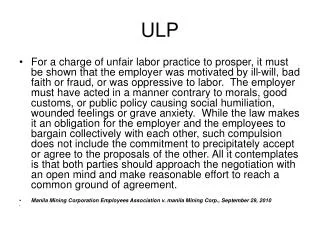
This document discusses the compact representation of ULP (Upper Layer Protocol) capabilities within beacon frames. It outlines the methods for representing ULPs in a compact manner using octet structures, and highlights the space limitations of ULP ID, which can reach up to 255. Various representation techniques, including bitmap and synthesis methods, are presented for different ULP configurations. A straw poll response is included, reflecting the general consensus about the merits of such compacting strategies.

ULP capability representation
E N D
Presentation Transcript
ULP capability representation Date: 2014-11-06 Authors: RYU Cheol, ETRI
PAD capability elements in a beacon frame must be compacted. RYU Cheol, ETRI
List representation 2 octets for 1 ULP 3 octets for 2 ULPs n octets for n-1 ULPs ULP ID space is up to 255. RYU Cheol, ETRI
Bitmap representation 3 octets for 1 ULP 3 octets for 2 ULPs … 3 octets for 32 ULPs ULP ID space is up to 32. RYU Cheol, ETRI
Synthesis 1 octets for 1 frequent ULP. 1 octets for 2 frequent ULPs … 1 octets for 7 frequent ULPs 2 octets for 1 not-frequent ULP and 7 frequents ULPs 3 octets for 2 not-frequent ULP and 7 frequents ULPs n octets for n-1 not-frequent ULP and 7 frequents ULPs ULP ID space is up to 255+7 RYU Cheol, ETRI
Straw Poll : • Do you agree that compacting ULP capability representation is a good idea? • Yes: 6 • No: 1 • Abstain: 17 RYU Cheol, ETRI