Human DNA Viruses: Papillomavirus and Adenovirus Infections
110 likes | 173 Views
Explore the characteristics and implications of human DNA viruses, including Papovaviruses, Parvoviruses, Adenoviruses, Herpesviruses, and Poxviruses. Learn about their impact on human health and the diseases they cause.


Human DNA Viruses: Papillomavirus and Adenovirus Infections
E N D
Presentation Transcript
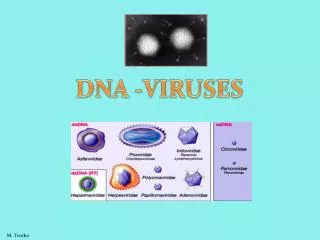
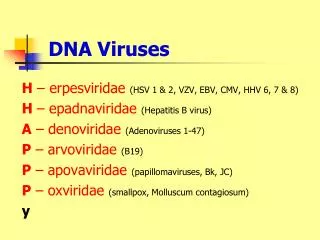
Papovaviruses • Human Papovaviridae • Papillomavirus - warts • Polyomavirus • BK virus – renal disease • JC virus – progressive multifocal leukoencephalopathy
Parvoviruses • The parvoviridae are the smallest of the DNA viruses. • Only one member of the Parvoviridae, B19 is known to cause human disaese – erythema infectiosum (fifth disease), a common childhood exanthem.
Adenoviruses • Adenoviruses were first isolated in 1953 in a human adenoid cell culture. • Since then, approximatelly 100 serotypes, at 47 of which infect humans, have been recognized.
Adenovirus infections in human • Adenoviruses infect epithelial cells of the pharynx, conjuctiva, small intestine, and occasionally other organ systems. • They usually do not spread beyond the regional lymph nodes.
Adenovirus infections in humans • Respiratory diseases • acute febrile pharyngitis • pharyngoconjuctival fever • acute respiratory disease • pneumonia • Eye infections • Gastrointestinal disease • Other diseases • acute hemorrhagis cystitis in children • cervical lessions • urethritis
Humanherpesviruses • Alphaherpesvirinae • Herpes simplex type 1 • Herpes simplex type 2 • Varicella zoster virus • Betaherpesvirinae • Cytomegalovirus • Human Herpes virus 6,7 • Gammaherpesvirinae • Epstein-Barr virus • Kaposi´s sarcoma-related virus
Poxviruses • Poxviruses are the largest and most complex of viruses. • Infections with the most poxviruses are characterized by a rash, although lesions induced by some members of the family are markedly proliferative.
Poxviruses • Poxviruses include the human viruses variolla (smallpox) and molluscum contagiosum poxvirus.