Enhanced Trigger System for the SuperKEKB Collaboration at Hanyang University
On March 19, 2009, during the 2nd Open Meeting of the SuperKEKB Collaboration, significant advancements in the calorimeter trigger technology were discussed. The new design features simpler electronics and a more flexible trigger algorithm than its predecessor, Belle. It incorporates a two-step process with FADC and FPGA technologies, utilizing optical fibers instead of bulky copper cabling. Current efforts are focused on fast signal shaping and testing prototypes. The meeting highlighted the progress of various components, including significant improvements in handling energy signals and beam background effects.

Enhanced Trigger System for the SuperKEKB Collaboration at Hanyang University
E N D
Presentation Transcript
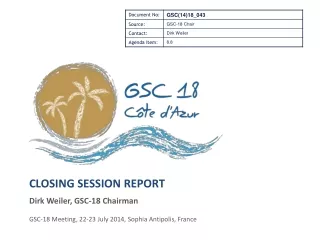
Trigger session report ByungGu Cheon Hanyang University 19 March, 2009 2nd Open Meeting of the Super KEKB Collaboration
S. Ryu Belle sBelle sBelle calorimeter trigger Feature : • Much simpler electronics chain (2 steps) than Belle • More flexible trigger algorithm design than Belle • 1st step (FAM) : 10MHz/12bit FADC + FPGA • 2nd step (TMM) : cascade/partitioning FPGAs • Bulky copper cables 52 optical fibers • Simple monitoring scheme • Simultaneous handling of CsI(Tl) and pure-CsI signals Current status : • We now investigate fast shaping signal from new Shaper. • FAM core firmware algorithm has been tested. • TSIM MC study has been performed w/ g4superb. Plan : • FAM/TMM prototypes will be ready by June. • Basic test of Shaper/FAM/TMM readout chain • Under real environment before Belle shutdown
Test bench for Shaperboard S. Ryu New Shaper Board
S. Ryu • Gain Test for fast shaping output :6 bits are reserved for the gain adjustment. → enough • Undershoot tail has been corrected with pole-zero cancelation → okay
S. Ryu • Noise level test with cosmic data → okay pedestal (mean value) 26 ch for 160 MeV ch ch peak RMS =1.58 ~ 10 MeV 6 ch ch
Problem in g4superb(?) Y. Unno • Single tracks( / e- / - / - / K+) are checked for gsim and g4superb. • Generate p=5GeV/c single track in CM isotrapically. • Without beam background • Check only Barrel region Logarithm scale hadron interaction effect in g4superb-ecl is strange??? November 6, 2014 7 Y.Unno
Effect of beam bkg Y. Unno • Check tsim response for signal MC with “beam background”. • “beam background”(addbg) is real random-triggered data. • Used here is exp.51 data: 2006/04-06(peak L =~ 16x1033/cm2/sec) November 6, 2014 8 Y.Unno
Effect of beam bkg Y. Unno Random triggered event under x20 bkg will be all triggered as physics event?! November 6, 2014 9 Y.Unno
APV25, Clock and Trigger M. Friedl APV25 • Please refer to my December 2008 meeting slides for details about APV25 (SVD session) • In Nov/Dec 2008 beam test, we confirmed that APV works perfectly fine with both • 42.4 MHz clock (=RF/12) 3.5 µs max L1 latency • 31.8 MHz clock (=RF/16) 4.7 µs max L1 latency • We can make the APV25 clock switchable Schematics of one channel
M. Friedl Summary • APV25 has trigger limitations due to (1) Minimum L1 distance of 6 APV clocks (2) Maximum pipeline filling • APV25 trigger simulation was performed to estimate dead time. • In case of no external limitation, we get @ 30kHZ L1: • 0.87% for 42.4MHz clock, 3.43% at 31.8MHz (see December slides for more detail) • With 500ns time jitter as estimated by CDC trigger we get • 0.42% for 42.4MHz clock, 2.7% at 31.8MHz • Conclusion: With 500ns CDC trigger jitter, both frequencies are fine according to Nakao-san‘s wish of<3% APV25 dead time@ L1=30kHz
Tsim-ecl with Belle and sBelle Y. Unno B Kp / Bp0p0 / Br0g / Btn /tmg / eeX(214)(mm)g Without beam background gsim g4superb Super-Belle geant3 geant4 Belle tsim-ecl sBelle tsim-ecl Belle ecl performance sBelle ecl performance November 6, 2014 19 Y.Unno
Check with single track Comparison between w/ and w/o inner detector Note that there is no difference between w/ and w/o inner detector for gsim too.