Understanding Schizophrenia and Personality Disorders: Symptoms, Causes, and Treatments
This comprehensive module delves into schizophrenia, characterized by a break with reality, affecting about 1% of the population. Key symptoms include delusions (false beliefs), hallucinations (seeing or hearing non-existent things), and disorganized thoughts. It also explores personality disorders, highlighting three clusters: Cluster A (odd-eccentric), Cluster B (dramatic-emotional), and Cluster C (anxious-fearful). The module details causes such as genetics and environmental triggers, and discusses treatments like cognitive and behavioral therapy to help manage these complex conditions.

Understanding Schizophrenia and Personality Disorders: Symptoms, Causes, and Treatments
E N D
Presentation Transcript
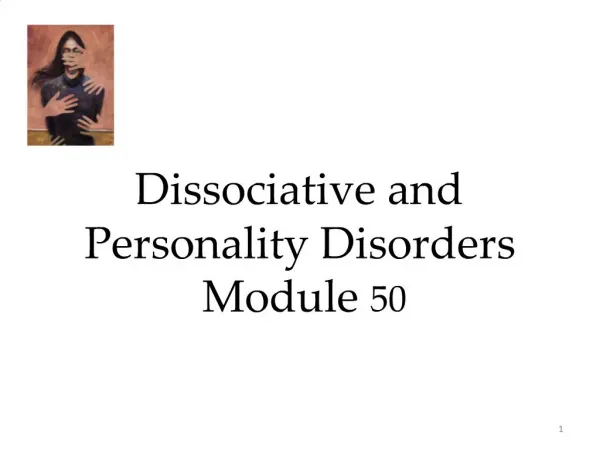
Module 50 Schizophrenia
Schizophrenia – break with reality (psychosis) - lifetime prevalence 1% Symptoms Delusions - false beliefs despite clear evidence to the contrary - delusions of control. - delusions of grandeur. • delusions of reference • delusions of persecution
Hallucinations - seeing and hearing things that are not there. Disorded Thoughts - unusual associations Flat Affect or Inappropriate Emotions and Action
Subtypes Paranoid Type - delusions of persecution - well organized delusions Disorganised Type - speech disorganisation (word salads) - poorly developed delusions
Catatonic Schizophrenia Motor symptoms Waxy inflexibility - remain in same position Undifferentiated Schizophrenia
Causes of Schizophrenia - genetics - triggered by environmental factors (illness, stress) • Dopamine Over activity • Maternal Virus During Midpregnancy Amphetamine Psychosis- drugs that increase dopamine (amphetamines, cocaine, angel dust) increase symptoms in schizophrenics and produce symptoms in normals.
Module 51 Personality Disorders
Personality Disorders - stable (long-term) - extreme personality characteristics - impair functioning and/or social relationships Cluster A: Odd-Eccentric Personality Disorders Paranoid, Schizoid and Schizotypal Disordered Thought Patterns - genetically linked to schizophrenia - no psychosis
Paranoid Personality Disorders Feel “everyone and everything is out to get them”. - misinterpret situations in line with this paranoia - intensifies under stress - May act on these feelings. Treatment - Cognitive Therapy to increase self- efficacy for dealing with problems. - does not challenge paranoid beliefs.
Cluster B - Dramatic-Emotional Antisocial, Borderline, Histrionic, Narcissistic Impulsive and Dramatic Show little regard for their own safety of others Total lack of concern for others
Antisocial Personality Disorders (Psychopath) -often appear very charming - no remorse or feelings of responsibility for actions. - don’t learn from punishment - impulsive, risk takers, aggressive - often have problems with the law - stalker, violent crimes 2 to 3 % of the population 80% are men.
Borderline Personality Disorder - cling to others, overly possessive. - short-term stormy relationships - act impulsively - prone to self-destruction - drinking, drug abuse, self-mutilation, reckless driving and suicide 75% are female. Childhood sexual abuse may play a role Main cause is biological!
Cluster C Anxious-Fearful Personality Disorders Avoidant, Dependant, Obsessive-Compulsive Obsessive-Compulsive Personality Disorder Rigid behavior, perfectionists, dogmatic & emotionally blocked. - This cluster treated with behavioral Therapy