How Often Should You Replace Your Toothbrush
0 likes | 2 Views
Not sure when to switch toothbrushes? Hereu2019s a simple guide on how often you should replace it for better dental care.


How Often Should You Replace Your Toothbrush
E N D
Presentation Transcript
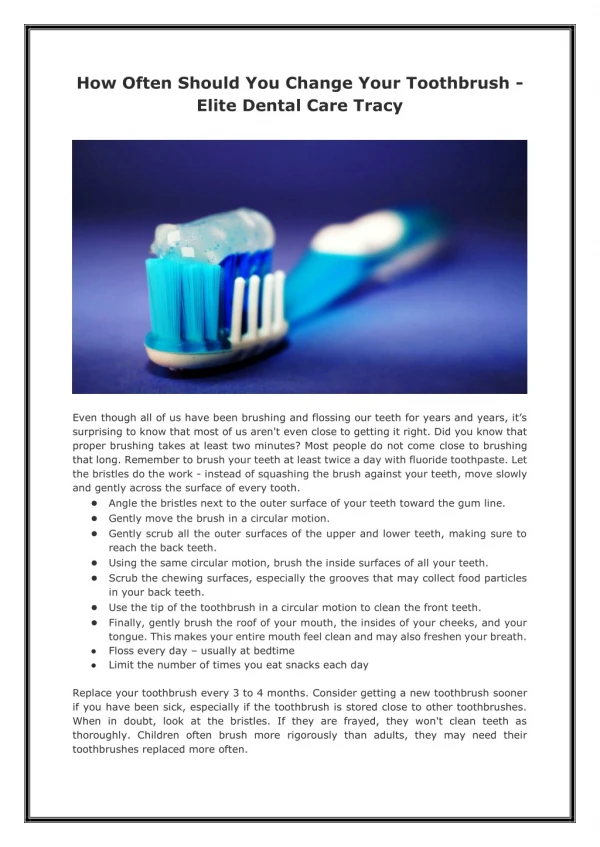
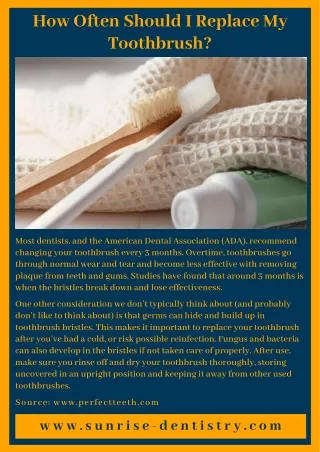
How Often Should You Replace Your Toothbrush? A toothbrush is one of the simplest yet most powerful tools in maintaining good oral hygiene. But many people hold on to their toothbrushes much longer than they should, unaware that over time, bristles wear down, collect bacteria, and lose their effectiveness. So, how often should you actually replace your toothbrush? The Recommended Timeline Dentists generally recommend replacing your toothbrush every 3 to 4 months. By this time, the bristles usually become frayed and lose their ability to clean your teeth properly. If you notice the bristles bending or spreading out earlier, it’s best to replace it sooner. For children, toothbrushes often wear out more quickly due to vigorous brushing, so they may need replacements more often. Signs It’s Time for a New Toothbrush Even if you haven’t reached the 3-month mark, watch out for these signs: •Frayed bristles– They no longer reach between teeth effectively. •Faded color indicators– Many toothbrushes come with colored bristles that fade when it’s time for a replacement. •Bad odor– A toothbrush that smells unpleasant may be harboring bacteria.
•After an illness–If you’ve been sick, it’s a good idea to switch to a fresh toothbrush to prevent reinfection. Why Replacing Your Toothbrush Matters Holding on to an old toothbrush isn’t just ineffective—it can also be harmful. Here’s why: •Bristle wear reduces cleaning power, leaving plaque and bacteria behind. •Bacteria buildup on the brush can lead to gum irritation or infections. •Frayed bristles may damage gums, causing sensitivity or recession. Electric Toothbrush Heads If you use an electric toothbrush, the same rule applies—replace the brush head every 3 to 4 months. Many brands even design their heads with color-changing bristles as reminders. Tips to Keep Your Toothbrush Clean •Rinse thoroughly with water after each use. •Store it upright in the open air to allow it to dry. •Avoid sharing toothbrushes, even within your family. •Don’t cover your toothbrush for long periods, as trapped moisture promotes bacterial growth. Final Thoughts Replacing your toothbrush regularly is a simple habit with a big impact on your oral health. By swapping it out every 3 to 4 months—or sooner if needed—you’ll help ensure that your teeth and gums stay healthy, clean, and free of harmful bacteria.