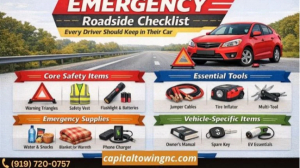
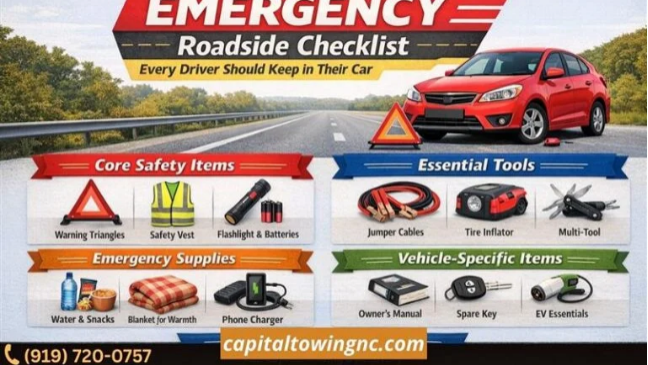
Car trouble rarely gives advance warning. A flat tire, dead battery, overheating engine, or sudden weather change can leave any driver stranded. That is why an Emergency Roadside Checklist Every Driver Should Keep in Their Car is not optional. It is a basic safety measure that protects drivers, passengers, and vehicles in unpredictable situations. Prepared drivers stay calmer, safer, and more in control when something goes wrong on the road. Why Every Driver Needs an Emergency Roadside Checklist Breakdowns can happen anywhere. Busy highways, quiet back roads, or parking lots late at night. In these moments, having the right supplies nearby can make a serious difference. An emergency checklist helps reduce risk, improve visibility, and keep drivers safe while waiting for help. It also prevents small problems from turning into dangerous situations. We recommend treating roadside preparedness as part of regular vehicle ownership, not something to think about after an emergency happens. Core Safety Items to Keep in Your Car Safety comes first in any roadside situation. These items help protect you and alert other drivers. Reflective warning triangles or road flares: make your vehicle visible from a distance, especially at night or in poor weather. High-visibility safety vest: increases your visibility when stepping outside the vehicle. Reliable flashlight with spare batteries: helps in low-light conditions and allows safe vehicle inspection. Essential Tools for Common Roadside Problems Some emergencies can be handled quickly if the right tools are available. Jumper cables or a portable jump starter: essential for dead batteries, as many breakdowns start with battery issues. Tire inflator or spare tire kit: helps manage slow leaks or flats; use a tire pressure gauge to avoid guesswork. Basic multi-tool or small toolkit: useful for loose parts, hose clamps, or minor adjustments. At Capital Towing & Recovery, we often see situations where simple tools could have helped drivers get moving faster.
Emergency Roadside Checklist Every Driver Should Keep in Their Car

- capitaltowingnc
- Jan 29, 2026 ·
That is why an Emergency Roadside Checklist Every Driver Should Keep in Their Car is not optional. It is a basic safety measure that protects drivers, passenge