Dose-Response Curve of Acetylcholine on Isolated Frog Rectus Abdominis and Drug Effects
This study investigates the dose-response curve of Acetylcholine (ACh) on the isolated frog rectus abdominis muscle and examines the effects of various drugs on neuromuscular transmission. The rectus abdominis is a skeletal muscle that receives somatic motor innervation via ACh, acting on Nm receptors. We explore both centrally and peripherally acting drugs, including muscle relaxants and botulinum toxin, and their influence on acetylcholine transmission. The project highlights the mechanisms of neuromuscular transmission and the comparative effects of drugs on muscle contraction.

Dose-Response Curve of Acetylcholine on Isolated Frog Rectus Abdominis and Drug Effects
E N D
Presentation Transcript
Lap # 5 Dose Response Curve of Ach & The Effect of Different Drugs on Isolated Frog Rectus Abdominis
Nervous system CNS PNS EFFERENT AFFERENT AUTONOMIC NERVOUS SYSTEM SOMATIC NERVOUS SYSTEM ENTERIC SYMPATHETIC PARA-SYMPATHETIC
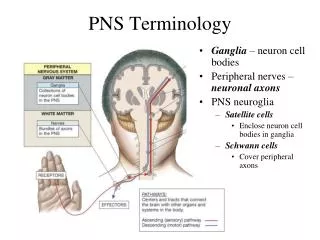
Frog Rectus Abdominis: Description: It is a skeletal, voluntary, striated & transverse muscle . It receives somatic motor innervations . The transmission is mediated through release of Ach that acts on Nm Receptors present postsynaptically on the muscle . Neuromuscular (myoneural) junction CNS Skeletal muscle Voluntary motor nerve Nm -R
Neuromuscular transmission: • Action potential propagation through nerve fiber . • Calcium influx into the nerve ending . • Release of Ach from its vesicles (fusion with membrane & exocytosis) . • Release of Ach into synaptic cleft . • Ach binds to Nm-R postsynaptically . • Activation of Na+/K+ channels→ Na+ influx → contraction . • Ach action is terminated by cholinesterase enzyme .
Drugs that act on skeletal muscles: 1-Centrally acting drugs: e.g. Diazepam (skeletal muscle relaxant) . 2-Peripherally acting drugs: a- Presynaptically . b- Postsynaptically .
Drugs that act on skeletal muscles: Presynaptically acting drugs : 1- ↓ AP propagation e.g. local anesthetics 2-↓ Ach synthesis e.g. hemicholinium, vesamicol 3- ↓ Ach release e.g. botulinum toxin 4-↓ calcium conc. e.g. Magnesium
Drugs that act on skeletal muscles: Postsynaptically acting drugs: A-Drugs that decrease transmission . B-Drugs that increase transmission .
A- Drugs that decrease transmission Drugs that act on skeletal muscles :
Drugs that act on skeletal muscles : B-Drugs that increase transmission: Cholinesterase inhibitors: 1-Reversible: e.g. neostigmine, physiostigmine 2- Irreversible: e.g. organ phosphorus insecticides * Both will lead to accumulation of Ach at myoneural junction .
Dose response curve of acetylcholine The effect of different drugs on the isolated frog rectus abdominis PART 1 PART 2 A W+N W+N W+N B N W+N W+N W+N W N 0.1ml Ach N 0.1ml Ach 0.1ml Ach Ach 0.05ml 0.2ml Ach 0.4ml Ach 0.1ml Ach Ach 0.1ml Physiostegmine 0.1ml Curare 0.1ml Height = A-B