Limiting Idle Time: Key Steps for Improved Engine Efficiency and Longevity
Discover effective strategies to minimize engine idle time and enhance operational efficiency. Limiting idling during breaks and cool-down periods is essential, as excessive idling can lead to significant wear on internal components, costing you more in the long run. Modern diesel engines are designed for active operation, and idling can cause incomplete combustion and carbon buildup, reducing engine life. By adopting economical operating practices and utilizing advanced technology, you can optimize performance and reduce costs. For questions, contact us at noidling@komatsuna.com.

Limiting Idle Time: Key Steps for Improved Engine Efficiency and Longevity
E N D
Presentation Transcript
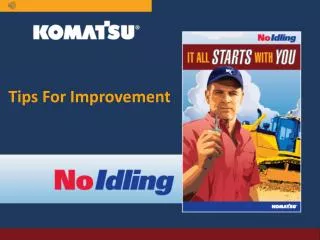
IT ALL STARTSWITHYOU 3Steps to Limiting IDLE TIME Turn it off at lunch and breaks Avoid idling more than 5 minutes Limit cool down periods to 3 minutes
IdlingShortens EngineLife • Diesel engines are designed to operate best at operating temperatures • At Idle • Cylinder temperature drops leading to incomplete combustion • Carbon builds on valves, head, rings, and pistons • Lower combustion pressures allow blow by and contribute to oil degradation According to the IDEM*,“Running an engine at low speed (idling) causes twice the wear on internal parts compared to normal use” *Indiana Department of Environmental Management
IDLINGISCOSTLY How Much Does 1 Hour of IDLE TIME Cost*? For a 20 T Excavator: *Indiana Department of Environmental Management
IT’S A NEW DAY Idling Born of Necessity … But No Longer NECESSARY Origins of the “let it idle” practice The early diesel environment Heavy rotating masses Mechanically controlled injection Pre-combustion chambers Thicker oils Cheap fuel Unreliable starters and batteries Fuel gelling in cold weather Inefficient cab heating / cooling systems = Need to let it run, little trust in restarting Reasons to change behavior The modern diesel environment Lighter / stronger rotating masses State-of-the-art electronic fuel systems More robust batteries Premium multi-viscosity oils Expensive fuel Advanced / reliable starters Summer and winter blend fuels Vastly improved heating and cooling systems = No need for “convenience” idling
NEXT STEPSIN OPERATING EFFICIENCY Work the machines, they’re built to work Use economy “E” mode, whenever possible Reduce high speed travel (track machines) Avoid operating at hydraulic relief Eliminate wheel spin Minimize non-productive movement
For more Information Direct your questions to noidling@komatsuna.com