Download
1 / 10
100 likes | 209 Views
The Haze Attribution Project focuses on developing a framework for understanding and attributing sources of haze affecting Class I areas. This discussion group aimed to establish a conceptual model and review data sources, methodologies, and deliverables. Key objectives included identifying geographic emissions sources, analyzing mass and species distributions, and providing clear documentation for policymakers. The project schedule encompassed organizational meetings, data reviews from existing studies, and the preparation of final reports to support ongoing haze mitigation efforts.

E N D
Attribution of Haze Project Inter-RPO Modeling Discussion Group May 25-26, 2004 Denver, CO
2004 Attribution of Haze Project • Definitions • Conceptual Model • Data Sources • Deliverables/Contractor Support • Schedule • Report Structure
Definitions • As they apply to emissions sources for WRAP technical analysis projects (from Webster’s): • Apportionment – to divide and share out according to a plan, to make a proportionate division or distribution • Attribution – to explain by indicating a cause
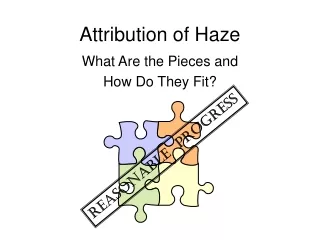
Conceptual Model Reality Attribution Attribution of Haze Project Apportionment Receptor Modeling & Trajectory Analyses Gridded Dispersion Model Analyses Existing 2002 EIs Pure, Idle Speculation
2004 AoH Project Data Sources • Source apportionment modeling simulations from the Regional Modeling Center • Receptor-oriented source contribution analyses of aerosol and meteorological monitoring data from the Causes of Haze Assessment project • Existing and refined emissions inventories from the Dust, Emissions, and Fire Forums • Special-purpose source attribution studies such as BRAVO, et cetera • EPA technical guidance documents and analyses • Journal publications, and workshop/conference reports addressing emissions and visibility impairment
2004 AoH Project Deliverables • Identify: • Geographic source areas of emissions that contribute to impairment at each mandatory federal and tribal Class I area • Mass and species distributions of emissions by source categories within each contributing geographic source area • The amount of natural and manmade emissions affecting each Class I area
2004 AoH Project Deliverables • Provide: • Documentation of the assumptions, methods, and uncertainties used in the integrated analyses of modeling, monitoring, and emissions data. • Succinct, clear summaries for policymakers, of the estimated areas and sources of impairment for each Class I area, including the associated uncertainty
Schedule • January – March • Organizational meetings – phone/in-person • Develop scope of work for contractor support + hire • April – June • Review/discuss existing source attribution studies (BRAVO, et cetera) • Contractor to identify data available for AoH project • July – September • Review/discuss work products from RMC, CoHA, and EIs • Assign expert review topics
Schedule • October – December • Continue review/discussion of work products from RMC, CoHA, and EIs • Review/discuss draft reports from expert reviewers • Review first draft of AoH report prepared by contractor • January 2005 • Publish final 2004 AoH report • Make plan for subsequent workgroup activities