Download

1 / 8
80 likes | 91 Views
Looking for a CA firm in India? Find the best chartered accountants to handle your accounting, taxation, and financial needs. Get expert advice and reliable services from top CA firms in India. Contact us today!

E N D
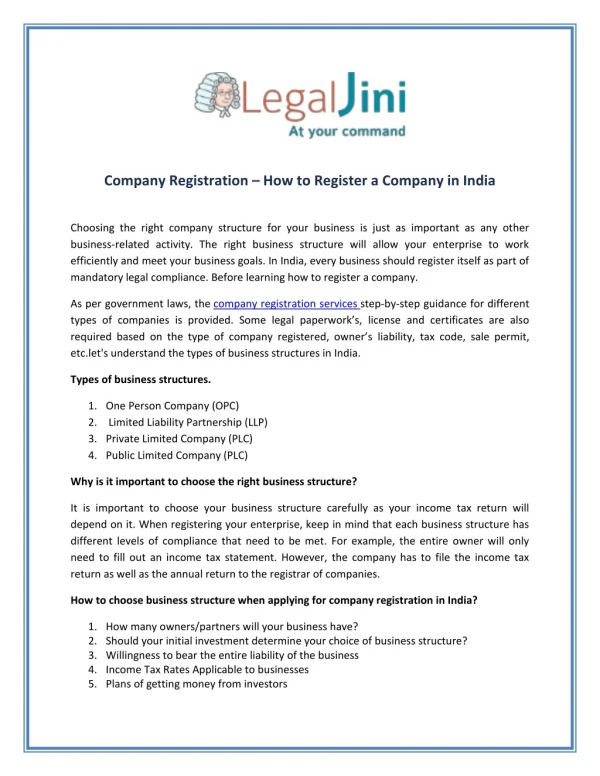
How To Register A Private Limited Company In India India is one of the fastest growing economies in the world, and it has become a hub for businesses seeking to expand in Asia. Registering a private limited company in India can be a daunting task, especially for those who are new to the process. However, with the right guidance and knowledge, it can be a smooth and efficient process. In this topic, we will explore the step-by-step process of how to register a private limited company in India. We will cover the legal requirements, the necessary documents, and the different stages of the registration process. Whether you are an entrepreneur looking to start your own business, or a foreign company planning to expand to India, this guide will provide you with the information you need to successfully register a private limited company in India. Read More - Audit & Assurance Services in Jaipur What are the types of business structures in India? In India, there are several types of business structures that entrepreneurs and companies can choose from, depending on their specific needs and objectives. Here are the most common types of business structures in India: Sole Proprietorship: This is the simplest form of business structure where a single individual owns and manages the business.
Partnership Firm: A partnership firm is a business structure where two or more individuals come together to run a business and share the profits and losses. Limited Liability Partnership (LLP): LLP is a popular business structure where the partners have limited liability for the debts of the business, and it is a separate legal entity from its partners. Private Limited Company: This is a separate legal entity with limited liability for its shareholders, and it requires a minimum of two directors and shareholders. Public Limited Company: This is similar to a private limited company, but it can have an unlimited number of shareholders, and it can offer its shares to the public. One Person Company (OPC): This is a type of private limited company where only one person is the shareholder and the director. Each of these business structures has its own advantages and disadvantages, and it is important for entrepreneurs to carefully evaluate their options before choosing the most appropriate business structure for their needs. Why Is It Important To Choose The Right Business Structure? Choosing the right business structure is essential for any entrepreneur or company as it can impact various aspects of the business, including legal liability, tax obligations, ownership structure, and management. Here are some reasons why it is important to choose the right business structure: Legal Liability: The legal liability of the business owners varies depending on the business structure they choose. For instance, in a sole proprietorship, the owner is personally liable
for all the debts and obligations of the business. On the other hand, in a limited liability company, the personal assets of the owners are protected from business debts and obligations. Tax Obligations: Different business structures have different tax implications. For example, a sole proprietorship is taxed as the owner's personal income, while a company is taxed as a separate legal entity. Ownership Structure: Different business structures have different ownership structures. For example, a partnership has a shared ownership structure, while a private limited company has a limited number of shareholders. Management: The management structure of the business can also vary depending on the business structure. For example, a sole proprietorship has a single owner who manages the business, while a private limited company has a board of directors that manages the company. Funding: The type of business structure can also impact the ability of the business to raise capital. For example, a private limited company can raise capital by issuing shares, while a sole proprietorship is limited to the owner's personal funds. In summary, choosing the right business structure is crucial for any entrepreneur or company as it can impact various aspects of the business, and it is important to carefully evaluate the options and choose the most appropriate structure for the business. How To Choose A Business Structure While Applying For Company Registration In India? Choosing the right business structure is a crucial step when applying for company registration in India. Here are some key factors to consider when choosing a business structure:
Liability Protection: If you want to protect your personal assets from business liabilities, you should consider a limited liability structure like a Limited Liability Partnership (LLP) or Private Limited Company. Ownership Structure: If you want to have a clear ownership structure, you should consider a Private Limited Company or a One Person Company (OPC). Tax Implications: Tax implications vary depending on the business structure. If you want to optimize your tax savings, you should consult with a tax expert to choose the most suitable structure for your business. Compliance: Different business structures have different compliance requirements. If you want to avoid complex compliance procedures, you should consider a Sole Proprietorship or a One Person Company. Fund Raising: If you plan to raise funds from external investors, you should consider a Private Limited Company as it allows you to issue shares to investors. Long-term objectives: Consider your long-term objectives while choosing the business structure. If you plan to expand your business, you should consider a structure that allows you to take in more partners or investors. Industry-specific regulations: Some industries have specific regulations and requirements, and choosing a business structure that meets those requirements is crucial. For example, if you are starting a financial services company, you may want to choose a structure that is compliant with RBI regulations. It is important to consider all these factors and consult with a legal or financial expert before choosing a business structure for your company registration in Jaipur. How to Register a Company in India? Registering a company in India requires compliance with various legal and regulatory requirements. Here are the step-by-step procedures to register a company in India: Obtain Director Identification Number (DIN) and Digital Signature Certificate (DSC): The first step is to obtain a DIN and DSC for all the proposed directors of the company. Name Reservation: Choose a unique name for your company and check its availability on the Ministry of Corporate Affairs (MCA) website. Submit an application to reserve the name of the company. Drafting of Memorandum of Association (MOA) and Articles of Association (AOA): MOA is a document that contains the objectives of the company, while AOA contains the rules and regulations governing the company's operations.
Filing of Incorporation Documents: File the incorporation documents including MOA, AOA, and other required documents like identity proofs, address proofs, and PAN card copies of the proposed directors. Payment of Fees: Pay the prescribed fees and stamp duty based on the authorized capital of the company. Verification and Approval: After submitting the incorporation documents, the Registrar of Companies (ROC) will verify the documents and approve the incorporation of the company. Obtain Certificate of Incorporation: After the documents are verified and approved, the ROC will issue the Certificate of Incorporation. Apply for PAN and TAN: Apply for Permanent Account Number (PAN) and Tax Deduction and Collection Account Number (TAN) for the company. Register for Goods and Services Tax (GST): Depending on the nature of the business, register for GST on the GST portal. Open Bank Account: Open a bank account in the name of the company and deposit the required share capital. In summary, registering a company in India involves several legal and regulatory procedures. It is recommended to seek the guidance of a legal or financial expert to ensure compliance with all the requirements and procedures. Documents Required For Company Registration The documents required for company registration in India vary based on the type of business structure you choose. Here is a list of some of the common documents required for company registration in India: Identity Proof: PAN Card, Aadhaar Card, Passport, or Voter ID of all directors. Address Proof: Utility Bill (not older than 2 months), Bank Statement (not older than 3 months), or Passport of all directors. Photograph: Passport-size photograph of all directors. Memorandum of Association (MOA): MOA is a document that contains the objectives of the company. Articles of Association (AOA): AOA contains the rules and regulations governing the company's operations. Consent Letters: Consent letters from all directors to act as directors.
Registered Office Address Proof: A document providing proof of the registered office address of the company, such as rent agreement or property tax receipt. Digital Signature Certificate (DSC): DSC is required to sign and file the incorporation documents electronically. Director Identification Number (DIN): DIN is a unique identification number required for all directors. Certificate of Incorporation: If the company is being formed by conversion of an existing business entity, then the certificate of incorporation of the previous entity may also be required. It is recommended to consult a legal or financial expert to ensure that all the required documents are in order before submitting them for company registration in India. Read More - Business License Registration in Jaipur What is the Cost of Company Registration? The cost of company registration in India depends on various factors, such as the type of business structure, authorized capital, stamp duty, professional fees, and other charges. Here is a rough estimate of the cost of company registration in India:
Sole Proprietorship: The cost of registering a sole proprietorship business in India is minimal, and it can be done with a cost of around INR 1,000 to 2,000. Partnership Firm: The cost of registering a partnership firm in India is around INR 5,000 to 7,000. Limited Liability Partnership (LLP): The cost of registering an LLP in India is around INR 8,000 to 12,000. Private Limited Company: The cost of registering a private limited company in India is around INR 15,000 to 25,000. The above-mentioned costs are an approximation and can vary based on various factors, such as the professional fees charged by the lawyers or chartered accountants hired for the process. It is advisable to consult a legal or financial expert to understand the exact cost of registering a company in India and ensure that all the legal and regulatory compliance requirements are fulfilled. Benefits of Company Registration in India Company registration in India provides several benefits to the business and its owners. Here are some of the benefits of registering a company in India: Limited Liability: One of the most significant benefits of registering a company in India is limited liability protection. This means that the personal assets of the company's owners are protected from the company's debts and obligations. Legal Recognition: Registering a company in India provides legal recognition to the business, making it a separate legal entity. This helps in establishing credibility with customers, suppliers, and other stakeholders. Fundraising: Registered companies can raise funds easily through bank loans, venture capital, angel investors, and public offerings. Business Continuity: A registered company in India enjoys perpetual existence, meaning it continues to exist even if the founder or directors leave the business or pass away. Tax Benefits: Registered companies in India enjoy several tax benefits, such as tax deductions, exemptions, and credits. Brand Protection: Registering a company in India provides protection to the brand name and logo of the business, preventing others from using the same or similar names.
Easy Transfer of Ownership: Registered companies have a formal ownership structure, making it easier to transfer ownership to another person or entity. In summary, registering a company in India provides several benefits that can help businesses grow and succeed in the long term. Final words In conclusion, registering a private limited company in India can be a challenging process, but it is a crucial step towards establishing a sustainable and successful business in the country. Entrepreneurs must carefully consider the various factors involved in choosing the right business structure, prepare the necessary documents, and comply with the legal and regulatory requirements to ensure a smooth and successful registration process. Seeking the guidance of legal and financial experts can be immensely helpful in this regard. Once registered, a private limited company in India can provide numerous benefits, such as limited liability, legal recognition, fundraising options, tax benefits, brand protection, and easy transfer of ownership. With its vast market and growing economy, India presents exciting opportunities for entrepreneurs to establish and grow their businesses. By registering a private limited company, entrepreneurs can take advantage of these opportunities and build a strong foundation for their business in India.