Understanding Mitochondria: Structure, Function, and Evolutionary Insights
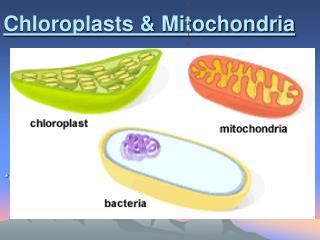
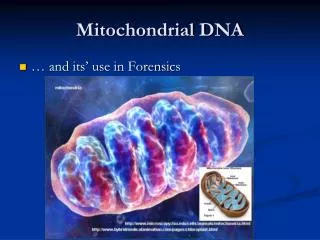
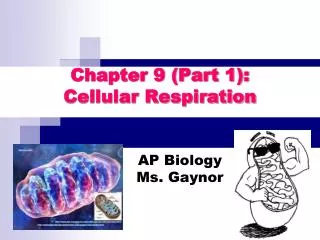
Mitochondria are energy-harvesting organelles characterized by a double membrane structure, including a smooth outer membrane and a highly folded inner membrane containing cristae. This unique architecture increases surface area for membrane-bound enzymes and transport proteins essential for energy production. Mitochondria also contain their own DNA and ribosomes, illustrating their endosymbiotic origins. The outer membrane features porins allowing specific molecules into the outer compartment, while enzymes such as hexokinase and dehydrogenases play critical roles in metabolic processes.

Understanding Mitochondria: Structure, Function, and Evolutionary Insights
E N D
Presentation Transcript
D G A F C B E
B C A G D E F
MITOCHONDRIA Which of the following can get into the outer membrane? Outer membrane with porins Outer compartment (cytosol) Inner membrane with Cristae Enzymes! Hexokinase (adds P to ADP) and Dehydrogenases (catalyze redox reactions) Matrix
Mitochondria • Double membrane • outer membrane • inner membrane • highly folded cristae • enzymes & transport proteins • intermembrane space • fluid-filled space between membranes
outer membrane intermembrane space inner membrane cristae matrix mitochondrialDNA Mitochondria — Structure • Double membrane energy harvesting organelle • smooth outer membrane • highly folded inner membrane • cristae • intermembrane space • fluid-filled space between membranes • matrix • inner fluid-filled space • DNA, ribosomes • enzymes • free in matrix & membrane-bound What cells would have a lot of mitochondria?
Mitochondria – Function Dividing mitochondria Who else divides like that? Membrane-bound proteins Enzymes & permeases bacteria! Advantage of highly folded inner membrane? More surface area for membrane-bound enzymes & permeases What does this tell us about the evolution of eukaryotes? Endosymbiosis!
Enzymes on the Outside • Hexokinases- adds P onto ADP • Dehydrogenases- catalyze REDOX • Transfers electrons (H) to an acceptor NAD or FAD • FAD and NAD are electron carriers