
Understanding Flavin Coenzymes: Riboflavin, FMN, and FAD Structures and Functions
Flavin coenzymes, including riboflavin, flavin mononucleotide (FMN), and flavin adenine dinucleotide (FAD), play crucial roles in the biochemical processes of living organisms. These coenzymes bind tightly to their respective enzymes, characterized by low dissociation constants, leading to minimal free flavin levels in cells. Despite many organisms utilizing nicotinamide coenzymes for oxidation-reduction reactions, flavins serve as potent oxidizing agents, facilitating essential metabolic functions. Flavoenzymes participate in various biochemical reactions, underscoring the importance of flavins in cellular processes.

Understanding Flavin Coenzymes: Riboflavin, FMN, and FAD Structures and Functions
E N D
Presentation Transcript
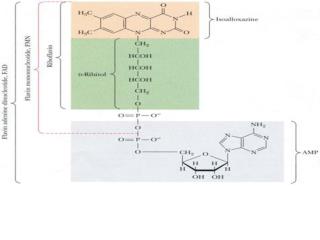
The structures of riboflavin,flavin mononucleotide(FMN),and flavin adenine dinucleotide(FAD).Flavin coenzymes bind tightly to the enzymes that use them,with typical dissociation constants in the range of 10-8to10-11M,so that only very low levels of free flavin coenzymes occur in most cells.Even in organisms that rely on the nicotinamide coenzymes(NADH and NADPH)for many of their oxidation-reduction cycles,the flavin coenzymes fill essential roles.Flavins are stronger oxidizing agents than NAD+ and tron and two-electron pathways and can be reoxidized easily by molecular oxygen.Enzymes that use flavins to carry out their reactions-flavoenzymes-are involved in many kinds of oxidation-reduction reactions.
