Integumentary System
Discover the fascinating structure and functions of the integumentary system, particularly the skin. This article delves into the epidermis and dermis layers, explaining how keratinocytes produce keratin for protection and how melanocytes create melanin for skin color. Learn about skin conditions like acne related to sebaceous glands, the role of sweat glands in temperature regulation, and what different skin colors indicate about health. Uncover cool facts about your skin and its essential functions for overall wellbeing.


Integumentary System
E N D
Presentation Transcript
Integumentary System System Structures and Functions Skin Conditions and Treatments
Integumentary System System Structures and Functions Skin Conditions and Treatments
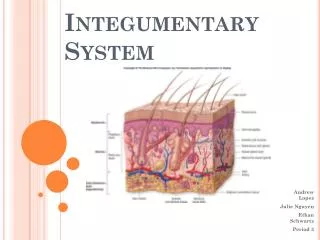
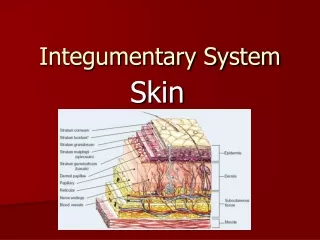
Cool facts about the … • Epidermis: • outer most layer of your skin – has 5 stratums (sub-layers) • has no blood supply that’s why one can shave without much bleeding • top stratum is flaky – it is this that causes dandruff • bottom stratum has keratinocytes that produce keratin • make tough protective layer and/or corn • bottom stratum also has melanocytes that produce melanin • yellow, brown to black (more melanin = darker skin) • sunlight stimulates the production of melaninto protect DNA • from being damaged by sunlight • freckles and moles show where there is high amount of melanin
Cool facts about the … • Dermis: • inner layer of your skin – has 2 main sub-layers • sensitive part of your skin: has oil, nerves, sweat glands etc. • long and stretchy to protect your internal organelles • animal dermis is used to make leather goods • dermal papillae: make whorl ridges and loops on your hand/feet to • increase friction and gripping ability • tips of your fingers have sweat pores which mark the dermal papillae • pattern to give you your fingerprint on anything you touch
Cool facts about the … • Moods of Skin Colours: • Redness (erythema): embarrassment (blushing), fever, inflammation • or allergy – high blood pressure • Pallor (blanching): fear, anger or sick – low blood pressure • Yellow (jaundice): liver problem – too much bile circulating • Black-and-blue (bruising): blood clotting
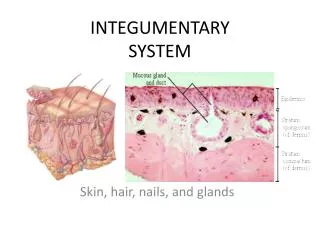
Cool facts about the … • Sebaceous Gland – skin nightmare?? • Oil glands found everywhere except on the palm of hands and feet • it keeps skin soft and moist • it protects hair from becoming brittle • the oil has chemicals that can also kill bacteria ACNE Whiteheads = blocked sebaceous gland duct Blackheads = oxidized whiteheads When the gland gets infected
Cool facts about the … • Sweat glands: • they are found everywhere • heat regulator to keep your body within normal temperature (37 C) • sweat: water + salt + metabolic wastes (eg. urea, uric acid pee ew) • Hair: • made up of protein, has some keratin in it • is a hollow tube