Exploring Our Solar System: Facts and Discoveries
70 likes | 188 Views
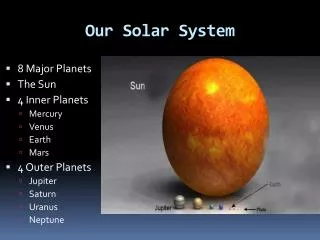
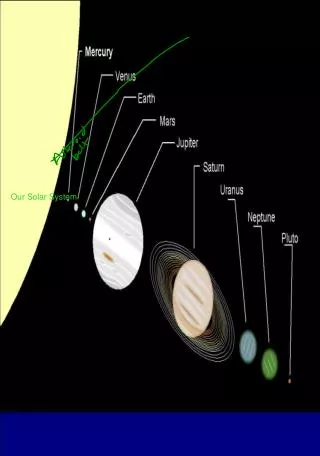
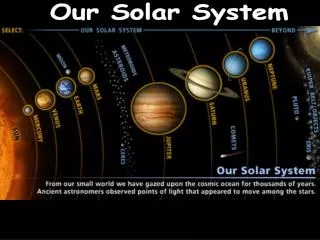
Our Solar System consists of one star and at least eight planets, alongside numerous moons and dwarf planets. Researchers have identified over 500 additional solar systems. Within our own system, there are 8 planets, 5 dwarf planets, and 174 known moons. Scientists are particularly interested in 187 potential locations that might support life. Understanding the relative distances and characteristics of these celestial bodies helps us assess their habitability. Let's dive into the fascinating aspects of our Solar System and discover what makes each body unique.


Exploring Our Solar System: Facts and Discoveries
E N D
Presentation Transcript
A Solar System has at least one star and at least one planet around that star. • Scientists have already discovered over 500! solar systems besides our own.
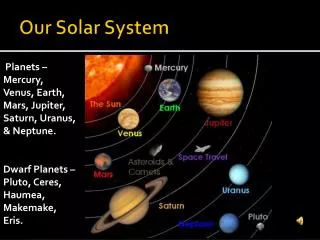
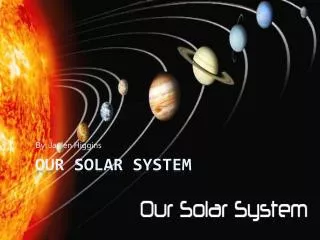
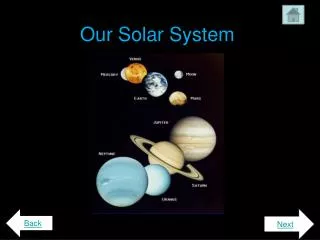
In our solar system, we have: • Planets: 8 • Dwarf Planets: 5 • Moons: 174 • Potential Places to Look for Life187!
How can we tell if a specific body in the Solar System might have life? • By writing down facts we know about it!