Download
1 / 13
130 likes | 254 Views
This policy strategy outlines essential approaches to optimize oil usage and combat the growing pollution challenge in Washington State. Emphasizing the integration of multi-modal transportation options, the proposal advocates for enhanced infrastructure, better vehicle technologies, and the adoption of cleaner fuels. By leading with government initiatives, establishing clear permitting paths, and encouraging private investments, we can diversify rural economies and manage oil dependency. This plan prioritizes quality, innovation, and collaboration to create a sustainable energy future.

E N D
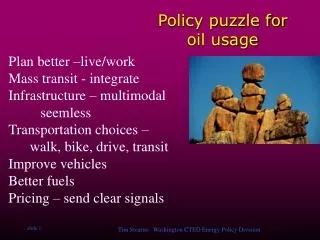
Policy puzzle for oil usage Plan better –live/work Mass transit - integrate Infrastructure – multimodal seemless Transportation choices – walk, bike, drive, transit Improve vehicles Better fuels Pricing – send clear signals Tim Stearns- Washington CTED Energy Policy Division
context • 1.2 billion gallons distillate fuels use in WA • 4b gallon of gasoline per year • Growing world demand for oil – 70 mbd • 3 gallons per day per person US – 20 mbd • Oil Supply peaking – new price level • Demand will double in 50 years • Large pollution challenge – air & water • Diversify rural economies • All imported to state Tim Stearns- Washington CTED Energy Policy Division
Washington State Policy • Lead with government usage • Clear permitting path • Coordinate agencies • Improve financing climate – public/private • Can’t control markets for ag or oil • Can’t control farmers or entrepreneurs or feds • Work with existing infrastructure • Structure market to expand production • Quality – quality – quality Tim Stearns- Washington CTED Energy Policy Division
Keys to success • solid business plan • Buyers • Manufacturing • Service • Management • marketing • Distribution channels • financing – equity – debt – grants • partners Tim Stearns- Washington CTED Energy Policy Division
Federal help • Federal blenders tax credit • EPA support for regulatory framework • USDA guaranteed loans • USDA crop research • Navy & GSA approval of pumps & storage • Usage • Challenge – decentralize – support diverse activities Tim Stearns- Washington CTED Energy Policy Division
Why biodiesel? • Can grow feed stocks – canola & mustard • Canola – feed cattle • Mustard – biofumigate potatoes • Modular size better fit for northwest • Midwest better for corn & soybeans • Midwest way ahead on ethanol • Cellulosic ethanol still a work in progress Tim Stearns- Washington CTED Energy Policy Division
vision risks control Investment Innovate manage Clear framework Prevent problems Safety - environmental Create markets Cajole & assist Research quality Private - government Tim Stearns- Washington CTED Energy Policy Division
Pithy observations • Recognize oil addiction 2006 - duh • Can’t wait for feds - might be good • Avoid harm - provoke change • Action - alternatives don’t just happen • Diversify rural • Free market is not free - $ without morals • High prices irrelevant without substitutes • R&D is step 1 Tim Stearns- Washington CTED Energy Policy Division
Biofuels action • Renewable fuel standard 2% in 2008 • Market - buyers/framers/referees • State $ to attract private • Quality • Near term research • Lead - follow - get out of the way • Plug in hybrid cars & buses • Converting 9,000 school buses • 3 freedom highways Tim Stearns- Washington CTED Energy Policy Division
Policy puzzle for oil usage Plan better –live/work Mass transit - integrate Infrastructure – multimodal seemless Transportation choices – walk, bike, drive, transit Improve vehicles Better fuels Pricing – send clear signals Tim Stearns- Washington CTED Energy Policy Division
The end • We can do it – Be creative - innovate • Have fun doing it – work together • Make money doing it – • must invest – take risks • Just do it Tim Stearns- Washington CTED Energy Policy Division
Washington State BiofuelsTim StearnsEnergy Policy DivisionWA Department of Community, Trade & Economic Development206-256-6121tims@cted.wa.gov