Innovative Mileage Fee Proposal: Oregon's Road User Fee Pilot Program Overview
This document presents Oregon’s Road User Fee Pilot Program, led by James Whitty, focusing on a new revenue collection method for state roads. Introducing the Mileage Fee, a per-mile charge based on Vehicle Miles Traveled (VMT), aims to replace the gas tax which is projected to diminish in effectiveness over time. This system can accurately track mileage without recording location data, ensuring motorist privacy. The pilot involves 280 vehicles with an integrated point-of-sale system, and includes options for rush hour pricing. A seamless transition from fuel tax is planned, benefiting both the state and the private sector.

Innovative Mileage Fee Proposal: Oregon's Road User Fee Pilot Program Overview
E N D
Presentation Transcript
Oregon’s Road User Fee Pilot ProgramPresented toNEACTLaGrande, OregonAugust 4, 2005 James Whitty, ManagerOffice of Innovative Partnerships andAlternative Funding
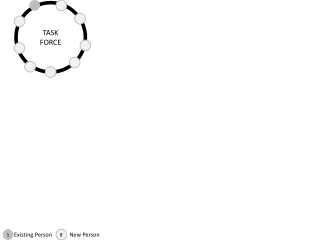
Road User Fee Task Force Legislative Mandate: “To develop a design for revenue collection for Oregon’s roads and highways that will replace the current system for revenue collection.”
Oregon Road Revenue Sources FY 2005(bonding excluded) Source: 2005-2007 Governor's Recommended Budget
Conclusion In the future, gas tax revenue will not be the primary source for funding our roads.
A Solution: The Mileage Fee • A per-mile charge based on Vehicle Miles Traveled (VMT) within a state • Replaces fuel tax for participating motorists
Affordable…............................... System is accurate and reliable.. Differentiation of boundaries...... Technology Feasible.............................. Reliable……………….……. Secure…………………..….. Protects privacy of motorists……. Minimal evasion potential………... Minimal burden on private sector.. Seamless transition……………… Policy Requirements
Collection Possibilities Human Data Gathering Centralized Electronic Collection Toll way-Style Collection
Oregon’s Mileage Fee Concept
The Concept A per-mile charge based on miles driven within Oregon by zone. Zone 1 = in state Zone 2 = out of state Optional Zone 3 = rush hour
How it Works One way signal received by car to switch mileage counter between in-state and out-of-state zones. Gas tax deducted from gas purchase price (24 cents/gallon) and mileage fee added. Mileage totals counted for in-state and out-of-state. No location information is recorded. Mileage read wirelessly at fueling stations.
Fuel tax maintained for non-equipped vehicles Mileage fee integrates with fuel tax collection system Oregon’s weight-mile tax retained for heavy trucks Also testing “rush hour” pricing How it Works
Privacy • No vehicle location data stored in vehicle • No data transferred except mileage totals within zones • Data transferred only at time of fueling via short range radio frequency
Cost Service Stations • Capital costs (Oregon): $33 million • Annual operating costs (Oregon): $1.6 million Vehicles • No retrofitting • Components installed during vehicle manufacture
System Integration Less risky – • Bulk of revenue stream remains at distributor level (fewer taxpayers) • Mileage fee gradually becomes predominant Retain current multi-state anti-evasion processes Fuel tax retained as redundant system to guard against system failure and tampering
May 14, 2004 Public Demonstration of Mileage Fee Technology Oregon State University Corvallis, Oregon Zone switching … Successful VMT data transmission … Successful Electronic calculation of fee … Successful Gas tax deducted … Successful Receipt presented … Successful
Affordable…............................... System is accurate and reliable.... Differentiation of boundaries..... Technology Feasible.............................. Reliable…………………….. Secure……………………… Protects privacy of motorists……… Minimal evasion potential…………. Minimal burden on private sector… Seamless transition………………… Policy Requirements - All Met!
Retrofitting cost versus long phase-in Setting the mileage fee rate Requirements on vehicle manufacturers and fuel distribution industry Interstate system standardization and revenue allocation Integration with federal solution Policy Issues Remaining
Oregon’s Pilot Program Time Line: March 2006 – March 2007 Pre-Pilot: 20-vehicle preliminary control start Full Pilot: 280 vehicles from one community paying mileage fee in lieu of gas tax; service stations with integrated point- of-sale systems Rush Hour: Some pilot volunteers participating in Rush Hour Pricing Group
RUFTF Website www.oregon.gov/ODOT/HWY/OIPP/ruftf.shtml