
Enhancing Community Mobilization and Participation in Development Projects in Kauma
E N D
Presentation Transcript
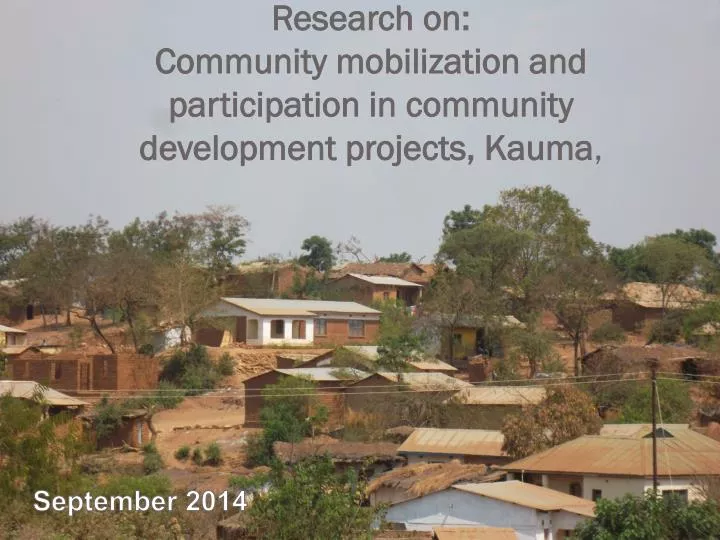
Research on:Communitymobilization and participation in communitydevelopmentprojects, Kauma, September 2014
What are the factorswhich influence participation in communitydevelopmentprojects? • How mobilizationprocesscanat best enhance participation in communitydevelopmentprocesses?
Presentation of the research • Objectives • to determine factors which facilitate or impede inclusive communities’ mobilization in informal settlements in Lilongwe • to identify individual characteristics which influence participation in community development projects. • Research process: 60 questionnaires
Water , distance to hospital, education, especially, girl education driver Carpenter security guard kisok attendant soldier and security officer business security guard Born in KAUMA Church groups farmer business security guard garden boy business piecework (bricklayer, cook, decoration) tailor manure groups 1-10 000 MKW Saving groups yes
Main findings • Communitycohesion and wellbeing • Social capital and sense of solidarity • Perception of difference and exclusion • Knowledge, participation and benefits of communitydevelopmentprojects
Cohesion and wellbeing • Overallsense of wellbeing • Individualproblemssuch as lack of money,lack of job opportunities, etc
Social capital and sense of solidarity • Communityorganization and groups’ membership in Kauma • Ability to voice communityneeds • Whatchannels people use to voice communityneeds? • Whatcouldprevent people to do so?
Perception of differences and exclusion • Exclusion Do somekind of differencesdivide people in the community? Difference in education, wealth, landholding, time spent in Kauma, religion, tribes? • Access to services
Communitydevelopmentprojects • Knowlegde • Participation • Lack of collective action and preference for individual interests • Lack of information and awareness about community development projects • Lack of inclusion • Sense of benefits