Download

1 / 6
0 likes | 6 Views
Wisdom teeth often cause pain due to impaction, crowding, or infection. This guide explains the common reasons behind the discomfort and offers practical tips for relief, including when to seek dental help or consider removal.

E N D
Why Wisdom Teeth Hurt and What You Can Do About It Aveley Dental
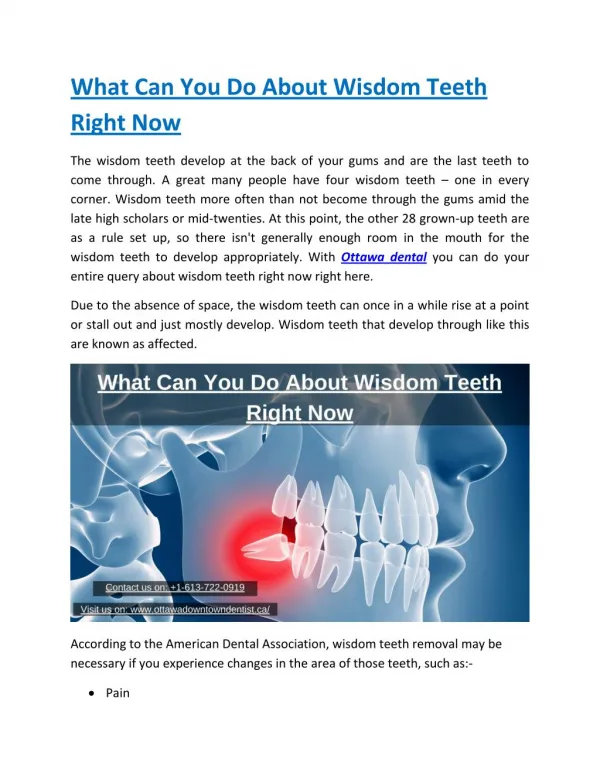
Wisdom teeth, also known as third molars, are the last set of teeth to develop in your mouth. Typically emerging between the ages of 17 and 25, these teeth often cause discomfort or pain. Understanding why wisdom teeth hurt and how to manage the pain can help you take better care of your oral health. Why Do Wisdom Teeth Hurt? Several reasons can cause pain related to wisdom teeth: 1.Impaction: Wisdom teeth often don’t have enough room to emerge properly and become impacted, meaning they are trapped under the gum or bone. This can cause swelling, pain, and infection. 2.Crowding: When wisdom teeth push against adjacent teeth, it can cause discomfort and misalignment of your teeth. 3.Infection: Partially erupted wisdom teeth create an opening where bacteria can enter, leading to gum infection known as pericoronitis. 4.Cavities and Gum Disease: Wisdom teeth are hard to clean due to their position at the back of the mouth, increasing the risk of tooth decay and gum disease.
Symptoms of Wisdom Teeth Problems Persistent pain or tenderness at the back of your mouth Swelling around the jaw or gums Difficulty opening your mouth Bad breath or unpleasant taste Headaches or ear pain What Can You Do About Wisdom Teeth Pain? 1. Maintain Good Oral Hygiene Brush and floss regularly, especially around the wisdom teeth area, to reduce the risk of infection and decay. 2. Use Over-the-Counter Pain Relievers Medications like ibuprofen or acetaminophen can help relieve pain and reduce inflammation.
3. Rinse with Warm Salt Water Gargling with warm salt water several times a day can soothe irritated gums and reduce bacteria. 4. Apply Cold Compress A cold compress on the cheek can reduce swelling and numb the area to ease pain. 5. Visit Your Dentist Regular dental checkups help track wisdom teeth development. Your dentist may use X-rays to decide if removal is needed. For those searching for wisdom teeth removal near me ellenbrook, choose a trusted clinic with oral surgery expertise. When Should You See a Dentist? Seek professional advice if you experience: Severe or persistent pain Swelling that affects your ability to open your mouth or breathe Signs of infection such as fever or pus discharge Difficulty swallowing or swallowing blood
Wisdom Teeth Removal In some cases, extraction of wisdom teeth is necessary to prevent ongoing pain, infection, or damage to other teeth. This is a common procedure, usually performed by a dentist or oral surgeon. Conclusion Wisdom teeth pain is a common issue but manageable with proper care and timely dental intervention. Maintaining good oral hygiene and regular dental visits are essential to prevent complications. If you experience persistent discomfort, don’t hesitate to consult your dentist for a personalized treatment plan.
Aveley Dental Shop c1/311 Millhouse Rd, Aveley WA 6069, Australia +61 86246 0144 https://www.aveleydental.com.au/