
Evidence-Based Amputee Rehabilitation Model: Integrating Science, Experience, and Patient Input
This article presents an evidence-based model for amputee rehabilitation, highlighting the integration of scientific evidence and clinical experience into the decision-making process. By incorporating insights obtained from patients, practitioners can enhance treatment and care strategies for individuals with lower-limb loss. The significance of developing innovative sensing and monitoring tools to support rehabilitation and ensure optimal outcomes is discussed. This comprehensive approach aims to improve patient quality of life and rehabilitation efficacy.

Evidence-Based Amputee Rehabilitation Model: Integrating Science, Experience, and Patient Input
E N D
Presentation Transcript
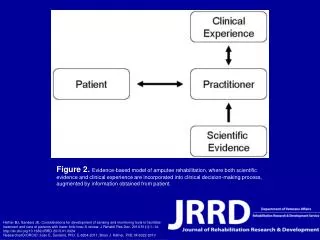
Figure 2. Evidence-based model of amputee rehabilitation, where both scientific evidence and clinical experience are incorporated into clinical decision-making process, augmented by information obtained from patient. Hafner BJ, Sanders JE. Considerations for development of sensing and monitoring tools to facilitate treatment and care of persons with lower-limb loss: A review. J Rehabil Res Dev. 2014:51(1):1–14. http://dx.doi.org/10.1682/JRRD.2013.01.0024 ResearcherID/ORCID: Joan E. Sanders, PhD: E-8204-2011; Brian J. Hafner, PhD: M-6322-2013