Understanding Contract Termination
Learn about contract termination, its types, and legal implications. Discover how Arida Lawyers can assist with expert guidance on ending contracts effectively.


Understanding Contract Termination
E N D
Presentation Transcript
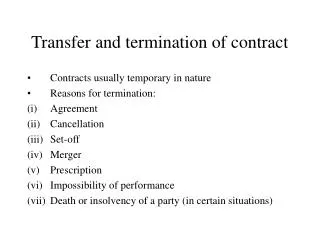
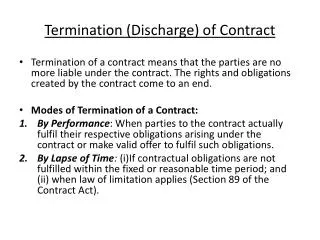
What is Contract Termination? Understanding Contract Termination: A Clear Guide to Ending Agreements Contract termination is the formal process of ending a legally binding agreement between parties. It dissolves obligations and responsibilities, typically occurring due to mutual agreement, breach, or completion of terms. Proper contract termination must comply with the contract's terms and relevant laws. Common Reasons for Contract Termination 1.Breach of Contract: When one party fails to meet obligations. 2.Mutual Agreement: Both parties agree to end the contract. 3.Completion of Obligations: All terms and conditions are fulfilled. 4.Impossibility of Performance: External factors render the contract unachievable. 5.Force Majeure: Unforeseen events like natural disasters or war. 6.Legal Orders: Courts mandate contract termination. Steps to Terminate a Contract Legally 1.Review Contract Terms: Check termination, notice, and force majeure clauses. 2.Identify Legal Grounds: Ensure justification aligns with the law.
3.Provide Written Notice: Inform the other party of reasons and the effective date. 4.Negotiate Terms (if necessary): Resolve disputes or adjust termination terms. 5.Address Compensation: Settle financial obligations arising from the termination. 6.Document the Process: Maintain records for future reference. Types of Contract Termination Voluntary: By mutual agreement. Involuntary: Due to breach or legal grounds. For Convenience: Terminated without cause. For Cause: Resulting from a material breach. Final Note Contract termination is a sensitive process that requires adherence to legal standards and contractual obligations. Before initiating termination, seek legal advice to protect your interests and ensure compliance with relevant laws.