Download
1 / 8
90 likes | 236 Views
This overview discusses Vladimir Propp's narrative theory, focusing on the archetypal roles in storytelling. Key characters include the Hero, who leads the narrative and seeks to resolve a central problem; the Villain, who obstructs the Hero and often embodies the core conflict; the Heroine, often representing reward or support; the Father, an authority figure who initiates the quest; the Donor, who provides crucial assistance; the Mentor, guiding the Hero; and the Helper, who acts as a supportive sidekick. Explore how these roles shape narratives across genres.

E N D
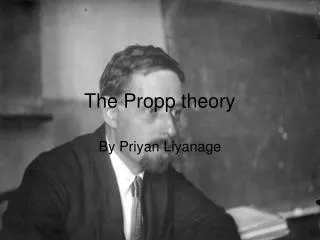
The Propp theory By Priyan Liyanage
The hero • Leads narrative • Can be male or female (heroine) • Searches for the source of a particular problem • Tries to solve the problem
The villain • Obstructs the hero from stopping the problem • Often challenges the hero to some sort of fight • Usually is the source of the problem • Sometimes is someone originally close to him
The heroine • A prize or reward for the hero (if the main character is the heroine then the male hero takes this role) • Often accompanies the hero or gives something to the hero to help them • Usually someone of the hero’s interest
The father • A figure of authority • Offers reward for ‘quest’ (e.g. money, the heroine, etc) • Often the person that sends the hero on the quest in the 1st place
The Donor • Gives the hero something to help with their ‘quest’ • In action films, usually gadgets or weapons, etc
The Mentor • Teaches and guides hero • Teaches the hero the ability to fight or another particular skill • Often is the donor too
The Helper • Helps the hero to complete ‘quest’ • Acts as sidekick