Download
1 / 17
170 likes | 302 Views
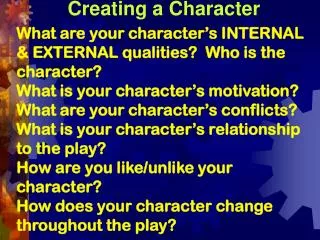
Developing interesting characters is essential for compelling storytelling. Explore Campbell’s Eight Devices for Characterization, which include techniques like showcasing a character's actions, speech, and effects on others. Understand how to illustrate traits and motives, describe sensory details, and analyze psychological processes. By utilizing these methods, you can create multi-dimensional characters that resonate with readers. This guide will help you practice and enhance your character development skills to produce captivating narratives that leave a lasting impression.

E N D
Paint a Character from Eight Perspectives Mr. Seymour October 25, 2007
Here’s a little something that might help you develop characters . . .
By action of the character: • Pete slunk out of the battle.
By speech of the character: • “Hiya, pardner!”
By effect of the character upon other characters: • Her loveliness was breath-taking.
By the character’s own reactions to persons, things, and surrounding circumstances: • John adored her, especially in blue.
By reporting what other characters say about the character: • Said Tom, “Of course Sam is a heel!”
By explaining the traits and motives of the character: • He loved good food.
By describing the character (in terms of the five senses): • He had blue eyes, spoke with a Southern accent, smelled of the smokehouse, and his muscles were hard as nails.
By analyzing the psychological processes of the character: • He was unable to overcome his shyness, which was the result of his being the son of a famous and terribly egotistical father.
Raise your hand if you are confident you can provide me with an example of all of these characterization strategies.
All right, everyone. Time for some practice! Let’s do some writing!
Good job, everyone! Give yourselves an old-fashioned thumbs up!