Advanced Fire Protection Deluge System (AFPDS): Experimental Design and Performance Analysis
This research investigates the Advanced Fire Protection Deluge System (AFPDS) intended for enhancing fire safety in munitions manufacturing and handling. The study includes an experimental design aimed at determining critical performance and installation parameters using high-pressure water and foam mixtures. By employing regression models and response surface methodology, we analyze experimental data and provide actionable recommendations for future designs. Our collaboration with AFRL ensures accurate system characterization, leading to efficient and effective AFPDS deployment in industrial operations.

Advanced Fire Protection Deluge System (AFPDS): Experimental Design and Performance Analysis
E N D
Presentation Transcript
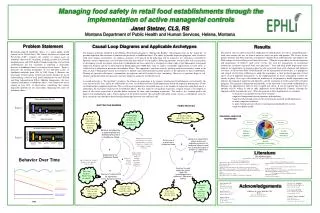
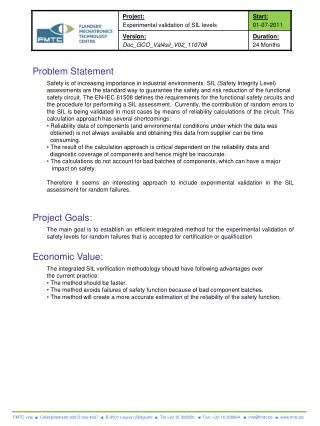
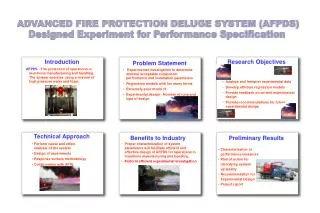
ADVANCED FIRE PROTECTION DELUGE SYSTEM (AFPDS) Designed Experiment for Performance Specification Introduction Research Objectives Problem Statement AFPDS- Fire protection of operations in munitions manufacturing and handling. The system operates using a mixture of high pressure water and foam. • Experimental investigation to determine minimal acceptable component performance and installation parameters • Regression models with too many terms • Extremely poor model fit • Experimental design - Number of runs and type of design • Analyze and interpret experimental data • Develop efficient regression models • Provide feedback on current experimental design • Provide recommendations for future experimental design Technical Approach Benefits to Industry Preliminary Results • Perform cause and effect analysis of the system • Design of experiments • Response surface methodology • Collaboration with AFRL • Proper characterization of system parameters will facilitate efficient and effective design of AFPDS for operations in munitions manufacturing and handling • Perform efficient experimental investigation • Characterization of performance measures • Plan of action for identifying system variability • Recommendation for Experimental Design • Project report