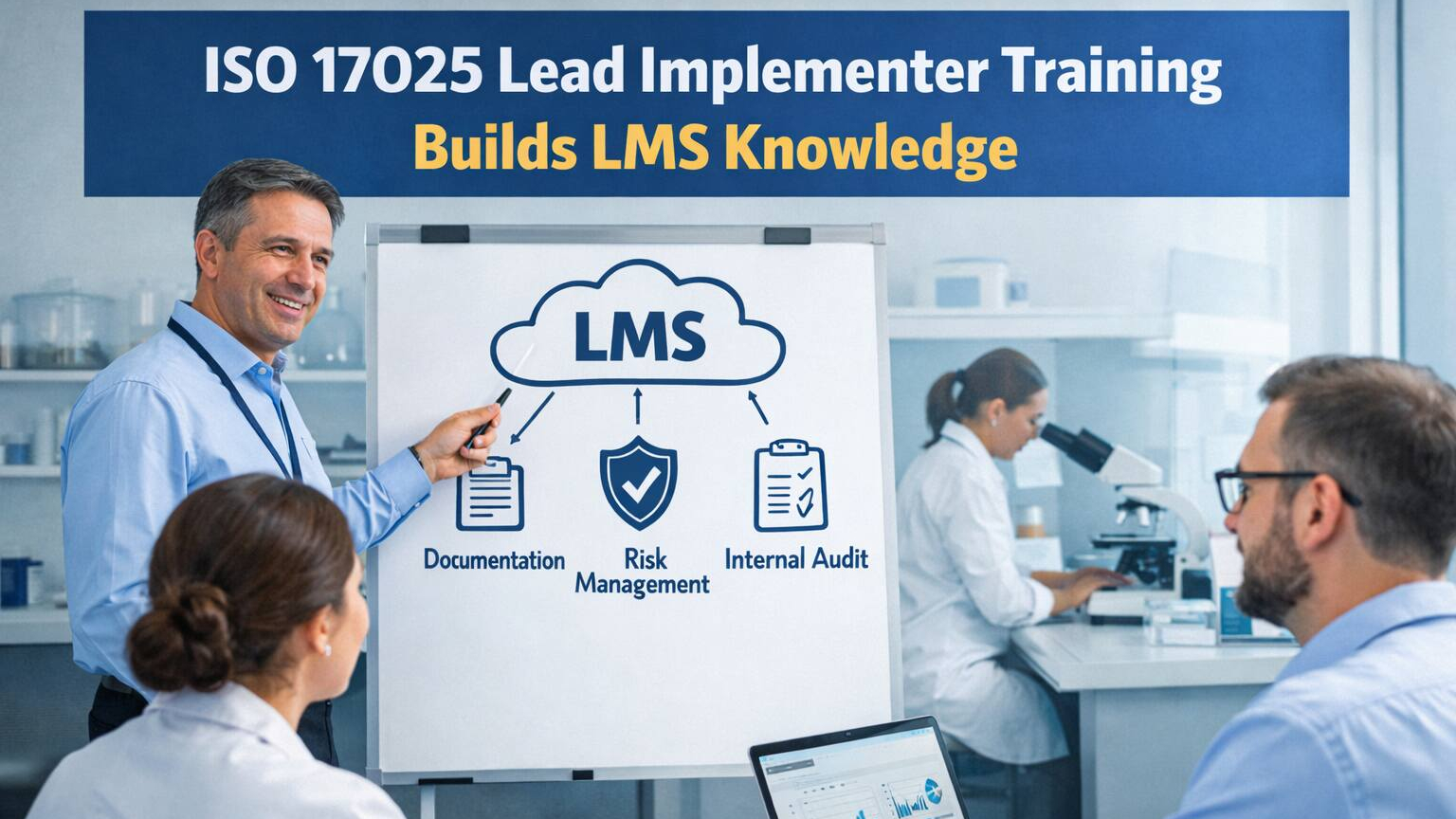
ISO 17025 is a recognised international standard for testing and calibration laboratories. Focusing on technical competence and reliable results. To meet these requirements, laboratories must establish and maintain an effective Laboratory Management System (LMS). Understanding LMS requirements is not always straightforward, especially for professionals new to accreditation. This is where ISO 17025 Lead Implementer Training plays a critical role, as it provides in-depth LMS knowledge and practical implementation skills.
Understanding LMS in the Context of ISO 17025
A Laboratory Management System (LMS) refers to a set of policies, processes, procedures and resources used to ensure laboratory activities comply with ISO 17025 requirements. LMS integrates both management and technical elements, including impartiality, competence, risk management, documentation, and continual improvement. Without a strong LMS, laboratories struggle to demonstrate consistency, accuracy, and compliance during accreditation assessments.
Core LMS Elements Covered in ISO 17025 Lead Implementer Training
One of the main strengths of ISO 17025 Lead Implementer Training is its structured approach to LMS elements. The course explains management system requirements such as leadership responsibilities, quality policies, and objectives. It emphasizes a process-based approach, helping participants understand how laboratory activities interact within the LMS. Risk-based thinking, impartiality, and confidentiality are also addressed, ensuring that LMS design supports both compliance and ethical laboratory operations.
Enhancing LMS Competence Through Risk Management and Audits
An ISO 17025 Lead Implementer Training strengthens LMS knowledge by focusing on risk management and internal audits. Participants learn how to identify risks and opportunities related to laboratory activities and LMS processes. The training also covers internal audit planning, execution, reporting, and follow-up. By understanding nonconformity management and corrective actions, professionals gain the ability to continuously improve LMS performance and reduce recurring issues.
Practical Application of LMS Concepts
A key benefit of Lead Implementer Training is its practical adaptation. The course bridges the gap between theory and practical real-world laboratory operations. Participants learn how to align daily testing and calibration activities with LMS requirements, ensuring consistency and traceability. This practical LMS knowledge helps laboratories prepare effectively for accreditation assessments and surveillance audits.
Conclusion
ISO 17025 Lead Implementer Training is a powerful tool for building comprehensive LMS knowledge. By covering management principles, documented information, risk management, audits, and practical implementation, the training enables professionals to design and manage robust laboratory management systems. Strong LMS understanding not only supports successful accreditation but also enhances laboratory efficiency, reliability, and long-term sustainability.