PLC
Powerline Communication (PLC) is revolutionizing the way data is transmitted over power lines, offering innovative solutions for building automation, remote control, and more. With a massive existing infrastructure of over 250,000 km of medium and low voltage lines, PLC enables low-cost cabling and higher bit rates compared to traditional methods. As the network becomes increasingly interconnected, power suppliers can explore new business opportunities in a liberalized market. This technology, suited for general use at 50/60 Hz, supports various applications, including IP telephony and alarm systems, ensuring reliable communication without additional wiring.

PLC
E N D
Presentation Transcript
PLC Mohamed Mokdad Ecole d’Ingénieurs de Bienne
Why PLC? • The biggest network in the world • The main • E.g. CH 250 000 km (Middle and low voltage) • ONP (Liberalisierung) • Year 90 • Power suppliers have new business opportunities • Everybody is connected!
PLC rationale • Low cost cabling • Higher bit rates (against modem) • Buildings automation • Alarms • Detection • Remote controls • IP Telephony
Le support PLC • Cabling • Adapted for 50/60 Hz but not higher • A[dB] (PVC) = 8 x A[dB] (PE) • Chlorure de polyvinyle & Polyéthylène • E.g. 26 MHz results in 5 dB (PVC) & 40 (PE) • Perturbations • bruit blanc, bande étroite, pics • Capacity: 2 to 4 bits per Hz • A[dB] = f(distance, frequency) • Network = Low pass filter
Filtering R Pout Pin C Z = R - j/2пfC
The main • High Voltage • More than 110 kV • Middle Voltage • From 10 to 30 kV • Low Voltage • Less than 400 V • 1 Transformer for 100-200 users & 300 m • Data information cannot go through voltage transformer
The main HV=110-380kV MV=10-30kV LV<400V
3-phase system 220V 120° 120° 120° 380V
Les 3 phases • Biphase user between 2 phases • Coupling via capacitance effects R S T N
The main HV=110-380kV Data MV=10-30kV LV<400V Data Data
Transmission bus • Bus Access • CSMA/CD • Modulation • TDMA, FDMA, CDMA • Coding: OFDM • Orthogonal Frequency Division Multiplexing • Self adapting system • Use non disturbed spectrum zones
Bandwidth vs. distance (Indors) MHz 10.8 8.4 4.8 2.4 max.4.50 Mbit/s (3 x 1.5) min. 2.25 Mbit/s max.4.50 Mbit/s (3 x 1.5) min. 2.25 Mbit/s max.3.00 Mbit/s (2 x 1.5) min. 1.50 Mbit/s max.1.50 Mbit/s min. 0.75 Mbit/s m 100 180 250
Erstes Beispiel: Nutzungsbestimmung "NB 30": Antrag an das Reg-TP NB 30, die am 30.3.01 vom deutschen Bundesrat abgesegnet wurde US EU ~13 MHz
Self adapting system Spectral density Frequency
Exemples d'architecture Network B Network C NetworkA
PLC needs • 1 ISP via Powerline • EWB? Autre? • 1 "Modem" per access • Main Plug with ethernet interface • Layer 1: e.g. Ethernet or WLAN • Import products • Standards are not the same worlwide • US products could not run in EU
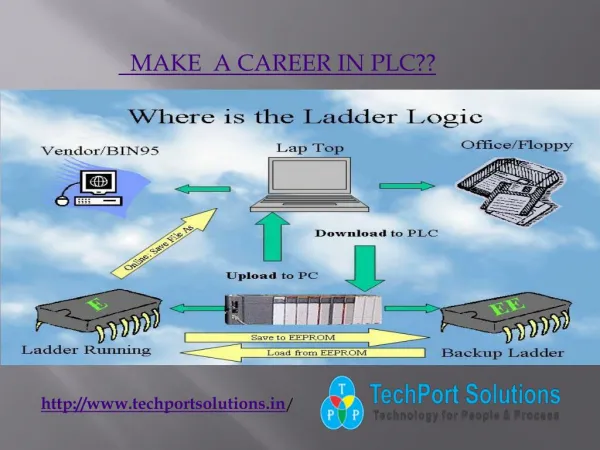
Adapter Separates the current and data signals at each mains supply socket, various interface variants and combinations e.g. USB, RS232, Ethernet, analog a/b
Equipment • Outdoor master • Controls data and services up to 250 housholds • Outdoor Access Point • Receives/transmits signals from/to the Outdoor Master, also available in combination with an Indoor Controller • Indoor Controller • Interfaces Outdoor AP to In House premises
Channels? • No specific protocole, just not infringe the EMC Rules. • Provider has to stay within frequency range. • Standards • X-10, CEBus (EIA IS-60), LONWorks • ETSI Standards and ASCOM • ETSI and CENELEC
Präsentation 2001Ascom PowerlineCommunications Marcel Graber 13.4.01
S S S • Einleitung: • Was versteht man unter Powerline Communications? • Wie funktioniert Powerline? S OA OA OA M => Master S => Slave S S S mid voltage grid S S S S S M S S S S
Verschiedene Adaptermodelle: Sicherheit- und Alarmsysteme - Internet -> USB oder Ethernet - analog Telefone & Fax - "Smart house" -> RS 232 Internet Anschluss "Smart House" Applikationen Telefonie: - Vermittelt "a/b" - IP-Telefonie Indoor Controller Letzte Meile Access Ein mit Ascom Powerline vernetztes Haus
Erstes Beispiel: Nutzungsbestimmung "NB 30": Antrag an das Reg-TP NB 30, die am 30.3.01 vom deutschen Bundesrat abgesegnet wurde US EU ~13 MHz
Technische Daten: • Es musste eine Technologie gefunden/angewendet werden, die sich für die breitbandige Datenübertragung über das Niederspannungsnetz ausserhaus und inhaus eignet • Produktekonzept:u.a - Master Slave • - Infrastruktur-Geräte einfache Installation • - Geräte Adapter "plug and play" • Übertragungsfrequenzen: - Access ("last Mile") 1.6 bis 10.0/13.0 MHz • - Inhaus ("last Inch") 15.0 bis 30.0 MHz • Modulation: - GMSK • Übertragungsart: - Paketorientiert • Bandbreiten: - 1. Produktegeneration > 2 Mbit/s • - 2. Produkte Generation > 10 Mbit/s
Die maximale Bandbreite für "jeden" Benützer: • sofern der Kunde im Bereich von 100 m liegt, unter Einhaltung der Nutzungs- bestimmung "NB 30" und ohne Repeater • möglicher Lösungsansatz: über "Friendly Customer" (siehe folgende Folie) • Netzplaner muss die grösst mögliche Flexibilität für den Design eines Anschluss- konzeptes angeboten werden, um die max. Kundenerwartung erfüllen zu können. MHz 10.8 8.4 4.8 2.4 max.4.50 Mbit/s (3 x 1.5) min. 2.25 Mbit/s max.4.50 Mbit/s (3 x 1.5) min. 2.25 Mbit/s Maximal 3 Träger à 2.25 Mbit/s Bruttorate max.3.00 Mbit/s (2 x 1.5) min. 1.50 Mbit/s max.1.50 Mbit/s min. 0.75 Mbit/s m 100 180 250
"Friendly Customer" Installation: IA IA PLC PLC Mit einem Hausbesitzer (Friendly Customer) wird ein Nutzungsvertrag für den Access abgeschlossen outdoor indoor Slave Controller PLC outdoor Telco Master NT Access , e.g. xDSL , CATV ( last mile )