Guidelines for Writing Effective Generalizations in Education
This guide outlines key principles for crafting generalizations that enhance student understanding of critical concepts in lessons. It emphasizes the use of full-sentence statements without proper nouns or personal pronouns, focusing on relationships between concepts using present tense verbs. The content encourages the incorporation of qualifiers such as "often" or "may" to reflect the nature of educational concepts accurately. By promoting connections among various strands, this guideline aims to foster deeper learning and comprehension in students.

Guidelines for Writing Effective Generalizations in Education
E N D
Presentation Transcript
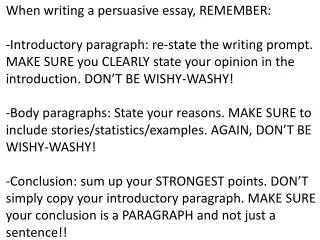
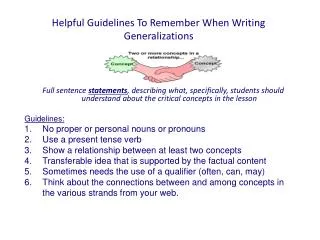
Helpful Guidelines To Remember When Writing Generalizations Full sentence statements, describing what, specifically, students should understand about the critical concepts in the lesson Guidelines: No proper or personal nouns or pronouns Use a present tense verb Show a relationship between at least two concepts Transferable idea that is supported by the factual content Sometimes needs the use of a qualifier (often, can, may) Think about the connections between and among concepts in the various strands from your web.