Download
1 / 2
20 likes | 134 Views
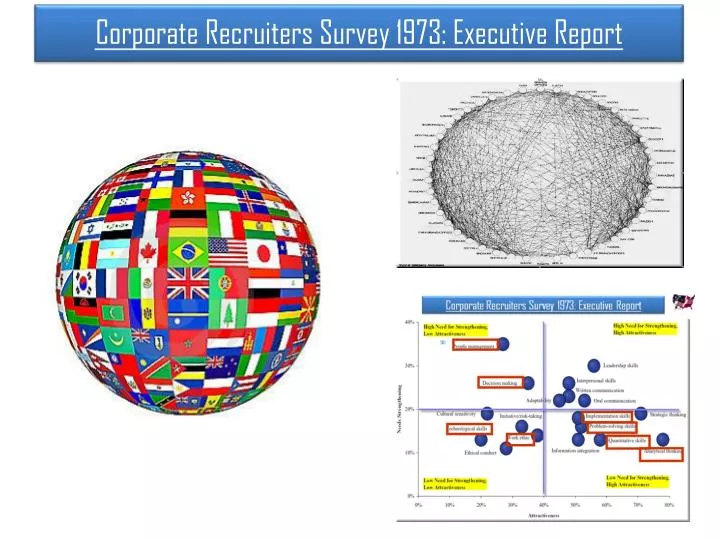
Corporate Recruiters Survey 1973: Executive Report. The U.S. Paradigm: Leadership Standards. Global Market Context. Executive Consequence. Asymmetric; Lone Ranger yet Social Conformity of Organization Man. Theory X Sets Standards MBA Curriculum, circa 1973 *

E N D
The U.S. Paradigm: Leadership Standards Global Market Context Executive Consequence Asymmetric; Lone Ranger yet Social Conformity of Organization Man. Theory X Sets Standards MBA Curriculum, circa 1973 * Scientific Models supersede Managers Control based on esoteric but objective, quantitative management tools. * Good at Math is basis for Good at Leadership Ethnocentric operating standards, ethnocentric vision. The US was the Center of the Market Language skills purely optional and generally regarded as unnecessary • Era of Main Expansion: 1947- I973/1989 – 1999 • State of Travel & Communications • Rapidly improving; wartime infrastructure created logistics matrix of increasing scale and scope • Scope of Trade and Investment Barriers • Progressive elimination via government and institutional fiat; Cold War and Detente promotes trade. • Transnational Institutional Context • Emergent Code of Conduct Exchange, Expansion, Enforcement, and Endurance of Capitalism • Nature of Innovation • Standardization; Integrated Value Chain; Emergent science of planning and control facilitates global expansion of massification in design, production, media, and distribution • Nature of Organization: • Centralized Control and Coordination of dispersed strategic business units. • Logic of Capitalism: • Managerial Capitalism • Meritocracy • Theory X