Download
1 / 4
0 likes | 16 Views
Allergies can be a recurring and frustrating problem for millions of people, especially during certain seasons. With symptoms ranging from itchy eyes and sneezing to more severe reactions, finding relief is a priority for many. For those seeking solutions, the choice often comes down to allergy prescription medications or natural remedies. Each approach has its pros and cons, so understanding what works best for your needs is essential. Here, weu2019ll explore the effectiveness of both natural remedies and pills for allergies to help you make an informed choic

E N D
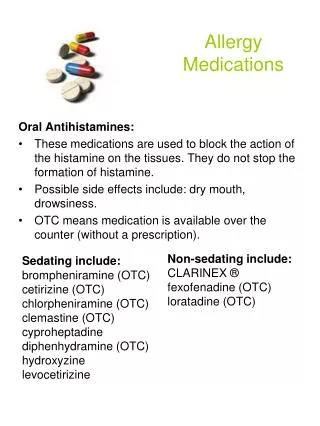
Natural Remedies vs. Medications for Allergy Relief: What Works? Allergies can be a recurring and frustrating problem for millions of people, especially during certain seasons. With symptoms ranging from itchy eyes and sneezing to more severe reactions, finding relief is a priority for many. For those seeking solutions, the choice often comes down to allergy prescription medications or natural remedies. Each approach has its pros and cons, so understanding what works best for your needs is essential. Here, we’ll explore the effectiveness of both natural remedies and pills for allergies to help you make an informed choice. Medications for Allergy Relief Prescription and over-the-counter (OTC) allergy prescription medications are commonly used for managing symptoms. These medications work in different ways to block or reduce the body’s reaction to allergens, providing fast and reliable relief. 1. Antihistamines: Blocking Histamine Responses Antihistamines are one of the most commonly prescribed allergy prescription medications. They work by blocking histamines, which are chemicals released by the body in response to allergens. When histamines bind to receptors in the body, they trigger allergic reactions like itching, swelling, and mucus production. By blocking this process, antihistamines can significantly reduce allergy symptoms. Pills for allergies such as loratadine, cetirizine, and fexofenadine are popular antihistamines, and they come in various forms suitable for adults and children. These allergy medicine for adults options are often the first line of defense for seasonal and year- round allergies, with most offering relief within 30 minutes to an hour of ingestion. 2. Decongestants: Reducing Nasal Congestion For those suffering from stuffy noses or sinus pressure, decongestants can be highly effective. Decongestants like pseudoephedrine reduce swelling in the nasal passages, helping you breathe more comfortably. These allergy prescription medications are often available both on their own and combined with antihistamines for comprehensive relief.
However, decongestants can have side effects such as increased heart rate and jitteriness, making them less suitable for individuals with certain health conditions. 3. Corticosteroids: Reducing Inflammation Corticosteroids, such as nasal sprays and eye drops, are commonly prescribed as seasonal allergy medications for people with severe allergic reactions. These medications reduce inflammation and help control symptoms for longer periods, making them ideal for individuals with chronic allergy problems. Unlike antihistamines, which work on histamine responses, corticosteroids address the body’s overall inflammatory response to allergens. Corticosteroid allergy medicine for adults is effective but may take a few days to start working. They are particularly beneficial for managing ongoing symptoms and are often recommended for those with persistent seasonal allergies. Natural Remedies for Allergy Relief For individuals seeking a holistic approach to allergy relief, natural remedies offer alternative methods to manage symptoms. Although they may not always be as potent as allergic reaction pills, natural remedies are popular due to their minimal side effects and support for overall wellness. 1. Quercetin: A Natural Antihistamine Quercetin is a flavonoid found in fruits and vegetables, known for its anti-inflammatory and antihistamine properties. It works by stabilizing mast cells, which release histamines in response to allergens. Studies suggest that quercetin may help reduce allergy symptoms when taken consistently, especially for seasonal allergies. Though quercetin is not as fast-acting as traditional allergy prescription medications, it’s a popular choice among those seeking natural options for managing mild symptoms. It is available in supplement form, making it easy to add to a daily wellness routine. 2. Stinging Nettle: An Herbal Option Stinging nettle has long been used as a natural remedy for allergies. Known for its anti- inflammatory properties, stinging nettle can help reduce nasal congestion and itchy eyes, making it a natural alternative to pills for allergies. Some studies have shown that stinging
nettle may have mild antihistamine effects, providing relief for mild symptoms without the side effects associated with some medications. Stinging nettle can be taken as a tea or in capsule form. While it may not be as potent as certain allergy medicine for adults, it offers an accessible option for those with mild symptoms. 3. Saline Nasal Rinse: Clearing Nasal Passages Using a saline nasal rinse, such as a neti pot, can help flush out allergens from the nasal passages, reducing nasal congestion and irritation. This method is particularly helpful for those experiencing symptoms triggered by airborne allergens like pollen. While a saline rinse won’t eliminate histamine reactions, it can provide immediate relief from sinus discomfort and reduce exposure to allergens. Saline rinses are considered safe for regular use and can be an effective addition to a natural remedy regimen. They are also compatible with seasonal allergy medications for those who prefer a combination approach. 4. Local Honey: Building Resistance Although scientific evidence is limited, local honey is often suggested as a natural remedy for seasonal allergies. The theory behind this is that local honey contains small amounts of pollen from the area, which could help the body gradually build immunity to local allergens. While honey is unlikely to replace allergic reaction pills, it is a safe and pleasant addition to a holistic approach to allergy management. Comparing Effectiveness: Natural Remedies vs. Medications When it comes to immediate and reliable symptom relief, allergy prescription medications are generally more effective than natural remedies. Medications like antihistamines and corticosteroids have been clinically tested and proven to alleviate symptoms quickly, making them ideal for people with moderate to severe allergies. For example, pills for allergies can relieve symptoms within minutes, while natural remedies often require consistent use over time. Natural remedies, on the other hand, are popular among individuals with mild allergies or those looking for long-term wellness support. They tend to work more gradually and may offer additional health benefits, such as anti-inflammatory effects and immune support.
Additionally, natural remedies can often be safely combined with seasonal allergy medications, offering a complementary approach to managing allergies. Combining Approaches for Optimal Relief For those with persistent symptoms, a combined approach can offer the best of both worlds. Using allergy prescription medications alongside natural remedies can provide both immediate and lasting relief. For example, taking an antihistamine for quick relief while incorporating quercetin or stinging nettle into a daily regimen may help maintain long-term symptom management. It’s important to consult with a healthcare provider before starting any new allergy treatment plan, particularly when combining allergic reaction pills with supplements. They can advise on safe dosages, potential interactions, and help determine the best strategy based on individual needs. When it comes to allergy relief, both natural remedies and allergy prescription medications have their place. Medications like pills for allergies provide fast and reliable symptom control, making them ideal for those with moderate to severe allergies. Meanwhile, natural remedies offer a gentle, holistic approach that can support the body’s immune system over time, especially for those with mild symptoms. For a balanced approach, consider combining effective seasonal allergy medications with natural options, allowing you to manage symptoms efficiently and enhance your overall well-being. To explore allergy relief options and find the right balance for your needs, visit eDrugstore for trusted allergy solutions.