Download
1 / 28
0 likes | 4 Views
Innovation Meets Strategy! The information technology sector redefineshow businesses operate by integrating advanced tools and systems to enhance efficiency, scalability, and innovation. The industry continuously grows from artificial intelligence to cloud computing, introducing solutions that streamline processes and transform customer experiences.

E N D
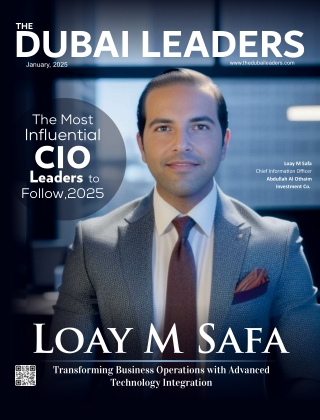
www.thedubaileaders.com January, 2025 The Most Influential CIO Leaders to Follow,2025 Loay M Safa Chief Informa?on Officer Abdullah Al Othaim Investment Co. Loay M Safa Transforming Business Operations with Advanced Technology Integration
"A good CIO is not just a technologist but a strategist who sees technology as a means to achieve business objectives."
"A good CIO is not just a technologist but a strategist who sees technology as a means to achieve business objectives."
Catalysts for Change Technology is best when it brings people together. A technology but also strategists, innovators, and enablers of collaboration. s the digital landscape evolves at an unprecedented pace, the role of the Chief Information Officer has transcended traditional boundaries, positioning these leaders as catalysts for change within their organizations. Effective CIOs in today's world are not only stewards of information TheDubaiLeaders in this edition has curated a list of The Most Influential CIO Leaders to Follow, 2025 where we celebrate the visionary leaders who are redefining the intersection of technology and business. These CIOs leverage emerging technologies, embrace data-driven decision-making, and cultivate environments that encourage agility and resilience in the face of uncertainty. Our featured CIOs hails from diverse industries, each one contributing unique insight into effective leadership and transformative practices. Their stories inspire not just their teams but also the broader business community, illustrating how technology can forge connections and drive sustainable growth. As you immerse yourself in this edition, we invite you to learn from their experiences and perspectives. Whether you are a seasoned CIO, an aspiring leader, or someone passionate about the future of technology, you will find valuable lessons in the journeys of these extraordinary individuals. Thank you for joining us in honoring the visionaries who are not only leading their organizations but also inspiring the next generation of technology leaders. Preston B. Editor’s Editor’s Note Note
Catalysts for Change Technology is best when it brings people together. A technology but also strategists, innovators, and enablers of collaboration. s the digital landscape evolves at an unprecedented pace, the role of the Chief Information Officer has transcended traditional boundaries, positioning these leaders as catalysts for change within their organizations. Effective CIOs in today's world are not only stewards of information TheDubaiLeaders in this edition has curated a list of The Most Influential CIO Leaders to Follow, 2025 where we celebrate the visionary leaders who are redefining the intersection of technology and business. These CIOs leverage emerging technologies, embrace data-driven decision-making, and cultivate environments that encourage agility and resilience in the face of uncertainty. Our featured CIOs hails from diverse industries, each one contributing unique insight into effective leadership and transformative practices. Their stories inspire not just their teams but also the broader business community, illustrating how technology can forge connections and drive sustainable growth. As you immerse yourself in this edition, we invite you to learn from their experiences and perspectives. Whether you are a seasoned CIO, an aspiring leader, or someone passionate about the future of technology, you will find valuable lessons in the journeys of these extraordinary individuals. Thank you for joining us in honoring the visionaries who are not only leading their organizations but also inspiring the next generation of technology leaders. Preston B. Editor’s Editor’s Note Note
08C O V E R S T O R Y Loay M Safa Transforming Business Operations with Advanced Technology Integration A r t i c l e s Digital Leadership Maintaining Human Connec?on in a Virtual World 16 22 Reverse Mentoring How Junior Staff Are Shaping Tomorrow's Leaders?
08C O V E R S T O R Y Loay M Safa Transforming Business Operations with Advanced Technology Integration A r t i c l e s Digital Leadership Maintaining Human Connec?on in a Virtual World 16 22 Reverse Mentoring How Junior Staff Are Shaping Tomorrow's Leaders?
Featured Person Company Name Brief www.thedubaileaders.com Murphy is recognized for his leadership in project management, driving successful outcomes across various industries. Andrew Murphy Chief Information Officer Abu Dhabi Airports adairports.ae Editor-in-Chief Merry D'Souza Dr.Joseph George Group Chief Digital and Information Officer (CDIO) Dr. George is celebrated for his work in healthcare, particularly in enhancing patient care through research and education. Managing Editor Executive Editor Assistant Editors Doha Bank qa.dohabank.com Preston B. Jenny F. Michael W. Art & Design Director Associate Designer Visualizer Hendus Venter Group Chief Information Officer Jubaili Bros jubailibros.com Venter specializes in environmental sustainability, advocating for eco-friendly practices and policies. David King Rosy Scott Angela Ruskin Senior Sales Managers Business Development Manager Kamran Abbasi Chief Technology & Data officer Brain Moody, Jack McDowell Mark Hassan Gartner gtnr.it Kamran Abbasi is known for his contributions to medical research and his role in promoting scientific discourse. Marketing Manager Sales Executives James M. Max Floyd Loay M Safa Chief Information Officer Abdullah Al Othaim Investment Co alothaiminvestment.com Loay M Safa is recognized for his expertise in information architecture and leadership within technology teams. Technical Head Business Development Executives Jacob Smile Simon, Tom ADIB - Abu Dhabi Islamic Bank adib.ae Manoj Bhojwani Group Chief Information Officer Bhojwani is an expert in supply chain management, known for optimizing logistics and operational efficiency. Technical Specialist Digital Marketing Manager Dominique T. Irvin Wilson Taha Tkito Chief Information Officer Research Analyst SME-SMO Executive Tamer Group tamergroup.com Tkito has a background in financial analysis, focusing on investment strategies and economic forecasting. Frank Adams Steve Rodrigues Database Management Technology Consultant Circulation Manager Tamer Hamed Chief Information Officer Dubai Cable Company - Ducab ducab.com Hamed is known for his expertise in cybersecurity, helping organizations safeguard their digital assets. Stella Andrew David Stokes Robert Brown sales@thedubaileaders.com January, 2025 Vishal Kapil Group Chief Information Officer Vishal has a strong background in software development, focusing on innovative solutions and technology integration. MAIR Group mairgroup.com www.linkedin.com/company/the-dubai-leaders/ Follow us on : www.facebook.com/thedubaileaders/ Wael Alfattani Director of Information Technology (CIO) General Authority for Competition gac.gov.sa Alfattani specializes in business development, emphasizing strategic growth and market expansion initiatives. We are also available on : Copyright © 2025 The Dubai Leaders, All rights reserved. The content and images used in this magazine should not be reproduced or transmitted in any form or by any means, electronic, mechanical, photocopying, recording or otherwise, without prior permission from The Dubai Leaders. Reprint rights remain solely with The Dubai Leaders.
Featured Person Company Name Brief www.thedubaileaders.com Murphy is recognized for his leadership in project management, driving successful outcomes across various industries. Andrew Murphy Chief Information Officer Abu Dhabi Airports adairports.ae Editor-in-Chief Merry D'Souza Dr.Joseph George Group Chief Digital and Information Officer (CDIO) Dr. George is celebrated for his work in healthcare, particularly in enhancing patient care through research and education. Managing Editor Executive Editor Assistant Editors Doha Bank qa.dohabank.com Preston B. Jenny F. Michael W. Art & Design Director Associate Designer Visualizer Hendus Venter Group Chief Information Officer Jubaili Bros jubailibros.com Venter specializes in environmental sustainability, advocating for eco-friendly practices and policies. David King Rosy Scott Angela Ruskin Senior Sales Managers Business Development Manager Kamran Abbasi Chief Technology & Data officer Brain Moody, Jack McDowell Mark Hassan Gartner gtnr.it Kamran Abbasi is known for his contributions to medical research and his role in promoting scientific discourse. Marketing Manager Sales Executives James M. Max Floyd Loay M Safa Chief Information Officer Abdullah Al Othaim Investment Co alothaiminvestment.com Loay M Safa is recognized for his expertise in information architecture and leadership within technology teams. Technical Head Business Development Executives Jacob Smile Simon, Tom ADIB - Abu Dhabi Islamic Bank adib.ae Manoj Bhojwani Group Chief Information Officer Bhojwani is an expert in supply chain management, known for optimizing logistics and operational efficiency. Technical Specialist Digital Marketing Manager Dominique T. Irvin Wilson Taha Tkito Chief Information Officer Research Analyst SME-SMO Executive Tamer Group tamergroup.com Tkito has a background in financial analysis, focusing on investment strategies and economic forecasting. Frank Adams Steve Rodrigues Database Management Technology Consultant Circulation Manager Tamer Hamed Chief Information Officer Dubai Cable Company - Ducab ducab.com Hamed is known for his expertise in cybersecurity, helping organizations safeguard their digital assets. Stella Andrew David Stokes Robert Brown sales@thedubaileaders.com January, 2025 Vishal Kapil Group Chief Information Officer Vishal has a strong background in software development, focusing on innovative solutions and technology integration. MAIR Group mairgroup.com www.linkedin.com/company/the-dubai-leaders/ Follow us on : www.facebook.com/thedubaileaders/ Wael Alfattani Director of Information Technology (CIO) General Authority for Competition gac.gov.sa Alfattani specializes in business development, emphasizing strategic growth and market expansion initiatives. We are also available on : Copyright © 2025 The Dubai Leaders, All rights reserved. The content and images used in this magazine should not be reproduced or transmitted in any form or by any means, electronic, mechanical, photocopying, recording or otherwise, without prior permission from The Dubai Leaders. Reprint rights remain solely with The Dubai Leaders.
Loay M Safa Transforming Business Operations with Advanced Technology Integration Loay M Safa Chief Informa?on Officer Abdullah Al Othaim Investment Co. Loay’s leadership ethos focuses on collaboration, empowerment, and relentlessly aligning technological advancements with long-term objectives, ensuring measurable outcomes and sustainable growth.
Loay M Safa Transforming Business Operations with Advanced Technology Integration Loay M Safa Chief Informa?on Officer Abdullah Al Othaim Investment Co. Loay’s leadership ethos focuses on collaboration, empowerment, and relentlessly aligning technological advancements with long-term objectives, ensuring measurable outcomes and sustainable growth.
Innovation Meets Strategy! T innovation. The industry continuously grows from artificial intelligence to cloud computing, introducing solutions that streamline processes and transform customer experiences. Its impact spans diverse industries, creating interconnected ecosystems where data drives decision-making and automation improves productivity. Integrating advanced technologies into everyday business functions underscores the importance of IT as a catalyst for economic growth and operational excellence. As these advancements unfold, IT professionals are tasked with aligning technology seamlessly with organizational goals, pushing boundaries, and setting new benchmarks for success. he information technology sector redefines how businesses operate by integrating advanced tools and systems to enhance efficiency, scalability, and Loay’s ability to steer intricate environments and a vision of integrating technology with business strategy positions him as a transformative force in the eld. Loay M Safa, as Chief Information Officer, characterizes innovative and strategic leadership. His ability to steer intricate environments and a vision of integrating technology with business strategy position him as a transformative force in the field. His structured yet adaptable approach allows him to balance operational priorities with forward-looking initiatives. His leadership ethos focuses on collaboration, empowerment, and relentlessly aligning technological advancements with long- term objectives, ensuring measurable outcomes and sustainable growth. technology to revolutionize industries, solve intricate problems, and improve lives. This fascination led him to pursue a degree in Computer Graphics, which served as a foundation for his career in information technology. Early in his professional journey, he gained hands-on experience as a web developer, strengthening his technical expertise and honing his problem-solving and analytical skills. Over the years, he has worked with prominent organizations across various sectors, including oil and gas, telecommunications, and large-scale sporting events. His role in the Supreme Committee for Delivery & Legacy during the FIFA World Cup Qatar 2022 was particularly formative. It involved delivering cutting-edge technology solutions globally, under tight deadlines, and in a highly collaborative environment. Each role he undertook contributed to his leadership, strategic thinking, and ability to adapt to fast-paced environments. Abdullah Al Othaim Investment Co., a prominent player in the retail, hospitality, and entertainment sectors, is the head of digital transformation. The company is committed to using advanced technologies to enhance operational efficiency and deliver exceptional customer experiences. By integrating robust IT infrastructure, implementing innovative solutions, and embracing sustainable practices, the organization has positioned itself as a leader in technological innovation. Its focus on aligning technology with its ambitious growth objectives underscores its dedication to setting industry benchmarks and driving excellence in every aspect of its operations. Joining Abdullah Al Othaim Investment Co. as CIO culminated this diverse experience. With its ambitious growth goals and business model spanning retail, hospitality, and entertainment, the organization offered an unparalleled opportunity to apply its expertise. It has been deeply rewarding for him to lead digital transformation initiatives that align technology with business objectives, ensuring sustainable growth and innovation. Let’s explore Loay’s adaptive leadership in information technology: Diverse Experience Across Multiple Sectors From an early age, Loay was captivated by the transformative power of technology. Growing up during advancements, he was inspired by the potential of
Innovation Meets Strategy! T innovation. The industry continuously grows from artificial intelligence to cloud computing, introducing solutions that streamline processes and transform customer experiences. Its impact spans diverse industries, creating interconnected ecosystems where data drives decision-making and automation improves productivity. Integrating advanced technologies into everyday business functions underscores the importance of IT as a catalyst for economic growth and operational excellence. As these advancements unfold, IT professionals are tasked with aligning technology seamlessly with organizational goals, pushing boundaries, and setting new benchmarks for success. he information technology sector redefines how businesses operate by integrating advanced tools and systems to enhance efficiency, scalability, and Loay’s ability to steer intricate environments and a vision of integrating technology with business strategy positions him as a transformative force in the eld. Loay M Safa, as Chief Information Officer, characterizes innovative and strategic leadership. His ability to steer intricate environments and a vision of integrating technology with business strategy position him as a transformative force in the field. His structured yet adaptable approach allows him to balance operational priorities with forward-looking initiatives. His leadership ethos focuses on collaboration, empowerment, and relentlessly aligning technological advancements with long- term objectives, ensuring measurable outcomes and sustainable growth. technology to revolutionize industries, solve intricate problems, and improve lives. This fascination led him to pursue a degree in Computer Graphics, which served as a foundation for his career in information technology. Early in his professional journey, he gained hands-on experience as a web developer, strengthening his technical expertise and honing his problem-solving and analytical skills. Over the years, he has worked with prominent organizations across various sectors, including oil and gas, telecommunications, and large-scale sporting events. His role in the Supreme Committee for Delivery & Legacy during the FIFA World Cup Qatar 2022 was particularly formative. It involved delivering cutting-edge technology solutions globally, under tight deadlines, and in a highly collaborative environment. Each role he undertook contributed to his leadership, strategic thinking, and ability to adapt to fast-paced environments. Abdullah Al Othaim Investment Co., a prominent player in the retail, hospitality, and entertainment sectors, is the head of digital transformation. The company is committed to using advanced technologies to enhance operational efficiency and deliver exceptional customer experiences. By integrating robust IT infrastructure, implementing innovative solutions, and embracing sustainable practices, the organization has positioned itself as a leader in technological innovation. Its focus on aligning technology with its ambitious growth objectives underscores its dedication to setting industry benchmarks and driving excellence in every aspect of its operations. Joining Abdullah Al Othaim Investment Co. as CIO culminated this diverse experience. With its ambitious growth goals and business model spanning retail, hospitality, and entertainment, the organization offered an unparalleled opportunity to apply its expertise. It has been deeply rewarding for him to lead digital transformation initiatives that align technology with business objectives, ensuring sustainable growth and innovation. Let’s explore Loay’s adaptive leadership in information technology: Diverse Experience Across Multiple Sectors From an early age, Loay was captivated by the transformative power of technology. Growing up during advancements, he was inspired by the potential of
Structured Approach to IT Infrastructure Technology Enablement: Collaborative tools like Microsoft Teams, SharePoint, and Dynamics 365 ensure seamless team communication and data sharing. • Loay believes balancing multifaceted responsibilities, including IT infrastructure, leading digital transformation, and driving AI innovation, requires a structured approach, strategic delegation, and a clear vision. He prioritizes establishing a robust IT infrastructure as the backbone of all operations. By ensuring high reliability, security, and scalability, a solid foundation is created for other strategic initiatives. Ultimately, the heart of success is creating an environment where people feel valued, supported, and inspired to think creatively. Streamlining Operations with ERP Systems Some of the notable milestones in Abdullah Al Othaim Investment Co.'s digital transformation journey include: Digital transformation demands aligning technology with business objectives. He works closely with all stakeholders to identify pain points, opportunities, and areas for automation. Whether streamlining operations using ERP systems like Dynamics 365 or enhancing employee experience with platforms like SAP SuccessFactors, every project is carefully aligned with organizational goals. ERP Implementation: Successfully rolling out Microsoft Dynamics 365 for engineering projects with centralized procurement and operations, streamlining processes, and improving data visibility. LS Retail was launched for food and beverage operations, and Yardi was introduced for property management and operations. Unified Digital Experience: Launching a phased rollout of all business websites and apps, including the Rewards app, which integrates multiple business lines and enhances customer engagement. Cybersecurity Enhancements: Implementing advanced cybersecurity measures with solutions like Darktrace, ensuring robust network protection. SSO and Cloud Migration: Seamlessly integrating SAP SuccessFactors with Azure AD for improved user authentication and adopting cloud-first strategies for scalability and resilience. Policies and Procedures: Introducing several new policies and procedures enabled the business to run more efficiently and maintain a reliable and secure environment. • AI innovation is another strategy pillar, where machine learning and predictive analytics are used to gain insights and optimize processes. A dedicated AI division within IT allows the exploration of transformative projects, such as personalized customer experiences in retail and predictive maintenance in real estate. • • Maintaining open communication, team collaboration, and empowering organizational leaders ensures that these diverse priorities are addressed effectively without compromising quality or timelines. • Strategies for Effective Team Collaboration • The success of cross-functional teams lies in shared vision, trust, and effective communication. Loay focuses on creating a culture where collaboration and innovation are integral to daily operations. Key strategies include: These initiatives have optimized operations and positioned the company as a leader in technological innovation. Clear Objectives: Defining shared goals and aligning them with broader organizational objectives ensures all team members work toward a common purpose. Empowering Leadership: Encouraging team leads to take ownership of their domains promotes accountability and innovation. Open Communication: Regular meetings and feedback sessions provide a platform for exchanging ideas, resolving conflicts, and celebrating achievements. Diverse Skill Sets: Emphasizing the inclusion of diverse talents, perspectives, and expertise within teams to cultivate creativity and innovation. • Importance of Setting Boundaries • Achieving work-life balance is essential to sustaining productivity and maintaining mental well-being. Loay prioritizes setting boundaries between work and personal life, ensuring time is allocated for family, health, and self- reflection. Walking 10,000 steps daily is a non-negotiable routine that keeps him physically active and mentally refreshed. • • Delegation is another essential tool. By trusting his team and empowering them to make decisions, he can focus on
Structured Approach to IT Infrastructure Technology Enablement: Collaborative tools like Microsoft Teams, SharePoint, and Dynamics 365 ensure seamless team communication and data sharing. • Loay believes balancing multifaceted responsibilities, including IT infrastructure, leading digital transformation, and driving AI innovation, requires a structured approach, strategic delegation, and a clear vision. He prioritizes establishing a robust IT infrastructure as the backbone of all operations. By ensuring high reliability, security, and scalability, a solid foundation is created for other strategic initiatives. Ultimately, the heart of success is creating an environment where people feel valued, supported, and inspired to think creatively. Streamlining Operations with ERP Systems Some of the notable milestones in Abdullah Al Othaim Investment Co.'s digital transformation journey include: Digital transformation demands aligning technology with business objectives. He works closely with all stakeholders to identify pain points, opportunities, and areas for automation. Whether streamlining operations using ERP systems like Dynamics 365 or enhancing employee experience with platforms like SAP SuccessFactors, every project is carefully aligned with organizational goals. ERP Implementation: Successfully rolling out Microsoft Dynamics 365 for engineering projects with centralized procurement and operations, streamlining processes, and improving data visibility. LS Retail was launched for food and beverage operations, and Yardi was introduced for property management and operations. Unified Digital Experience: Launching a phased rollout of all business websites and apps, including the Rewards app, which integrates multiple business lines and enhances customer engagement. Cybersecurity Enhancements: Implementing advanced cybersecurity measures with solutions like Darktrace, ensuring robust network protection. SSO and Cloud Migration: Seamlessly integrating SAP SuccessFactors with Azure AD for improved user authentication and adopting cloud-first strategies for scalability and resilience. Policies and Procedures: Introducing several new policies and procedures enabled the business to run more efficiently and maintain a reliable and secure environment. • AI innovation is another strategy pillar, where machine learning and predictive analytics are used to gain insights and optimize processes. A dedicated AI division within IT allows the exploration of transformative projects, such as personalized customer experiences in retail and predictive maintenance in real estate. • • Maintaining open communication, team collaboration, and empowering organizational leaders ensures that these diverse priorities are addressed effectively without compromising quality or timelines. • Strategies for Effective Team Collaboration • The success of cross-functional teams lies in shared vision, trust, and effective communication. Loay focuses on creating a culture where collaboration and innovation are integral to daily operations. Key strategies include: These initiatives have optimized operations and positioned the company as a leader in technological innovation. Clear Objectives: Defining shared goals and aligning them with broader organizational objectives ensures all team members work toward a common purpose. Empowering Leadership: Encouraging team leads to take ownership of their domains promotes accountability and innovation. Open Communication: Regular meetings and feedback sessions provide a platform for exchanging ideas, resolving conflicts, and celebrating achievements. Diverse Skill Sets: Emphasizing the inclusion of diverse talents, perspectives, and expertise within teams to cultivate creativity and innovation. • Importance of Setting Boundaries • Achieving work-life balance is essential to sustaining productivity and maintaining mental well-being. Loay prioritizes setting boundaries between work and personal life, ensuring time is allocated for family, health, and self- reflection. Walking 10,000 steps daily is a non-negotiable routine that keeps him physically active and mentally refreshed. • • Delegation is another essential tool. By trusting his team and empowering them to make decisions, he can focus on
Embracing Continuous Learning: Stay updated with emerging technologies and industry trends. Cultivating Leadership Skills: Effective communication, empathy, and decision-making are critical for inspiring and managing teams. Aligning Technology with Business Goals: Always approach technology as a business enabler, not an end. Networking: Build relationships with peers, vendors, and industry leaders to exchange knowledge and ideas. strategic priorities while reducing stress. Additionally, his faith plays a central role in maintaining balance, offering him a source of grounding and perspective. • • Collaborating with Academic Institutions • According to Loay, staying abreast of the latest developments requires continuous learning and engagement. He regularly participates in industry conferences, webinars, and workshops to gain insights into emerging technologies. He also subscribes to leading technology journals and collaborates with academic institutions and AI think tanks. • Vision for Innovation and Excellence Abdullah Al Othaim Investment Co.'s long-term vision focuses on driving innovation, operational excellence, and customer satisfaction. Goals include: A culture of experimentation and innovation is promoted to ensure Abdullah Al Othaim Investment Co. remains at the cutting edge. Pilot projects allow the exploration of new technologies before scaling them across the organization. Building strong partnerships with technology providers further ensures staying ahead of the curve. Scalability: Expanding IT infrastructure to support the company’s growing portfolio. Customer-centric solutions: Enhancing customer experiences through advanced analytics and AI. Sustainability: Using technology to optimize resource utilization and reduce environmental impact. Global Standards: Establishing the organization as a benchmark for technological excellence. • • • Defining Clear KPIs and ROI Metrics • He highlights that understanding the organization's strategic goals is key to aligning technology with business value. Before any project, Loay works with stakeholders to define clear KPIs and ROI metrics. Continuous monitoring and feedback ensure that initiatives remain on track and deliver measurable outcomes. Achieving these goals involves strategic planning, consistent investment in technology, and promoting a culture of continuous improvement. Setting New Benchmarks in Innovation AI is poised to revolutionize business by enhancing decision-making, automating routine tasks, and delivering personalized experiences. In retail, it is transforming inventory management and customer engagement. In real estate, predictive analytics optimize asset utilization and maintenance. Abdullah Al Othaim Investment Co.'s vision is to lead this transformation. By using AI to enhance customer experience, streamline operations, and gain actionable insights, the aim is to set new benchmarks for innovation and operational excellence in the industry. Embracing Continuous Learning To succeed as a CIO, aspiring leaders should focus on: Building a Strong Foundation: Deep technical knowledge and strategic thinking are essential. •
Embracing Continuous Learning: Stay updated with emerging technologies and industry trends. Cultivating Leadership Skills: Effective communication, empathy, and decision-making are critical for inspiring and managing teams. Aligning Technology with Business Goals: Always approach technology as a business enabler, not an end. Networking: Build relationships with peers, vendors, and industry leaders to exchange knowledge and ideas. strategic priorities while reducing stress. Additionally, his faith plays a central role in maintaining balance, offering him a source of grounding and perspective. • • Collaborating with Academic Institutions • According to Loay, staying abreast of the latest developments requires continuous learning and engagement. He regularly participates in industry conferences, webinars, and workshops to gain insights into emerging technologies. He also subscribes to leading technology journals and collaborates with academic institutions and AI think tanks. • Vision for Innovation and Excellence Abdullah Al Othaim Investment Co.'s long-term vision focuses on driving innovation, operational excellence, and customer satisfaction. Goals include: A culture of experimentation and innovation is promoted to ensure Abdullah Al Othaim Investment Co. remains at the cutting edge. Pilot projects allow the exploration of new technologies before scaling them across the organization. Building strong partnerships with technology providers further ensures staying ahead of the curve. Scalability: Expanding IT infrastructure to support the company’s growing portfolio. Customer-centric solutions: Enhancing customer experiences through advanced analytics and AI. Sustainability: Using technology to optimize resource utilization and reduce environmental impact. Global Standards: Establishing the organization as a benchmark for technological excellence. • • • Defining Clear KPIs and ROI Metrics • He highlights that understanding the organization's strategic goals is key to aligning technology with business value. Before any project, Loay works with stakeholders to define clear KPIs and ROI metrics. Continuous monitoring and feedback ensure that initiatives remain on track and deliver measurable outcomes. Achieving these goals involves strategic planning, consistent investment in technology, and promoting a culture of continuous improvement. Setting New Benchmarks in Innovation AI is poised to revolutionize business by enhancing decision-making, automating routine tasks, and delivering personalized experiences. In retail, it is transforming inventory management and customer engagement. In real estate, predictive analytics optimize asset utilization and maintenance. Abdullah Al Othaim Investment Co.'s vision is to lead this transformation. By using AI to enhance customer experience, streamline operations, and gain actionable insights, the aim is to set new benchmarks for innovation and operational excellence in the industry. Embracing Continuous Learning To succeed as a CIO, aspiring leaders should focus on: Building a Strong Foundation: Deep technical knowledge and strategic thinking are essential. •
Digital Leadership MaintainingHuman Connectionin a Virtual World Understanding Human Connection in a Virtual World I have significantly changed people’s communication behavior, and interactions have become more digital. Technology offers ways to touch base with others but it also delivers walls that make people feeling disconnected and disinterested. The article under consideration examines the ways of developing relationships in the online context; the primary focus is made on the role of affective communication and purposeful relationships. f we look at the contemporary world and the further it goes toward the digital world, the problem of people’s interactions becomes more acute. Global lockdowns due to COVID-19 The Impact of Virtual Communication Virtual communication often lacks many non-verbal cues that would be present if the parties were to meet face to face. Their absence can bring about misunderstandings and a low sense of being connected. Lack of emotional expressions in emails and texts has resulted in loneliness and disengagement, as per research3. In workplaces, where casual meetings have been substituted by virtual ones, employees report feeling less valued and connected with others. The problem then is how one can overcome the barriers by creating an effort towards emotional engagement. 16 17 www.thedubaileaders.com | January 2025 | www.thedubaileaders.com | January 2025 |
Digital Leadership MaintainingHuman Connectionin a Virtual World Understanding Human Connection in a Virtual World I have significantly changed people’s communication behavior, and interactions have become more digital. Technology offers ways to touch base with others but it also delivers walls that make people feeling disconnected and disinterested. The article under consideration examines the ways of developing relationships in the online context; the primary focus is made on the role of affective communication and purposeful relationships. f we look at the contemporary world and the further it goes toward the digital world, the problem of people’s interactions becomes more acute. Global lockdowns due to COVID-19 The Impact of Virtual Communication Virtual communication often lacks many non-verbal cues that would be present if the parties were to meet face to face. Their absence can bring about misunderstandings and a low sense of being connected. Lack of emotional expressions in emails and texts has resulted in loneliness and disengagement, as per research3. In workplaces, where casual meetings have been substituted by virtual ones, employees report feeling less valued and connected with others. The problem then is how one can overcome the barriers by creating an effort towards emotional engagement. 16 17 www.thedubaileaders.com | January 2025 | www.thedubaileaders.com | January 2025 |
Strategies for Maintaining Connections 6. Timing and Context: Understanding when and how to communicate is important in a virtual world. Sending messages at inappropriate times can disrupt personal boundaries and lead to frustration. Being considerate about others' schedules and workloads helps create an environment where people feel respected and valued. 1. Prioritize Emotional Engagement: To counteract the emotional detachment often experienced in virtual settings, individuals should strive to express their feelings openly. Beginning meetings with personal check-ins allows participants to share their current emotional states, fostering a sense of community and understanding. Additionally, incorporating emotional tags into communications can help clarify intentions and feelings, making interactions more relatable. The Role of AI in Human Connection As AI is woven more into the fabric of our lives, it offers both good and bad regarding human interface. On one hand, AI-driven chatbots and avatars can indeed hold conversations, but on the other, such intensive use diminishes the effectiveness of authentic interaction7. Thus, while we continue to harness AI-driven capabilities to make things more efficient, in this digital age, preserving genuine human interactions will prove important. 2. Leverage Technology Wisely: Although technology sometimes disconnects, it can also provide novel ways to build empathy. Virtual Reality (VR) experiences, for instance, have been known to enhance emotional empathy by exposing the user to different perspectives2. Such experiences may help a person understand and connect with others on a deeper level, thereby deepening the connection. Conclusion 3. Provide Casual Interaction Opportunities: The workplace often is the major source of socialization outside of the family. In order to create virtual informal chats similar to the ones that naturally occur in a physical space, the organizations should allow for casual virtual get- togethers. These can include coffee breaks or team-building exercises that allow people to interact in a relaxed environment without the tension of formal agendas. This will help employees rebuild camaraderie with colleagues. Staying connected in a virtual environment is possible if only the individual and the organization consciously endeavor. The fact that the working process is based on the priorities of the emotional approach, reasonable use of technologies, informal communication, feedback, active involvement, and the timeliness of the messages will let us build meaningful relationships even when we are far from each other. Making progress through this constantly evolving world we must remember that no matter how technical the world becomes, there is always a need for social interaction—a need which technology was intended to enhance, not replace. 4. Culture of Recognition: In a remote work environment, it is essential to identify individual contributions to maintain morale and connection. Leaders should be active in acknowledging the efforts of team members through shout-outs during meetings or personalized messages. This not only boosts individual confidence but also reinforces team cohesion. 5. Encourage Active Participation: Virtual meetings often have people disengaged because they're multitasking or zoning out. To prevent this, facilitators should ensure that participants are active by asking open-ended questions and inviting all the participants to contribute their thoughts. This does not only make the attendees more engaged but also makes them feel part of the group and connected to a cause. 18 www.thedubaileaders.com | January 2025 |
Strategies for Maintaining Connections 6. Timing and Context: Understanding when and how to communicate is important in a virtual world. Sending messages at inappropriate times can disrupt personal boundaries and lead to frustration. Being considerate about others' schedules and workloads helps create an environment where people feel respected and valued. 1. Prioritize Emotional Engagement: To counteract the emotional detachment often experienced in virtual settings, individuals should strive to express their feelings openly. Beginning meetings with personal check-ins allows participants to share their current emotional states, fostering a sense of community and understanding. Additionally, incorporating emotional tags into communications can help clarify intentions and feelings, making interactions more relatable. The Role of AI in Human Connection As AI is woven more into the fabric of our lives, it offers both good and bad regarding human interface. On one hand, AI-driven chatbots and avatars can indeed hold conversations, but on the other, such intensive use diminishes the effectiveness of authentic interaction7. Thus, while we continue to harness AI-driven capabilities to make things more efficient, in this digital age, preserving genuine human interactions will prove important. 2. Leverage Technology Wisely: Although technology sometimes disconnects, it can also provide novel ways to build empathy. Virtual Reality (VR) experiences, for instance, have been known to enhance emotional empathy by exposing the user to different perspectives2. Such experiences may help a person understand and connect with others on a deeper level, thereby deepening the connection. Conclusion 3. Provide Casual Interaction Opportunities: The workplace often is the major source of socialization outside of the family. In order to create virtual informal chats similar to the ones that naturally occur in a physical space, the organizations should allow for casual virtual get- togethers. These can include coffee breaks or team-building exercises that allow people to interact in a relaxed environment without the tension of formal agendas. This will help employees rebuild camaraderie with colleagues. Staying connected in a virtual environment is possible if only the individual and the organization consciously endeavor. The fact that the working process is based on the priorities of the emotional approach, reasonable use of technologies, informal communication, feedback, active involvement, and the timeliness of the messages will let us build meaningful relationships even when we are far from each other. Making progress through this constantly evolving world we must remember that no matter how technical the world becomes, there is always a need for social interaction—a need which technology was intended to enhance, not replace. 4. Culture of Recognition: In a remote work environment, it is essential to identify individual contributions to maintain morale and connection. Leaders should be active in acknowledging the efforts of team members through shout-outs during meetings or personalized messages. This not only boosts individual confidence but also reinforces team cohesion. 5. Encourage Active Participation: Virtual meetings often have people disengaged because they're multitasking or zoning out. To prevent this, facilitators should ensure that participants are active by asking open-ended questions and inviting all the participants to contribute their thoughts. This does not only make the attendees more engaged but also makes them feel part of the group and connected to a cause. 18 www.thedubaileaders.com | January 2025 |
"True leadership in the digital age means not just embracing change, but driving it with purpose and passion."
"True leadership in the digital age means not just embracing change, but driving it with purpose and passion."
Reverse Mentoring How Junior Staff Are Shaping Tomorrow's Leaders? T he role that junior staff has in the changing workplace is getting more and more important. There is recognition at the organizational level that enabling these younger employees boosts their skills and facilitates a new era of leaders for the complexities within modern business. This article identifies how junior staff contribute to developing leadership and what kind of strategies would be implemented on the organizational levels to harness them. The Importance of Junior Staff in Leadership Development Junior employees are also creative thinkers since they apply their recent school experience and update colleagues with modern tools and technologies. It is effective leadership because it encourages their participation in decision making and is a culture of team work. Leadership scholars have suggested that it is possible to involve junior staff in key meetings so that they can learn how top managers make decisions, in order to equip them for future leadership. Also, the young employees tend to be armed with greater information about the trends currently obtaining in the market as well as the behavior of the consumers which could be very vital in strategy formulation. This could help organizations to be in a position to meet changing market needs while at the same time making sound decisions. 22 23 www.thedubaileaders.com | January 2025 | www.thedubaileaders.com | January 2025 |
Reverse Mentoring How Junior Staff Are Shaping Tomorrow's Leaders? T he role that junior staff has in the changing workplace is getting more and more important. There is recognition at the organizational level that enabling these younger employees boosts their skills and facilitates a new era of leaders for the complexities within modern business. This article identifies how junior staff contribute to developing leadership and what kind of strategies would be implemented on the organizational levels to harness them. The Importance of Junior Staff in Leadership Development Junior employees are also creative thinkers since they apply their recent school experience and update colleagues with modern tools and technologies. It is effective leadership because it encourages their participation in decision making and is a culture of team work. Leadership scholars have suggested that it is possible to involve junior staff in key meetings so that they can learn how top managers make decisions, in order to equip them for future leadership. Also, the young employees tend to be armed with greater information about the trends currently obtaining in the market as well as the behavior of the consumers which could be very vital in strategy formulation. This could help organizations to be in a position to meet changing market needs while at the same time making sound decisions. 22 23 www.thedubaileaders.com | January 2025 | www.thedubaileaders.com | January 2025 |
Approaches to Developing Leaders for Tomorrow Secondly, there is a need to promote organizational learning culture. Promoting the ideas of getting education or training for junior employees enhance their experience but it also indicates the company cares about the development of the employee. To effectively cultivate leadership skills among junior staff, organizations can implement several key strategies: Individual Development Plans (IDPs): It is recommended that organization engage junior staff and help them in writing their Individual Development Plans containing their abilities, areas of, development and their career goals. These should be precise to state the part that the employee has to play or what the employee can do to respond to the goal, for instance training, responsibilities that match the interest of the employee. Mentorship Programs: It aligns junior staff with veteran mentors, who help transfer knowledge and develop the necessary skill level. Mentors can advise on experience, guide junior employees in navigating their career paths, and understand the organization. Promote Involvement in Meetings: Engage junior staff in top-level meetings. This way, they will be exposed to strategic discussions and decision-making processes. As an added effect, it will improve their understanding of the dynamics of an organization and increase their self- confidence in arriving at meaningful contributions. Challenging Assignments: Giving assignments to junior employees will assist them prove that they are able to solve problems and are flexible. Such experiences are important for building up of resilience and ability to think critically – important qualities of leadership. Regular Feedback and Recognition: This way junior staff get to know their performance and what needs to be improved through constructive criticism. When employees’ efforts are acknowledged they get a feeling of achievement as well as are encouraged to work hard. Ÿ Learning from Junior Staff Ironically, senior leaders may also learn from their juniors. Interaction with the younger group gives insights on new methodologies and technologies that would help improve efficiency in operations. In this two-way learning, organizations can better bridge the gaps between generations while improving team dynamics. Ÿ Conclusion Involving the junior staff for leadership development would be essential for building a strong workforce that is capable of managing future challenges. Companies can support younger employees by developing them to become effective leaders through individualized development plans, mentorship programs, and an organizational culture that allows inclusiveness. Ÿ Ÿ As we go forward in a business landscape that is becoming increasingly complex, organizations must realize the potential of their junior staff not only as future leaders but also as contributors to current operations. Companies will then be investing in growth today to create a more innovative and adaptive leadership pipeline tomorrow. Ÿ The Role of Organizational Culture It is therefore important for an organization to have an outstanding culture to nurture talent for the future leadership roles. Employers should encourage junior employees to express themselves freely, fully knowing that their ideas are worth considering. This can be done through practice and policies that promote free flow of information, cross- functional integration and diversity. 24 www.thedubaileaders.com | January 2025 |
Approaches to Developing Leaders for Tomorrow Secondly, there is a need to promote organizational learning culture. Promoting the ideas of getting education or training for junior employees enhance their experience but it also indicates the company cares about the development of the employee. To effectively cultivate leadership skills among junior staff, organizations can implement several key strategies: Individual Development Plans (IDPs): It is recommended that organization engage junior staff and help them in writing their Individual Development Plans containing their abilities, areas of, development and their career goals. These should be precise to state the part that the employee has to play or what the employee can do to respond to the goal, for instance training, responsibilities that match the interest of the employee. Mentorship Programs: It aligns junior staff with veteran mentors, who help transfer knowledge and develop the necessary skill level. Mentors can advise on experience, guide junior employees in navigating their career paths, and understand the organization. Promote Involvement in Meetings: Engage junior staff in top-level meetings. This way, they will be exposed to strategic discussions and decision-making processes. As an added effect, it will improve their understanding of the dynamics of an organization and increase their self- confidence in arriving at meaningful contributions. Challenging Assignments: Giving assignments to junior employees will assist them prove that they are able to solve problems and are flexible. Such experiences are important for building up of resilience and ability to think critically – important qualities of leadership. Regular Feedback and Recognition: This way junior staff get to know their performance and what needs to be improved through constructive criticism. When employees’ efforts are acknowledged they get a feeling of achievement as well as are encouraged to work hard. Ÿ Learning from Junior Staff Ironically, senior leaders may also learn from their juniors. Interaction with the younger group gives insights on new methodologies and technologies that would help improve efficiency in operations. In this two-way learning, organizations can better bridge the gaps between generations while improving team dynamics. Ÿ Conclusion Involving the junior staff for leadership development would be essential for building a strong workforce that is capable of managing future challenges. Companies can support younger employees by developing them to become effective leaders through individualized development plans, mentorship programs, and an organizational culture that allows inclusiveness. Ÿ Ÿ As we go forward in a business landscape that is becoming increasingly complex, organizations must realize the potential of their junior staff not only as future leaders but also as contributors to current operations. Companies will then be investing in growth today to create a more innovative and adaptive leadership pipeline tomorrow. Ÿ The Role of Organizational Culture It is therefore important for an organization to have an outstanding culture to nurture talent for the future leadership roles. Employers should encourage junior employees to express themselves freely, fully knowing that their ideas are worth considering. This can be done through practice and policies that promote free flow of information, cross- functional integration and diversity. 24 www.thedubaileaders.com | January 2025 |