DevOps Components
DevOps revolutionizes the traditional approach by promoting collaboration, automation, and continuous<br>Improvement, ultimately enhancing software delivery and reliability. StudySection offers certification exams in AWS DevOps, empowering professionals to validate their skills and expertise in leveraging AWS cloud services for streamlined software development, deployment, and operations

DevOps Components
E N D
Presentation Transcript
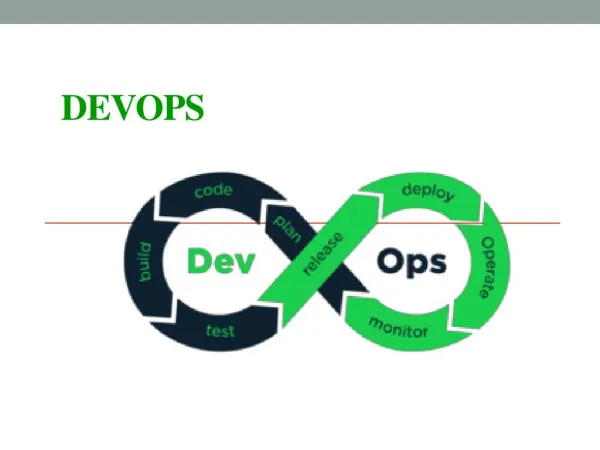
DevOps Components In Software Engineering, both Development and Operations play pivotal roles in delivering effective application outcomes. Development involves analyzing requirements, designing, coding, and testing software components, while Operations encompasses administrative processes and support services for the software's functioning. Integrating Development and Operations into a collaborative framework gives rise to the DevOps architecture. This approach aims to bridge the gap between these two teams, facilitating faster and smoother project execution and delivery. Let's delve into the various components of DevOps: Build: Traditionally, resource consumption was based on fixed allocations. However, with DevOps, resources are shared, and cloud utilization becomes prominent, allowing for more flexible resource management based on user needs. Code: Practices like version control with tools like Git enable efficient code management. Developers can track changes, understand the reasons behind modifications, and easily revert to previous versions when necessary. Test: Manual testing can be time-consuming. Implementing automation testing reduces testing time, thereby expediting the deployment process. Plan: DevOps often adopts agile methodologies for development planning. Organized planning enhances productivity by ensuring work is structured and aligned with team goals. Monitor: Continuous monitoring is crucial for identifying and mitigating risks promptly. Third-party tools aid in monitoring system health and performance effectively. Deploy: Automated deployment mechanisms streamline the production process. Cloud management platforms provide insights and analytics to optimize deployment processes. Operate: DevOps fosters collaboration between the development and operations teams throughout the service lifecycle. This collaborative approach ensures smooth workflow maintenance and alignment with business requirements. Release: While deployment to non-production environments can be automated, manual intervention is often preferred for production deployments to minimize customer impact and ensure smoother transitions. DevOps revolutionizes the traditional approach by promoting collaboration, automation, and continuous improvement, ultimately enhancing software delivery and reliability.
StudySection offers certification exams in AWS DevOps, empowering professionals to validate their skills and expertise in leveraging AWS cloud services for streamlined software development, deployment, and operations.