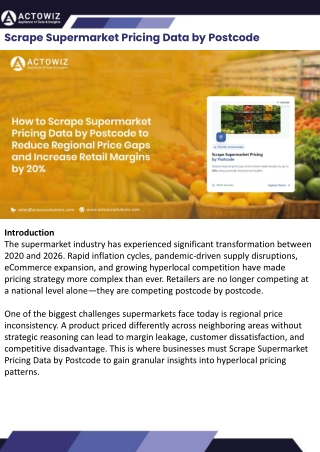
Scrape Supermarket Pricing Data by Postcode
Scrape supermarket pricing data by postcode to uncover regional price trends, track competitor price changes, and identify local demand patterns. Gain hyperlocal insights to compare store-level pricing, monitor promotions, and adjust strategies in real time. Optimize inventory, improve margins, and implement smarter, data-driven pricing decisions across targeted geographic areas.<br>

Scrape Supermarket Pricing Data by Postcode
E N D
Presentation Transcript
Scrape Supermarket Pricing Data by Postcode Extracting Information from TripAdvisor: A Guide to Scraping Data from Hotels and Restaurants How to Effectively Use Competitor Price Trackers: Operational Guidance and Benefits How to Use Zomato API to Scrape Restaurant Data – A Detailed Guide What are Datasets? - A Comprehensive Guide Introduction The supermarket industry has experienced significant transformation between 2020 and 2026. Rapid inflation cycles, pandemic-driven supply disruptions, eCommerce expansion, and growing hyperlocal competition have made pricing strategy more complex than ever. Retailers are no longer competing at a national level alone—they are competing postcode by postcode. One of the biggest challenges supermarkets face today is regional price inconsistency. A product priced differently across neighboring areas without strategic reasoning can lead to margin leakage, customer dissatisfaction, and competitive disadvantage. This is where businesses must Scrape Supermarket Pricing Data by Postcode to gain granular insights into hyperlocal pricing patterns. Introduction Introduction This blog will provide a comprehensive overview of datasets, including their definition, different types of datasets, and strategies for maximizing the value of data. Leveraging the appropriate API makes scraping TripAdvisor on a large scale a straightforward task. You don't need to possess advanced computer skills to achieve this. Our comprehensive, step-by-step guide is designed to walk you through extracting data from TripAdvisor using a user-friendly web scraping tool. In the dynamic landscape of eCommerce, pricing strategy stands paramount, especially for digital storefronts. Modern consumers are discerning, often prioritizing price comparison as a pivotal step before purchasing. The allure of securing the best deals and most competitive prices drives this behavior. Consequently, a significant portion of online shoppers actively engage in price monitoring across various platforms. Recognizing this trend, online retailers must adeptly employ competitor price trackers to stay ahead. What is a Dataset? Introduction In the dynamic world of digital gastronomy, where culinary delights and dining experiences are increasingly explored and celebrated online, the demand for up-to-date restaurant data is insatiable. As food enthusiasts and businesses seek the latest insights into menus, reviews, and more, the Zomato API emerges as a powerful tool for scraping this invaluable information. TripAdvisor stands out as a powerhouse with an extensive database comprising over 8 million locations, 1 billion reviews, and support for 29 languages. As of 2022, when the cumulative reviews surpassed the one billion mark, it became evident that TripAdvisor's meticulous gaze would soon cover every restaurant, hotel, vacation rental, or attraction listing. By leveraging retail data scraping techniques, businesses can collect comprehensive retail data, offering insights into the broader market's pricing landscape. Such price intelligence empowers retailers to craft a robust pricing strategy, bolstering sales, enhancing profit margins, and fostering customer loyalty. Moreover, a data-driven eCommerce pricing approach ensures competitiveness, with dynamic pricing becoming increasingly prevalent. Unlocking the Potential: The Advantages of Scraping TripAdvisor Data Our comprehensive guide delves into the intricate art of utilizing the Zomato API to scrape restaurant data. Whether you're a restaurateur striving to understand your competitors, a food blogger searching for fresh content, or a data enthusiast eager to explore culinary trends, this guide will serve as your compass in the world of data extraction. In essence, utilizing a competent competitor price tracker facilitates effective pricing optimization and solidifies a retailer's position in the fiercely competitive eCommerce arena. Amidst TripAdvisor's vast sea of information lies a treasure trove awaiting extraction, analysis, and innovative presentation. For those in the tourism, hospitality, or travel sectors, harnessing TripAdvisor data proves invaluable for monitoring competitors and supporting strategic business decisions. The TripAdvisor Scraper facilitates seamless and rapid web scraping, offering the most straightforward route to consistently obtaining data at scale. This article delves into the myriad benefits of scraping TripAdvisor, shedding light on how this process can be initiated, including exploring the initial steps involving API utilization. Dive into the realm of data-driven insights with TripAdvisor scraping. We will navigate through the intricacies of Zomato Scraper, uncovering its capabilities to provide you with rich, real-time restaurant data. From scraping restaurant details to accessing customer reviews, our detailed guide ensures that you harness the full potential of this resource.
When combined with Real-Time Price Monitoring, retailers can track competitor price movements, demand fluctuations, and promotional strategies instantly. Between 2020 and 2026, supermarkets adopting postcode-level pricing intelligence reported up to 20% improvement in retail margins and a 28% reduction in price discrepancies across regions. Hyperlocal data is no longer optional—it is the foundation of modern retail profitability. In the following sections, we explore six powerful strategies supermarkets can use to eliminate regional price gaps and boost margins. Strengthening Regional Pricing Consistency Maintaining consistent pricing across locations while accounting for regional cost variations is a delicate balance. Through Supermarket Price Monitoring by Location, retailers can evaluate pricing disparities and ensure strategic alignment across multiple stores. From 2020 to 2026, logistics costs increased unevenly across regions, contributing to widening price gaps. Extracting Information from TripAdvisor: A Guide to Scraping Data from Hotels and Restaurants How to Effectively Use Competitor Price Trackers: Operational Guidance and Benefits How to Use Zomato API to Scrape Restaurant Data – A Detailed Guide What are Datasets? - A Comprehensive Guide Introduction Introduction This blog will provide a comprehensive overview of datasets, including their definition, different types of datasets, and strategies for maximizing the value of data. Leveraging the appropriate API makes scraping TripAdvisor on a large scale a straightforward task. You don't need to possess advanced computer skills to achieve this. Our comprehensive, step-by-step guide is designed to walk you through extracting data from TripAdvisor using a user-friendly web scraping tool. In the dynamic landscape of eCommerce, pricing strategy stands paramount, especially for digital storefronts. Modern consumers are discerning, often prioritizing price comparison as a pivotal step before purchasing. The allure of securing the best deals and most competitive prices drives this behavior. Consequently, a significant portion of online shoppers actively engage in price monitoring across various platforms. Recognizing this trend, online retailers must adeptly employ competitor price trackers to stay ahead. What is a Dataset? Introduction In the dynamic world of digital gastronomy, where culinary delights and dining experiences are increasingly explored and celebrated online, the demand for up-to-date restaurant data is insatiable. As food enthusiasts and businesses seek the latest insights into menus, reviews, and more, the Zomato API emerges as a powerful tool for scraping this invaluable information. TripAdvisor stands out as a powerhouse with an extensive database comprising over 8 million locations, 1 billion reviews, and support for 29 languages. As of 2022, when the cumulative reviews surpassed the one billion mark, it became evident that TripAdvisor's meticulous gaze would soon cover every restaurant, hotel, vacation rental, or attraction listing. By leveraging retail data scraping techniques, businesses can collect comprehensive retail data, offering insights into the broader market's pricing landscape. Such price intelligence empowers retailers to craft a robust pricing strategy, bolstering sales, enhancing profit margins, and fostering customer loyalty. Moreover, a data-driven eCommerce pricing approach ensures competitiveness, with dynamic pricing becoming increasingly prevalent. Unlocking the Potential: The Advantages of Scraping TripAdvisor Data Our comprehensive guide delves into the intricate art of utilizing the Zomato API to scrape restaurant data. Whether you're a restaurateur striving to understand your competitors, a food blogger searching for fresh content, or a data enthusiast eager to explore culinary trends, this guide will serve as your compass in the world of data extraction. In essence, utilizing a competent competitor price tracker facilitates effective pricing optimization and solidifies a retailer's position in the fiercely competitive eCommerce arena. Amidst TripAdvisor's vast sea of information lies a treasure trove awaiting extraction, analysis, and innovative presentation. For those in the tourism, hospitality, or travel sectors, harnessing TripAdvisor data proves invaluable for monitoring competitors and supporting strategic business decisions. The TripAdvisor Scraper facilitates seamless and rapid web scraping, offering the most straightforward route to consistently obtaining data at scale. This article delves into the myriad benefits of scraping TripAdvisor, shedding light on how this process can be initiated, including exploring the initial steps involving API utilization. Dive into the realm of data-driven insights with TripAdvisor scraping. We will navigate through the intricacies of Zomato Scraper, uncovering its capabilities to provide you with rich, real-time restaurant data. From scraping restaurant details to accessing customer reviews, our detailed guide ensures that you harness the full potential of this resource.
Retailers that implemented structured monitoring tools reduced price gaps by nearly 35% within two years. This directly contributed to improved customer trust and margin recovery. Location intelligence allows supermarkets to justify price variations based on transport costs, local demand elasticity, and competition density rather than guesswork. Hyperlocal Competitive Benchmarking National pricing averages can be misleading. Consumers compare prices with nearby stores, not distant cities. With Postcode-Wise Supermarket Price Scraping, retailers can benchmark competitor pricing at the neighborhood level. Competitive benchmarking trends (2020–2026): Retailers leveraging postcode-level benchmarking achieved up to 20% margin growth by making micro-adjustments instead of broad price hikes. For example, supermarkets discovered that premium urban postcodes tolerated 5–7% higher prices on organic goods, while suburban regions responded better to bundled promotions. This granular strategy increased profitability without sacrificing competitiveness. Extracting Information from TripAdvisor: A Guide to Scraping Data from Hotels and Restaurants How to Effectively Use Competitor Price Trackers: Operational Guidance and Benefits How to Use Zomato API to Scrape Restaurant Data – A Detailed Guide What are Datasets? - A Comprehensive Guide Introduction Introduction This blog will provide a comprehensive overview of datasets, including their definition, different types of datasets, and strategies for maximizing the value of data. Leveraging the appropriate API makes scraping TripAdvisor on a large scale a straightforward task. You don't need to possess advanced computer skills to achieve this. Our comprehensive, step-by-step guide is designed to walk you through extracting data from TripAdvisor using a user-friendly web scraping tool. In the dynamic landscape of eCommerce, pricing strategy stands paramount, especially for digital storefronts. Modern consumers are discerning, often prioritizing price comparison as a pivotal step before purchasing. The allure of securing the best deals and most competitive prices drives this behavior. Consequently, a significant portion of online shoppers actively engage in price monitoring across various platforms. Recognizing this trend, online retailers must adeptly employ competitor price trackers to stay ahead. What is a Dataset? Introduction In the dynamic world of digital gastronomy, where culinary delights and dining experiences are increasingly explored and celebrated online, the demand for up-to-date restaurant data is insatiable. As food enthusiasts and businesses seek the latest insights into menus, reviews, and more, the Zomato API emerges as a powerful tool for scraping this invaluable information. TripAdvisor stands out as a powerhouse with an extensive database comprising over 8 million locations, 1 billion reviews, and support for 29 languages. As of 2022, when the cumulative reviews surpassed the one billion mark, it became evident that TripAdvisor's meticulous gaze would soon cover every restaurant, hotel, vacation rental, or attraction listing. By leveraging retail data scraping techniques, businesses can collect comprehensive retail data, offering insights into the broader market's pricing landscape. Such price intelligence empowers retailers to craft a robust pricing strategy, bolstering sales, enhancing profit margins, and fostering customer loyalty. Moreover, a data-driven eCommerce pricing approach ensures competitiveness, with dynamic pricing becoming increasingly prevalent. Unlocking the Potential: The Advantages of Scraping TripAdvisor Data Our comprehensive guide delves into the intricate art of utilizing the Zomato API to scrape restaurant data. Whether you're a restaurateur striving to understand your competitors, a food blogger searching for fresh content, or a data enthusiast eager to explore culinary trends, this guide will serve as your compass in the world of data extraction. In essence, utilizing a competent competitor price tracker facilitates effective pricing optimization and solidifies a retailer's position in the fiercely competitive eCommerce arena. Amidst TripAdvisor's vast sea of information lies a treasure trove awaiting extraction, analysis, and innovative presentation. For those in the tourism, hospitality, or travel sectors, harnessing TripAdvisor data proves invaluable for monitoring competitors and supporting strategic business decisions. The TripAdvisor Scraper facilitates seamless and rapid web scraping, offering the most straightforward route to consistently obtaining data at scale. This article delves into the myriad benefits of scraping TripAdvisor, shedding light on how this process can be initiated, including exploring the initial steps involving API utilization. Dive into the realm of data-driven insights with TripAdvisor scraping. We will navigate through the intricacies of Zomato Scraper, uncovering its capabilities to provide you with rich, real-time restaurant data. From scraping restaurant details to accessing customer reviews, our detailed guide ensures that you harness the full potential of this resource.
SKU-Level Margin Optimization While category-level analysis is useful, profitability often depends on SKU-level precision. Through Grocery SKU Price Tracking by Location, retailers monitor individual product pricing variations across regions. From 2020 to 2026, SKU tracking adoption grew rapidly: Retailers discovered that 12–18% of pricing inconsistencies occurred due to manual updates or outdated competitor benchmarking. Automated SKU tracking eliminated such errors and improved price accuracy by over 30%. Additionally, supermarkets identified high-elasticity products (e.g., dairy, bread, packaged snacks) where small price adjustments significantly impacted demand. SKU-level intelligence empowers retailers to protect margins at the micro level, which compounds into substantial overall profitability gains. Automation for Faster Strategic Decisions Speed is critical in modern retail. With Supermarket Grocery Pricing Data Extraction, businesses can automate structured pricing collection from websites and apps. Extracting Information from TripAdvisor: A Guide to Scraping Data from Hotels and Restaurants How to Effectively Use Competitor Price Trackers: Operational Guidance and Benefits How to Use Zomato API to Scrape Restaurant Data – A Detailed Guide What are Datasets? - A Comprehensive Guide Introduction Introduction This blog will provide a comprehensive overview of datasets, including their definition, different types of datasets, and strategies for maximizing the value of data. Leveraging the appropriate API makes scraping TripAdvisor on a large scale a straightforward task. You don't need to possess advanced computer skills to achieve this. Our comprehensive, step-by-step guide is designed to walk you through extracting data from TripAdvisor using a user-friendly web scraping tool. In the dynamic landscape of eCommerce, pricing strategy stands paramount, especially for digital storefronts. Modern consumers are discerning, often prioritizing price comparison as a pivotal step before purchasing. The allure of securing the best deals and most competitive prices drives this behavior. Consequently, a significant portion of online shoppers actively engage in price monitoring across various platforms. Recognizing this trend, online retailers must adeptly employ competitor price trackers to stay ahead. What is a Dataset? Introduction In the dynamic world of digital gastronomy, where culinary delights and dining experiences are increasingly explored and celebrated online, the demand for up-to-date restaurant data is insatiable. As food enthusiasts and businesses seek the latest insights into menus, reviews, and more, the Zomato API emerges as a powerful tool for scraping this invaluable information. TripAdvisor stands out as a powerhouse with an extensive database comprising over 8 million locations, 1 billion reviews, and support for 29 languages. As of 2022, when the cumulative reviews surpassed the one billion mark, it became evident that TripAdvisor's meticulous gaze would soon cover every restaurant, hotel, vacation rental, or attraction listing. By leveraging retail data scraping techniques, businesses can collect comprehensive retail data, offering insights into the broader market's pricing landscape. Such price intelligence empowers retailers to craft a robust pricing strategy, bolstering sales, enhancing profit margins, and fostering customer loyalty. Moreover, a data-driven eCommerce pricing approach ensures competitiveness, with dynamic pricing becoming increasingly prevalent. Unlocking the Potential: The Advantages of Scraping TripAdvisor Data Our comprehensive guide delves into the intricate art of utilizing the Zomato API to scrape restaurant data. Whether you're a restaurateur striving to understand your competitors, a food blogger searching for fresh content, or a data enthusiast eager to explore culinary trends, this guide will serve as your compass in the world of data extraction. In essence, utilizing a competent competitor price tracker facilitates effective pricing optimization and solidifies a retailer's position in the fiercely competitive eCommerce arena. Amidst TripAdvisor's vast sea of information lies a treasure trove awaiting extraction, analysis, and innovative presentation. For those in the tourism, hospitality, or travel sectors, harnessing TripAdvisor data proves invaluable for monitoring competitors and supporting strategic business decisions. The TripAdvisor Scraper facilitates seamless and rapid web scraping, offering the most straightforward route to consistently obtaining data at scale. This article delves into the myriad benefits of scraping TripAdvisor, shedding light on how this process can be initiated, including exploring the initial steps involving API utilization. Dive into the realm of data-driven insights with TripAdvisor scraping. We will navigate through the intricacies of Zomato Scraper, uncovering its capabilities to provide you with rich, real-time restaurant data. From scraping restaurant details to accessing customer reviews, our detailed guide ensures that you harness the full potential of this resource.
Automation impact (2020–2026): Manual price checks often delayed decision-making by several days. Automated extraction reduced response time by up to 80%, allowing retailers to match competitor promotions almost instantly. Faster decisions prevent revenue leakage, especially during seasonal sales and holiday campaigns. Localized Promotion and Demand Intelligence Promotions must align with regional buying behavior. By Scraping Area-wise grocery price data, retailers analyze how pricing impacts demand across income segments and demographics. Key findings (2020–2026): Urban premium areas showed 16% higher acceptance of price increases Rural regions reacted 21% stronger to discount-based promotions Middle-income zones preferred bundle offers over flat price cuts Extracting Information from TripAdvisor: A Guide to Scraping Data from Hotels and Restaurants How to Effectively Use Competitor Price Trackers: Operational Guidance and Benefits How to Use Zomato API to Scrape Restaurant Data – A Detailed Guide What are Datasets? - A Comprehensive Guide Introduction Introduction This blog will provide a comprehensive overview of datasets, including their definition, different types of datasets, and strategies for maximizing the value of data. Leveraging the appropriate API makes scraping TripAdvisor on a large scale a straightforward task. You don't need to possess advanced computer skills to achieve this. Our comprehensive, step-by-step guide is designed to walk you through extracting data from TripAdvisor using a user-friendly web scraping tool. In the dynamic landscape of eCommerce, pricing strategy stands paramount, especially for digital storefronts. Modern consumers are discerning, often prioritizing price comparison as a pivotal step before purchasing. The allure of securing the best deals and most competitive prices drives this behavior. Consequently, a significant portion of online shoppers actively engage in price monitoring across various platforms. Recognizing this trend, online retailers must adeptly employ competitor price trackers to stay ahead. What is a Dataset? Introduction In the dynamic world of digital gastronomy, where culinary delights and dining experiences are increasingly explored and celebrated online, the demand for up-to-date restaurant data is insatiable. As food enthusiasts and businesses seek the latest insights into menus, reviews, and more, the Zomato API emerges as a powerful tool for scraping this invaluable information. TripAdvisor stands out as a powerhouse with an extensive database comprising over 8 million locations, 1 billion reviews, and support for 29 languages. As of 2022, when the cumulative reviews surpassed the one billion mark, it became evident that TripAdvisor's meticulous gaze would soon cover every restaurant, hotel, vacation rental, or attraction listing. By leveraging retail data scraping techniques, businesses can collect comprehensive retail data, offering insights into the broader market's pricing landscape. Such price intelligence empowers retailers to craft a robust pricing strategy, bolstering sales, enhancing profit margins, and fostering customer loyalty. Moreover, a data-driven eCommerce pricing approach ensures competitiveness, with dynamic pricing becoming increasingly prevalent. Unlocking the Potential: The Advantages of Scraping TripAdvisor Data Our comprehensive guide delves into the intricate art of utilizing the Zomato API to scrape restaurant data. Whether you're a restaurateur striving to understand your competitors, a food blogger searching for fresh content, or a data enthusiast eager to explore culinary trends, this guide will serve as your compass in the world of data extraction. In essence, utilizing a competent competitor price tracker facilitates effective pricing optimization and solidifies a retailer's position in the fiercely competitive eCommerce arena. Amidst TripAdvisor's vast sea of information lies a treasure trove awaiting extraction, analysis, and innovative presentation. For those in the tourism, hospitality, or travel sectors, harnessing TripAdvisor data proves invaluable for monitoring competitors and supporting strategic business decisions. The TripAdvisor Scraper facilitates seamless and rapid web scraping, offering the most straightforward route to consistently obtaining data at scale. This article delves into the myriad benefits of scraping TripAdvisor, shedding light on how this process can be initiated, including exploring the initial steps involving API utilization. Dive into the realm of data-driven insights with TripAdvisor scraping. We will navigate through the intricacies of Zomato Scraper, uncovering its capabilities to provide you with rich, real-time restaurant data. From scraping restaurant details to accessing customer reviews, our detailed guide ensures that you harness the full potential of this resource.
Localized pricing and promotions improved promotional ROI by 25% and significantly reduced unnecessary discounting. Building a Scalable Intelligence Ecosystem Long-term success requires continuous monitoring. Through Grocery & Supermarket Data Scraping, retailers establish scalable pricing ecosystems. Market impact (2020–2026): Retailers using structured intelligence systems experienced 19% stronger margin stability and 24% fewer pricing complaints. Scalable systems ensure supermarkets remain competitive even in volatile market conditions. How Actowiz Solutions Can Help? Actowiz Solutions provides advanced Grocery Pricing Intelligence to help retailers optimize hyperlocal strategies. We enable businesses to Scrape Supermarket Pricing Data by Postcode efficiently and at scale. Our solutions include: Hyperlocal competitor benchmarking SKU-level margin analytics Automated pricing dashboards Dynamic alert systems We specialize in: Web Scraping Mobile App Scraping Delivery of a Real-time dataset Extracting Information from TripAdvisor: A Guide to Scraping Data from Hotels and Restaurants How to Effectively Use Competitor Price Trackers: Operational Guidance and Benefits How to Use Zomato API to Scrape Restaurant Data – A Detailed Guide What are Datasets? - A Comprehensive Guide Introduction Introduction This blog will provide a comprehensive overview of datasets, including their definition, different types of datasets, and strategies for maximizing the value of data. Leveraging the appropriate API makes scraping TripAdvisor on a large scale a straightforward task. You don't need to possess advanced computer skills to achieve this. Our comprehensive, step-by-step guide is designed to walk you through extracting data from TripAdvisor using a user-friendly web scraping tool. In the dynamic landscape of eCommerce, pricing strategy stands paramount, especially for digital storefronts. Modern consumers are discerning, often prioritizing price comparison as a pivotal step before purchasing. The allure of securing the best deals and most competitive prices drives this behavior. Consequently, a significant portion of online shoppers actively engage in price monitoring across various platforms. Recognizing this trend, online retailers must adeptly employ competitor price trackers to stay ahead. What is a Dataset? Introduction In the dynamic world of digital gastronomy, where culinary delights and dining experiences are increasingly explored and celebrated online, the demand for up-to-date restaurant data is insatiable. As food enthusiasts and businesses seek the latest insights into menus, reviews, and more, the Zomato API emerges as a powerful tool for scraping this invaluable information. TripAdvisor stands out as a powerhouse with an extensive database comprising over 8 million locations, 1 billion reviews, and support for 29 languages. As of 2022, when the cumulative reviews surpassed the one billion mark, it became evident that TripAdvisor's meticulous gaze would soon cover every restaurant, hotel, vacation rental, or attraction listing. By leveraging retail data scraping techniques, businesses can collect comprehensive retail data, offering insights into the broader market's pricing landscape. Such price intelligence empowers retailers to craft a robust pricing strategy, bolstering sales, enhancing profit margins, and fostering customer loyalty. Moreover, a data-driven eCommerce pricing approach ensures competitiveness, with dynamic pricing becoming increasingly prevalent. Unlocking the Potential: The Advantages of Scraping TripAdvisor Data Our comprehensive guide delves into the intricate art of utilizing the Zomato API to scrape restaurant data. Whether you're a restaurateur striving to understand your competitors, a food blogger searching for fresh content, or a data enthusiast eager to explore culinary trends, this guide will serve as your compass in the world of data extraction. In essence, utilizing a competent competitor price tracker facilitates effective pricing optimization and solidifies a retailer's position in the fiercely competitive eCommerce arena. Amidst TripAdvisor's vast sea of information lies a treasure trove awaiting extraction, analysis, and innovative presentation. For those in the tourism, hospitality, or travel sectors, harnessing TripAdvisor data proves invaluable for monitoring competitors and supporting strategic business decisions. The TripAdvisor Scraper facilitates seamless and rapid web scraping, offering the most straightforward route to consistently obtaining data at scale. This article delves into the myriad benefits of scraping TripAdvisor, shedding light on how this process can be initiated, including exploring the initial steps involving API utilization. Dive into the realm of data-driven insights with TripAdvisor scraping. We will navigate through the intricacies of Zomato Scraper, uncovering its capabilities to provide you with rich, real-time restaurant data. From scraping restaurant details to accessing customer reviews, our detailed guide ensures that you harness the full potential of this resource.
Our customized frameworks help retailers reduce price gaps, increase operational efficiency, and achieve up to 20% margin growth. Conclusion Retail pricing is no longer about nationwide averages—it is about postcode precision. Leveraging Web Scraping, Mobile App Scraping, and a Real-time dataset empowers supermarkets to eliminate inconsistencies and respond to market changes instantly. When retailers Scrape Supermarket Pricing Data by Postcode, they unlock powerful hyperlocal intelligence that reduces regional price gaps and drives up to 20% retail margin improvement. Actowiz Solutions is ready to help you build a scalable pricing intelligence strategy that transforms profitability. You can also reach us for all your mobile app scraping, data collection, web scraping , and instant data scraper service requirements! Extracting Information from TripAdvisor: A Guide to Scraping Data from Hotels and Restaurants How to Effectively Use Competitor Price Trackers: Operational Guidance and Benefits How to Use Zomato API to Scrape Restaurant Data – A Detailed Guide What are Datasets? - A Comprehensive Guide Introduction Introduction This blog will provide a comprehensive overview of datasets, including their definition, different types of datasets, and strategies for maximizing the value of data. Leveraging the appropriate API makes scraping TripAdvisor on a large scale a straightforward task. You don't need to possess advanced computer skills to achieve this. Our comprehensive, step-by-step guide is designed to walk you through extracting data from TripAdvisor using a user-friendly web scraping tool. In the dynamic landscape of eCommerce, pricing strategy stands paramount, especially for digital storefronts. Modern consumers are discerning, often prioritizing price comparison as a pivotal step before purchasing. The allure of securing the best deals and most competitive prices drives this behavior. Consequently, a significant portion of online shoppers actively engage in price monitoring across various platforms. Recognizing this trend, online retailers must adeptly employ competitor price trackers to stay ahead. What is a Dataset? Introduction In the dynamic world of digital gastronomy, where culinary delights and dining experiences are increasingly explored and celebrated online, the demand for up-to-date restaurant data is insatiable. As food enthusiasts and businesses seek the latest insights into menus, reviews, and more, the Zomato API emerges as a powerful tool for scraping this invaluable information. TripAdvisor stands out as a powerhouse with an extensive database comprising over 8 million locations, 1 billion reviews, and support for 29 languages. As of 2022, when the cumulative reviews surpassed the one billion mark, it became evident that TripAdvisor's meticulous gaze would soon cover every restaurant, hotel, vacation rental, or attraction listing. By leveraging retail data scraping techniques, businesses can collect comprehensive retail data, offering insights into the broader market's pricing landscape. Such price intelligence empowers retailers to craft a robust pricing strategy, bolstering sales, enhancing profit margins, and fostering customer loyalty. Moreover, a data-driven eCommerce pricing approach ensures competitiveness, with dynamic pricing becoming increasingly prevalent. Unlocking the Potential: The Advantages of Scraping TripAdvisor Data Our comprehensive guide delves into the intricate art of utilizing the Zomato API to scrape restaurant data. Whether you're a restaurateur striving to understand your competitors, a food blogger searching for fresh content, or a data enthusiast eager to explore culinary trends, this guide will serve as your compass in the world of data extraction. In essence, utilizing a competent competitor price tracker facilitates effective pricing optimization and solidifies a retailer's position in the fiercely competitive eCommerce arena. Amidst TripAdvisor's vast sea of information lies a treasure trove awaiting extraction, analysis, and innovative presentation. For those in the tourism, hospitality, or travel sectors, harnessing TripAdvisor data proves invaluable for monitoring competitors and supporting strategic business decisions. The TripAdvisor Scraper facilitates seamless and rapid web scraping, offering the most straightforward route to consistently obtaining data at scale. This article delves into the myriad benefits of scraping TripAdvisor, shedding light on how this process can be initiated, including exploring the initial steps involving API utilization. Dive into the realm of data-driven insights with TripAdvisor scraping. We will navigate through the intricacies of Zomato Scraper, uncovering its capabilities to provide you with rich, real-time restaurant data. From scraping restaurant details to accessing customer reviews, our detailed guide ensures that you harness the full potential of this resource.
How to Effectively Use Competitor Price Trackers: Operational Guidance and Benefits How to Use Zomato API to Scrape Restaurant Data – A Detailed Guide What are Datasets? - A Comprehensive Guide Introduction This blog will provide a comprehensive overview of datasets, including their definition, different types of datasets, and strategies for maximizing the value of data. In the dynamic landscape of eCommerce, pricing strategy stands paramount, especially for digital storefronts. Modern consumers are discerning, often prioritizing price comparison as a pivotal step before purchasing. The allure of securing the best deals and most competitive prices drives this behavior. Consequently, a significant portion of online shoppers actively engage in price monitoring across various platforms. Recognizing this trend, online retailers must adeptly employ competitor price trackers to stay ahead. What is a Dataset? Introduction In the dynamic world of digital gastronomy, where culinary delights and dining experiences are increasingly explored and celebrated online, the demand for up-to-date restaurant data is insatiable. As food enthusiasts and businesses seek the latest insights into menus, reviews, and more, the Zomato API emerges as a powerful tool for scraping this invaluable information. By leveraging retail data scraping techniques, businesses can collect comprehensive retail data, offering insights into the broader market's pricing landscape. Such price intelligence empowers retailers to craft a robust pricing strategy, bolstering sales, enhancing profit margins, and fostering customer loyalty. Moreover, a data-driven eCommerce pricing approach ensures competitiveness, with dynamic pricing becoming increasingly prevalent. Our comprehensive guide delves into the intricate art of utilizing the Zomato API to scrape restaurant data. Whether you're a restaurateur striving to understand your competitors, a food blogger searching for fresh content, or a data enthusiast eager to explore culinary trends, this guide will serve as your compass in the world of data extraction. In essence, utilizing a competent competitor price tracker facilitates effective pricing optimization and solidifies a retailer's position in the fiercely competitive eCommerce arena. We will navigate through the intricacies of Zomato Scraper, uncovering its capabilities to provide you with rich, real-time restaurant data. From scraping restaurant details to accessing customer reviews, our detailed guide ensures that you harness the full potential of this resource.