Download
1 / 2
20 likes | 39 Views
To know everything about Periodontal Disease visitu00a0https://westernpiedmontdental.com/everything-you-should-know-about-periodontal-disease

E N D
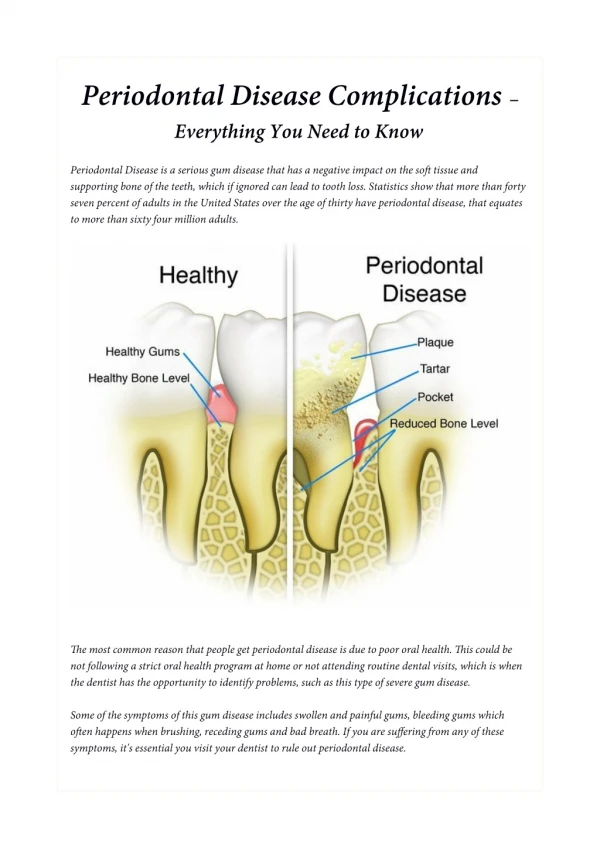
Everything you should know about about Periodontal Disease Periodontal diseases are usually caused by the infection and inflammation of the gums and bones that support and surround our teeth. In the initial stage, the gums can get swollen, become red, and may start bleeding. In its severe form, which is known as periodontitis, the gums can develop a gap from the teeth, bone can be lost, and the worst part is the teeth may get loosened or even fall out. In simple words, in periodontitis, you are on the verge of losing your teeth if left untreated. However, periodontal diseases are most common in adults. Periodontal disease and tooth decay are the major threats to dental health. If you want to deal with periodontal diseases, many dental specialists in Connelly Springs can help you choose the right periodontal disease treatment. As per recent reports provided by CDC, it showcases that 47.2% of adults over 30 and older have some form of periodontal disease. In addition to this, 70.1% of older adults 65 years and above are suffering from periodontal disease. This condition is much more common in men than women. Causes of Periodontal Diseases Bacteria in the mouth take a toll on the tissue surrounding the tooth, which causes inflammation nearby the tooth that eventually leads to periodontal diseases. When bacteria stay on the teeth for a longer time, they start forming a film called plaque, which eventually hardens to tartar, also known as calculus. The development of tartar can spread underneath the gum line, making teeth difficult to clean. Then, only a dental health professional can eliminate the tartar and cease the periodontal disease process. Warning Signs The following are warning signs of periodontal disease: Bad breath or bad taste that won’t go away Red or swollen gums Tender or bleeding gums ● ● ●
Painful chewing Loose teeth Sensitive teeth Gums that have pulled away from your teeth Any change in the way your teeth fit together when you bite Any change in the fit of partial dentures ● ● ● ● ● ● Risk factors Certain factors double the risk for periodontal disease: Smoking Diabetes Poor oral hygiene Stress Heredity Crooked teeth Underlying immune-deficiencies—e.g., AIDS Fillings that have become defective Taking medications that cause dry mouth Bridges that no longer fit properly Female hormonal changes, such as with pregnancy or the use of oral contraceptives ● ● ● ● ● ● ● ● ● ● ● Prevention and treatment Gingivitis can be managed and controlled by following good oral hygiene and professional cleaning. Not to be forgotten, the severe forms of periodontal disease can also be cured but may need more extensive treatment. To help prevent or control periodontal diseases, it is important to: 1. Regularly brush and floss to remove the bacteria causing gum disease. 2. Book an appointment with a dentist at least once a year for checkups or more frequently if you think you have dental issues. For more information, please feel free to get in touch with us.