1 / 3
0 likes | 5 Views
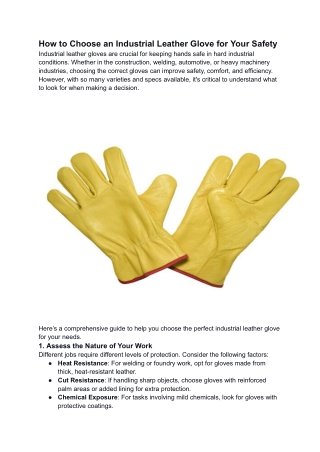
Industrial leather gloves are crucial for keeping hands safe in hard industrial conditions. Whether in the construction, welding, automotive, or heavy machinery industries, choosing the correct gloves can improve safety, comfort, and efficiency.

E N D
How to Choose an Industrial Leather Glove for Your Safety Industrial leather gloves are crucial for keeping hands safe in hard industrial conditions. Whether in the construction, welding, automotive, or heavy machinery industries, choosing the correct gloves can improve safety, comfort, and efficiency. However, with so many varieties and specs available, it's critical to understand what to look for when making a decision. Here’s a comprehensive guide to help you choose the perfect industrial leather glove for your needs. 1. Assess the Nature of Your Work Different jobs require different levels of protection. Consider the following factors: ● Heat Resistance: For welding or foundry work, opt for gloves made from thick, heat-resistant leather. ● Cut Resistance: If handling sharp objects, choose gloves with reinforced palm areas or added lining for extra protection. ● Chemical Exposure: For tasks involving mild chemicals, look for gloves with protective coatings.
● Abrasion Resistance: Jobs that involve handling rough or abrasive materials call for tough leather like goatskin. 2. Consider the Glove Design The design plays a crucial role in ensuring comfort and functionality: ● Palm Padding: For impact-heavy jobs, select gloves with reinforced palms to reduce strain. ● Wrist Closures: Look for adjustable cuffs or elastic wrists to prevent debris from entering. ● Finger Dexterity: If your work requires precision, opt for gloves that offer a snug fit without compromising movement. 3. Evaluate Safety Standards Always choose gloves that meet recognized safety certifications, such as: ● EN 388: For mechanical risks, including abrasion, cut, tear, and puncture resistance. ● EN 407: For heat and flame resistance, essential for welding and similar jobs. ● ANSI/ISEA: For cut resistance and general industrial standards. 4. Check the Durability Industrial jobs frequently entail difficult duties. Ensure that the gloves can endure prolonged use without tearing or degrading. Look for double stitching or reinforced seams to increase lifespan. 5. Prioritize Comfort and Fit Ill-fitting gloves can reduce performance and cause accidents. Choose a size that gives a snug yet comfortable fit while allowing for flexibility over lengthy periods of wear. Consider ergonomic gloves to help lessen fatigue. 6. Choose the Right Thickness The thickness of the leather impacts protection and dexterity: ● Thicker Leather: Best for high-risk tasks like welding, offering more protection but less flexibility. ● Thinner Leather: Suitable for precision work, providing better dexterity and control. 7. Look for Added Features Modern industrial leather gloves come with advanced features for enhanced safety and usability: ● Kevlar Stitching: Adds heat and cut resistance. ● Waterproof Coatings: Protect against moisture and mild chemicals. ● Insulation Layers: Provide additional protection in cold environments. 8. Test the Grip A strong grip is essential while handling tools or machinery. Look for gloves with textured or reinforced palms to improve grip, especially in wet or oily situations. 9. Choose Reliable Manufacturers Purchase gloves from reputable manufacturers known for their high quality and respect for safety requirements. Indian leather products makers, for example, are known for their expertise in producing long-lasting and dependable industrial gloves.
Conclusion Choosing the correct industrial leather glove is critical to ensure your safety and comfort in dangerous work situations. You may choose gloves that give optimal protection and efficiency by examining your unique requirements and taking into account elements like material, design, safety certifications, and durability.