Download

1 / 9
0 likes | 13 Views
Digital marketing, also called online marketing, is the promotion of brands to connect with potential customers using the internet and other forms of digital communication. This includes not only email, social media, and web-based advertising, but also text and multimedia messages as a marketing channel.<br>

E N D
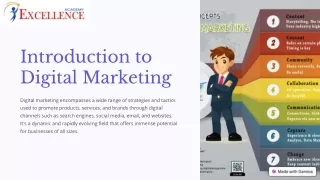
Introduction to Digital Marketing Digital marketing is the future of advertising and brand-building. It encompasses a wide range of strategies and techniques that leverage the power of the internet and digital technologies to reach and engage with target audiences. From search engine optimization and social media marketing to email campaigns and content creation, digital marketing offers unparalleled opportunities for businesses to connect with their customers, build brand loyalty, and drive measurable results. by kislaykumar jha
Importance of Digital Marketing Targetted Reach Cost-Effectiveness Measurable Results Digital marketing allows businesses to precisely target their ideal customers based on demographic, geographic, and behavioral data. This ensures that marketing efforts are focused on the right audience, leading to higher engagement and conversion rates. Compared to traditional marketing channels, digital marketing strategies are generally more cost-effective, allowing businesses to achieve a higher return on investment (ROI). Many digital marketing tactics, such as social media and content marketing, can be implemented with a relatively low budget. Digital marketing platforms provide robust analytics and data tracking, enabling businesses to measure the performance of their campaigns in real-time. This data-driven approach allows for continuous optimization and informed decision-making.
Key Digital Marketing Channels Search Engine Optimization (SEO) 1 Optimizing your website and content to rank higher in search engine results, driving organic traffic and visibility. Social Media Marketing 2 Leveraging popular social media platforms to engage with your target audience, build brand awareness, and drive conversions. Email Marketing 3 Sending targeted, personalized emails to your subscriber list to nurture leads, promote offers, and retain customers. Content Marketing 4 Creating and distributing valuable, relevant, and consistent content to attract and retain a clearly defined audience.
Content Marketing Strategies Ideation 1 Brainstorming and researching relevant, engaging topics that align with your target audience's interests and pain points. Creation 2 Producing high-quality, informative, and visually appealing content, such as blog posts, videos, infographics, and podcasts. Optimization 3 Ensuring your content is search engine-friendly, easy to navigate, and optimized for maximum visibility and engagement.
Search Engine Optimization (SEO) Keyword Research Identifying the most relevant and high-performing keywords your target audience is searching for, and optimizing your content and website to rank for those keywords. On-Page Optimization Ensuring your web pages are structured and coded in a way that makes them easy for search engines to crawl, index, and understand. Link Building Acquiring high-quality backlinks from reputable websites to improve your domain authority and search engine rankings. Technical SEO Addressing technical aspects of your website, such as site speed, mobile-friendliness, and security, to create a better user experience and improve search engine visibility.
Social Media Marketing Facebook Leverage the world's largest social network to build brand awareness, engage with your audience, and drive sales through targeted advertising. Instagram Harness the power of visual storytelling to showcase your brand's products, services, and culture, and connect with a younger, more visually-driven audience. LinkedIn Position your brand as an industry thought leader, network with professionals, and generate leads through targeted content and advertising on the world's largest professional social network. Twitter Engage in real-time conversations, share timely updates, and leverage the power of hashtags to reach and interact with your target audience on this fast-paced, microblogging platform.
Email Marketing List Building Grow your email subscriber base by offering valuable content, lead magnets, or other incentives to encourage sign-ups. Segmentation Divide your email list into targeted segments based on customer data, preferences, and behaviors to deliver more personalized and relevant content. Automation Leverage email automation tools to trigger personalized, timely messages based on customer actions, such as welcome emails, abandoned cart reminders, or post-purchase follow-ups. Optimization Continuously test and refine your email campaigns, subject lines, and content to improve open rates, click-through rates, and conversions.
Measuring and Optimizing Digital Campaigns Metric Description Importance Click-Through Rate (CTR) The percentage of people who click on a specific link or ad. Measures the effectiveness of your ad copy, image, and targeting. Conversion Rate The percentage of visitors who complete a desired action, such as making a purchase or filling out a form. Indicates how well your campaigns are driving tangible results. Cost per Acquisition (CPA) The cost to acquire a new customer or lead. Helps you understand the efficiency of your marketing spend. Return on Investment (ROI) The ratio of the net profit to the cost of the investment. Measures the overall effectiveness and profitability of your digital marketing efforts.
Modules of Digital Marketing Search Engine Optimization (SEO) Social Media Marketing Content Marketing Leveraging popular social media platforms to engage with your target audience, build brand awareness, and drive conversions. Creating and distributing valuable, relevant, and consistent content to attract and retain a clearly defined audience. Optimizing your website and content to rank higher in search engine results, driving organic traffic and visibility.