front end development course
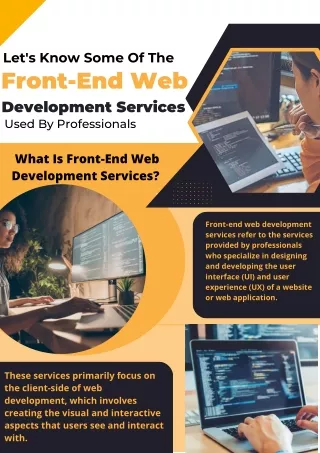
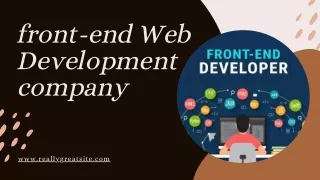
A Front-End Developer is responsible for designing and implementing the visual and interactive elements of a website or web application. They work on the "front end," or the client side, of web development, creating everything a user sees and interacts with, from layout and design to buttons, menus, and forms.


front end development course
E N D
Presentation Transcript
The Best Project Based Front-End Development Course In Vadodara Front-end web development is the practice of creating the visual and interactive parts of a website that users interact with directly. With our specifically designed front-end web development course in Vadodara, you will learn how to use various tools and technologies to create attractive and functional websites that are optimized for user experience. In a front-end web development course, you will learn HTML, CSS, and JavaScript, which are the core technologies used to create websites. You will also learn about various frameworks and libraries, such as React, Angular, and Vue, that are commonly used by front-end developers to build complex web applications. Other skills that you might learn in a front-end web development course include responsive design, accessibility, and user experience (UX) design. You will learn how to optimize your websites for various devices, including desktops, tablets, and mobile devices. You will also learn how to create websites that are accessible to users with disabilities, and how to design websites that are intuitive and easy to use. Overall, a front-end web development course will provide you with the skills and knowledge you need to create professional and engaging websites that are optimized for user experience. Top Job Opportunities After Front-End Development Course
After completing our front-end web development course, you will be qualified for various roles in the web development industry. Additionally, we are providing 100% job support with a front-end web development course. Some common job titles you may be eligible for include: Front-End Developer: As a front-end developer, your primary responsibility is to create the user-facing parts of a website or web application. This includes writing HTML, CSS, and JavaScript code to create visually appealing and interactive web pages. User Experience (UX) Designer: As a UX designer, your primary responsibility is to create an intuitive and engaging user experience for website or web application users. This involves understanding user needs and behavior, conducting user research, creating wireframes and prototypes, and designing the visual interface of a website. UI Developer: As a UI developer, your primary responsibility is to develop the visual interface of a website or web application. This includes working closely with UX designers to create a visually appealing and intuitive interface that meets user needs and expectations. Web Designer: As a web designer, your primary responsibility is to design the visual interface of a website or web application. This includes creating the overall look and feel of a website, selecting color schemes and fonts, and designing icons and other graphical elements. Overall, your role and responsibilities after completing our project-based training program for front-end web development will depend on the specific job title you pursue. However, in general, you can expect to work on creating visually appealing and user-friendly websites or web applications, using the skills and knowledge you learned in the course.
Why Should You Join Our Front-End Web Development Course There are several compelling reasons to join a front-end web development course, some of which include: In-demand skill: Front-end web development is a highly sought-after skill in today’s digital age, as every organization needs a well-designed and user-friendly website. By learning front-end development, you can open up new career opportunities and increase your earning potential. Creative outlet: Front-end development allows you to use your creativity and problem-solving skills to design and develop visually appealing and interactive websites. Constantly evolving: The front-end development landscape is constantly evolving, with new technologies, frameworks, and tools being introduced regularly. Joining a course can help you stay up-to-date with the latest trends and developments in the industry. Flexibility: Front-end development can be done remotely, which means you can work from anywhere and have a flexible work schedule. Collaborative field: Front-end development involves collaborating with designers, other developers, and stakeholders to build a website that meets the requirements and goals of the project. This collaborative environment can help you develop communication and teamwork skills that are valuable in any profession. By joining a front-end web development course, you can gain the necessary skills and knowledge to become a competent front-end developer and launch a successful career in this field.