Sterilization and Disinfection
0 likes | 48 Views
Learn the essential concepts of Sterilization and Disinfection with this easy-to-understand, exam-oriented PDF designed for MBBS, Nursing, and Paramedical students. Authored by Dr. Preeti Tyagi, one of Indiau2019s most trusted medical educators, this guide explains physical and chemical sterilization methods, levels of disinfection, and hospital-based practices u2014 all in a concise format.<br><br>ud83dudd2c Includes real-world applications<br>ud83dudcda Best for revision & quick understanding<br>ud83dudcf2 Powered by the TurningBrain App<br><br>Visit: www.turningbrain.in | ud83dudcde 91-8368648746


Sterilization and Disinfection
E N D
Presentation Transcript
Sterilization and Disinfection -By -By Dr. Preeti Tyagi (MBBS,MD) Dr. Preeti Tyagi (MBBS,MD) Professor of Physiology VMMC & Sufdarjung Hospital New Delhi
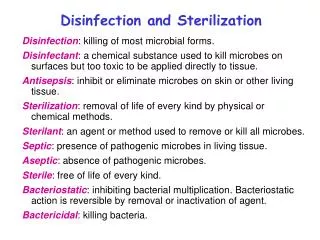
Introduction Sterilization and disinfection are essential practices in microbiology and clinical settings. They help prevent infections, ensure safety in surgeries, and maintain lab hygiene. Key Definitions: Sterilization: Destruction or removal of all forms of microbial life, including spores. Disinfection: Elimination of most pathogenic microbes (excluding spores) from inanimate objects.
Levels of Disinfection High-level – Destroys all microorganisms except high numbers of bacterial spores (e.g., glutaraldehyde) Intermediate-level – Kills mycobacteria, most viruses, and fungi (e.g., alcohols, phenolics) Low-level – Eliminates most bacteria and some viruses (e.g., quaternary ammonium compounds)
Methods of Sterilization Physical Methods Chemical Methods Moist heat Dry heat radiation Filtration Ethylene oxide Formaldehyde Hydrogen peroxide
Methods of Sterilization Physical/Chemical 1.Moist Heat Sterilization Uses steam under pressure (Autoclave) 121°C for 15–20 minutes Kills spores Commonly used for surgical instruments, media 2.Dry Heat Sterilization Hot air oven (160°C for 2 hours) Used for glassware, powders 3.Filtration For heat-sensitive liquids (e.g., antibiotics, serum) 4.Radiation UV light – surface disinfection Ionizing radiation – sterilizes disposable equipment 1.Ethylene Oxide Gas – for heat-sensitive instruments 2.Glutaraldehyde – high-level disinfectant, used for endoscopes 3.Formaldehyde – used for fumigation 4.Hydrogen Peroxide Vapor – surface and room sterilization
Full Physiology Course is available on Turning Brain App by The Best Physiology Faculty in india, Dr. Preeti Tyagi For More Info. +91-8368648746 www.turningbrain.in https://youtube.com/@dr.preetityagilectures874?si=YfbJEi66jOE0hjzu APP LINKS Android: https://play.google.com/store/apps/details id=tbrain.in.medical.eduapp&hl=en_IN IOS: https://apps.apple.com/in/app/turning-brain-dr-preeti-tyagi/id6502828714
Common Disinfectants in Hospitals Alcohols (70% ethanol/isopropanol) – skin and surface disinfectant Chlorine compounds (bleach) – effective against viruses and bacteria Phenolics – used for environmental surfaces Quaternary ammonium compounds – floors, furniture Iodophors – pre-operative skin preparation
Factors Affecting Efficacy ?Type and Number of Microorganisms: Some microbes (e.g., bacterial spores, mycobacteria) are more resistant. A higher microbial load requires stronger or prolonged treatment. ?Presence of Organic Matter: Blood, pus, or mucus can interfere with disinfectant action. Organic material protects microbes and inactivates some agents. ?Concentration and Contact Time: Stronger solutions are generally more effective, but must be used safely. Adequate contact time ensures complete microbial kill. ? pH and Temperature: Some disinfectants work better at specific pH levels or temperatures. For example, chlorine is more effective in acidic pH. ?Nature of Surface or Material: Porous or rough surfaces may hide microbes. The material (metal, plastic, rubber) also affects the choice of sterilizing method.
Quick Summary Sterilization kills all microorganisms; disinfection kills most Both are essential to infection control Choose the method based on material type and risk Understand agent effectiveness and safety ? Tip for Students: Revise microbiology faster with TurningBrain App – includes full video lectures, MCQs, and notes for sterilization, disinfection, and more.
THANK-YOU Full Physiology Course is available on Turning Brain App by The Best Physiology Faculty in india, Dr. Preeti Tyagi For More Info. +91-8368648746 www.turningbrain.in https://youtube.com/@dr.preetityagilectures874?si=YfbJEi66jOE0hjzu APP LINKS Android: https://play.google.com/store/apps/details id=tbrain.in.medical.eduapp&hl=en_IN IOS: https://apps.apple.com/in/app/turning-brain-dr-preeti-tyagi/id6502828714