Download
1 / 12
0 likes | 4 Views
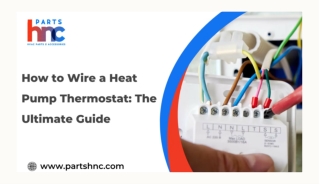
Choosing the right heat pump thermostat boosts comfort and energy efficiency. Ensure itu2019s compatible with your system, offers smart features like remote access, and includes accurate temperature control. Look for energy-saving capabilities and user-friendly interfaces. When wiring, safety comes firstu2014always turn off power before starting. Use proper tools, follow color codes (R, Y, O/B, G, C, W, E), and refer to manuals or wiring diagrams. For two-stage systems, connect Y2 and W2 as needed. Once installed, test system functions thoroughly.

E N D
Introduction Wiring a Heat pump thermostat can seem challenging, but with the right knowledge and a little patience, it's a manageable task that ensures your heating and cooling system runs efficiently. Heat pump thermostats are designed to control both the heating and cooling functions of a heat pump system, making them a bit different from traditional HVAC thermostats. Understanding the wiring components, color codes, and proper connections is crucial for effective installation. In this guide, we'll walk you through the step-by-step process of wiring a heat pump thermostat, from safety precautions to troubleshooting common issues. Whether you're installing a basic model or a smart thermostat, this guide will help ensure that your heat pump operates smoothly and efficiently.
Why Proper Thermostat Wiring Matters System Performance Energy Efficiency Safety Considerations Incorrect wiring can lead to system inefficiency or complete failure. When wires are connected to the wrong terminals, your heat pump may run constantly, short cycle, or fail to operate altogether, resulting in uncomfortable temperatures and wasted energy. Properly wired thermostats ensure your heat pump operates as designed, maintaining comfortable temperatures while minimizing energy consumption. This translates directly to lower utility bills and reduced environmental impact. Working with electrical components always carries risk. Improper wiring can create short circuits, damage expensive equipment, or even pose fire hazards. Following proper procedures protects both you and your home. Taking the time to understand and correctly wire your heat pump thermostat is an investment in comfort, efficiency, and peace of mind for years to come.
How to Choose the Right Heat Pump Thermostat for Your Home System Compatibility Smart Features Feature Requirements Ensure the thermostat is specifically designed for heat pump systems. Standard HVAC thermostats often lack the specialized functions needed for efficient heat pump operation, such as emergency heat mode and reversing valve control. Modern smart thermostats require a common (C) wire to power their Wi-Fi, displays, and programming features. Check if your system has this wire or if you'll need to install an adapter. Consider which features matter most: programmable schedules to save energy, Wi-Fi connectivity for remote control, multi-stage support for variable-speed systems, or geofencing for automatic adjustments. Temperature Control Energy Efficiency Temperature control systems provide accurate climate maintenance for your house throughout all seasons. Choose a thermostat that possesses settings adjustments for maintaining steady indoor temperature conditions and blocking unwanted temperature changes. Temperature settings adjust automatically through home-based analysis to decrease energy waste thus setting temperature based on building needs and occupancy rates and daily periods. Your energy bills will decrease substantially because of this feature. Take time to research thermostats that match your specific heat pump model. Many manufacturers provide compatibility checkers on their websites. When in doubt, consult your heat pump's installation manual or contact the manufacturer directly.
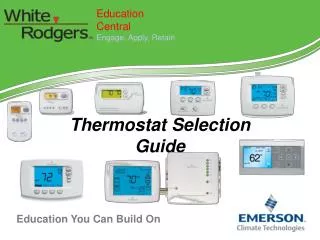
Popular Heat Pump Thermostat Types Mechanical Thermostats Digital Programmable Smart Wi-Fi Thermostats The simplest option with manual temperature adjustment using physical dials. These basic models lack programming features but are inexpensive and straightforward to install. Best suited for users who prefer simplicity over advanced features. Offer preset scheduling options to automatically adjust temperatures throughout the day. These mid- range options balance functionality with affordability. Most include emergency heat settings specifically designed for heat pump systems. Premium models from brands like Ecobee, Nest, and Honeywell offer remote control via smartphone apps, learning capabilities to adapt to your schedule, and integration with smart home systems. Many can provide energy usage reports to help optimize efficiency. When selecting your thermostat, consider not just current needs but future plans. If you might upgrade to a more advanced HVAC system in the coming years, investing in a more capable thermostat now could save money in the long run.
How to Safely Wire a Heat Pump Thermostat in Your Home Turn Off the Power Begin all work by disconnecting power from the heat pump system. The power disconnect safeguards users from electric shock and shields the system from possible harm. Use the Right Tools The necessary tools for thermostat wiring include a screwdriver together with wire strippers and a voltage tester. You will require a drill to install the thermostat if you plan to position it in a different area. Check for Compatibility Verify that the thermostat matches the requirements of your heat pump system. Check the compatibility of your thermostat with heat pumps before you buy because some models do not support this system. Read the Manual Reading the manual is essential for safety purposes and system protection. Follow the heat pump thermostat wiring guide while checking that power is completely off before starting and following all instructions. Check out How Much Will A Heat Pump System Cost?
How to Identify the Wiring Components of Your Heat Pump Thermostat R Wire Red. Provides 24V power from the transformer. C Wire Blue or Black. Common wire that completes the circuit back to the transformer. Y Wire Yellow. Controls the compressor for cooling and heating. O/B Wire Orange or Dark Blue. Controls the reversing valve that switches between heating and cooling. G Wire Green. Controls the indoor blower fan. W/Aux/E Wire White. Controls auxiliary/emergency heating elements. Wire colors can vary between installations, so don't rely solely on color. Always check your system's wiring diagram, usually found in the heat pump manual or on the inside of the furnace access panel. If the wires aren't color-coded, you'll need to trace them back to the control board.
How to Wire a Heat Pump Thermostat? Turn Off Power 1 Before starting, turn off the power to your HVAC system at the circuit breaker. This prevents electrical shocks and protects your thermostat and heat pump from damage. Remove the Old Thermostat 2 Carefully remove the cover of your existing thermostat. Take a picture of the wiring for reference, and label each wire to ensure proper reconnection. Identify the Thermostat Wires Heat pump systems use specific wiring configurations. The most common wire labels include: R (Red): Power supply Y (Yellow): Controls the compressor 3 O/B (Orange/Blue): Reversing valve (O for cooling, B for heating) G (Green): Controls the fan C (Blue/Black): Common wire, required for smart thermostats E (Emergency Heat): Engages emergency heat mode W (White): Activates backup heat strips Connect the Wires to the New Thermostat 4 Refer to your thermostat9s manual for the exact wiring diagram. Insert each labeled wire into its corresponding terminal and ensure a secure fit. Read on & find out How Much Does It Cost to Install a Heat Pump?
Testing Your Installation Restore Power Test Fan Function Test Cooling Mode Turn the circuit breakers back on at your electrical panel to power up the system Set the thermostat to "Fan On" mode and verify the indoor blower operates correctly Set the thermostat to cooling and a temperature below room temperature, then verify cool air production Test Heating Mode Test Emergency Heat Set the thermostat to heating and a temperature above room temperature, then verify warm air production Activate emergency heat mode and confirm auxiliary heating elements function properly When testing, allow sufficient time (10-15 minutes) for each mode to fully engage before making judgments about performance. Listen for unusual noises and pay attention to how the system responds to thermostat adjustments. If you notice delayed responses, short cycling, or failure to maintain temperature, these could indicate wiring issues that need correction.
Most Common Heat Pump Thermostat Wiring Problems Incorrect Wiring of Terminals The manufacturer's wiring diagram requires thorough review for ensuring all terminal connection points remain accurate. Follow the diagram to verify wire placements because improper connections may cause system breakdown. Loose or Disconnected Wires Begin by disconnecting power from the system. Check the thermostat casing for loose wires and reconnect all wires properly to achieve reliable power distribution. Inconsistent Signal Visual inspection of wiring must identify any signs of damage together with any indications of wear. The replacement of defective components will enable proper communication between the thermostat and heat pump to achieve effective heating or cooling. Many thermostat issues manifest as performance problems rather than complete system failure. If your heat pump runs constantly, short cycles, or provides insufficient heating or cooling after installation, these are clear signs of potential wiring issues. Also read on: Explore 9 Varieties of Home Heating Systems
Conclusion The process of wiring a heat pump thermostat appears complex at first but proper knowledge and tools enable you to complete this task successfully which leads to improved heating and cooling system efficiency. The installation process for basic thermostats matches the steps required for smart WiFi models. The combination of proper wiring color code implementation with thermostat wiring guide usage and thorough issue troubleshooting will lead to long- term efficient heat pump operation. The correct setup of thermostat wiring will provide you with enhanced comfort together with reduced energy expenses. Work at a comfortable pace and read all the manufacturer9s guidelines then reach out to an expert if you come across challenges you cannot handle. At PartsHnC, we offer top-quality thermostats and HVAC heat pump parts from trusted brands like Trane, Carrier, Mars, Danfoss, Honeywell, and Siemens. Shop with us for reliable, easy-to-install options that ensure optimal performance for your heating and cooling systems. Let us help you make your installation hassle-free!
FAQs 1. What is HVAC thermostat wiring and why is it important? 2. How does a heat pump thermostat with emergency heat work? HVAC thermostat wiring connects the thermostat to your heating and cooling system. Correct wiring is essential for proper system function, allowing it to respond accurately to temperature changes. A heat pump thermostat with emergency heat switches to an auxiliary heating source, like electric heat strips, when the heat pump can no longer efficiently heat the home. This ensures warmth during extreme cold conditions.