Introduction
Silica gel is one of the most commonly used desiccants for moisture control in a wide range of applications. Despite its name, silica gel is not a gel but a solid, porous form of silicon dioxide (SiO₂). Its unique structure allows it to effectively adsorb and retain water vapor, making it invaluable in protecting products sensitive to moisture.
Structure and Working Principle
Silica gel is composed of a network of interconnected pores that create a large internal surface area typically between 600 and 800 m² per gram. Water molecules are attracted to and held on the surface of these pores through physical adsorption. Unlike other drying agents that chemically bind water, silica gel adsorbs moisture without changing its chemical composition, allowing it to be reused after drying or regeneration.
Types of Silica Gel
Non-Indicating Silica Gel:
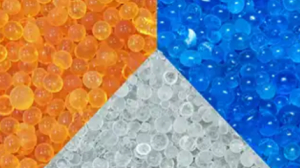
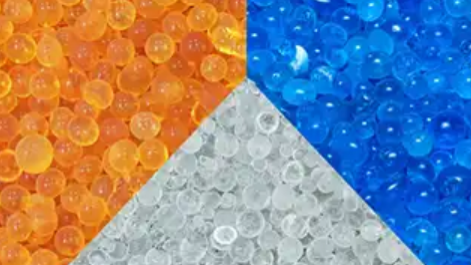
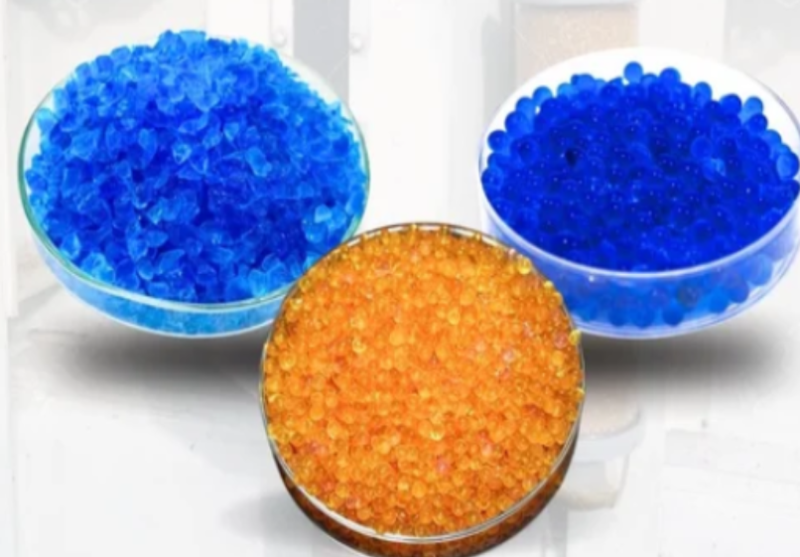
A white, amorphous form used where visual monitoring of moisture is unnecessary. Indicating Silica Gel: Contains moisture-sensitive dyes that change color to show the level of saturation.
Common examples include blue-to-pink (cobalt chloride type) or orange-to-green (DMF type).
Beaded and Granular Forms:
Available in different particle sizes depending on the application—beads for uniform adsorption and granules for higher surface contact.
Applications
Silica gel is widely used to control humidity and prevent damage in enclosed environments. Key application areas include:
- Pharmaceuticals: To maintain the stability of medicines by preventing moisture-induced degradation.
- Food Industry: In packaging of dry or dehydrated foods to extend shelf life.
- Electronics: To protect sensitive components from corrosion and condensation during transport and storage.
- Textiles and Leather Goods: To prevent mold and mildew formation.
- Optical and Scientific Equipment: To maintain dry conditions for precision instruments and lenses.
Advantages of Silica Gel as a Desiccant
- High adsorption capacity relative to weight
- Chemically inert and non-corrosive
- Reusable through heating or regeneration
- Safe for use with most materials and products
- Available in various forms for flexible use
Environmental Considerations
Silica gel is generally non-toxic and environmentally safe. However, older types of indicating silica gels containing cobalt chloride should be handled with care due to their potential toxicity. Modern alternatives now use environmentally friendly indicators.
Conclusion
Silica gel remains a highly effective and versatile desiccant due to its strong adsorption capacity, chemical stability, and ease of regeneration. It continues to play an essential role in protecting goods and materials from humidity-related damage across industries such as pharmaceuticals, electronics, and food packaging. For high-quality desiccant materials like silica gel—as well as other industrial chemicals such as calcium hypochlorite, sodium benzoate, carbon molecular sieve, activated carbon, and activated alumina, Oozechem is a trusted supplier serving global industry needs.