LiDAR (Light Detection and Ranging) technology has become a cornerstone in autonomous vehicles, robotics, and industrial mapping due to its ability to generate precise 3D spatial data. Among various LiDAR configurations, rotating mirror semi-solid state LiDAR has emerged as a promising solution that balances performance, cost, and reliability. Understanding how rotating mirror semi-solid state LiDAR works provides critical insights for engineers, manufacturers, and investors, particularly in the context of the rotating mirror semi-solid state LiDAR industry analysis.
Fundamental Principles of Semi-Solid State LiDAR
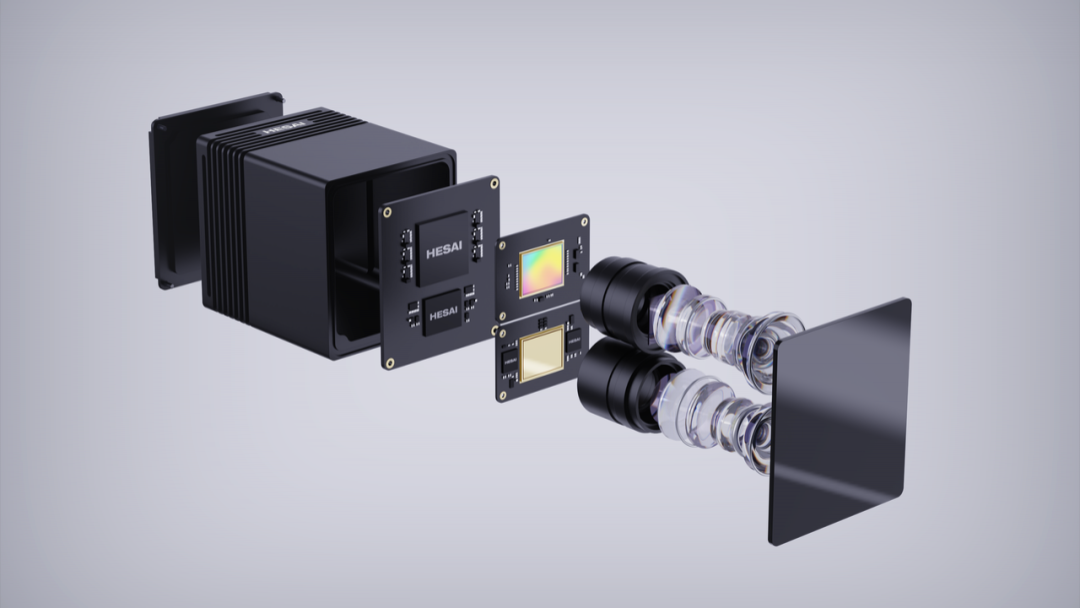
Semi-solid state LiDAR combines elements of both traditional mechanical LiDAR and solid-state LiDAR. Unlike fully mechanical LiDAR, which uses a spinning head to scan the environment, semi-solid state designs integrate a rotating micro-mirror or galvanometer-based mirror system to direct laser pulses. Key components include: Laser emitter: Sends out short, pulsed laser beams. Rotating micro-mirror: Directs the laser beam across a scanning pattern, covering horizontal or vertical planes. Photodetector array: Receives reflected laser light from objects, capturing distance and intensity data. Signal processor: Converts reflected signals into 3D point clouds for mapping or navigation.
How the Rotating Mirror Works
The rotating mirror is central to the semi-solid state LiDAR. As the mirror pivots or oscillates, it redirects the laser pulse across a scanning area, producing a layered “sweep” of environmental data. The rotational speed and angular resolution determine the LiDAR’s effective scanning range, density, and refresh rate.
Advantages of using a rotating mirror include: Compact design: Smaller than traditional spinning LiDAR heads. Enhanced reliability: Fewer moving parts reduce wear and mechanical failure. Cost efficiency: Lower production costs compared to fully mechanical LiDAR. However, there are tradeoffs. While faster mirror rotation increases scanning frequency, it can introduce vibration sensitivity and mechanical stress, potentially affecting long-term durability. Optimizing speed versus stability is a key design challenge.
Technical Tradeoffs and Performance Considerations
Designing rotating mirror semi-solid state LiDAR requires balancing several critical factors: Range vs. Resolution: Higher resolution demands narrower beam divergence and precise mirror control, which can limit maximum range. Scan Frequency vs. Mechanical Stress: Increasing sweep speed improves temporal resolution but increases wear on mirror bearings and actuators. Field of View (FOV) vs. Compactness: A wider FOV provides better environmental coverage but may require larger mirrors or multiple units, impacting vehicle integration. Signal-to-Noise Ratio (SNR): Longer-range detection requires higher laser power and sensitive detectors, which may increase power consumption and system cost.
Rotating Mirror Semi-Solid State LiDAR in the Industry
The rotating mirror semi-solid state LiDAR industry analysis reveals strong growth potential due to demand for autonomous systems, robotics, and smart infrastructure. Compared to fully mechanical or solid-state alternatives: Mechanical LiDAR: Offers 360° coverage but is bulky, expensive, and prone to mechanical failure. Solid-state LiDAR: Highly reliable and compact but may have limited field of view and higher unit costs at scale. Semi-solid state LiDAR: Strikes a balance between cost, reliability, and scanning capability, making it appealing for mid-tier autonomous systems, industrial robotics, and urban mapping applications.
Despite advantages, challenges persist: Temperature and Environmental Effects: Mirror actuators must operate reliably under temperature variations, dust, and vibrations. Calibration and Alignment: Precise alignment of the mirror and detector array is essential to maintain measurement accuracy. Manufacturing Complexity: High-precision components increase production complexity and cost, particularly for mass-market applications. Integration with Systems: Effective integration with autonomous vehicle perception systems or industrial mapping platforms requires robust software and sensor fusion.
Understanding how rotating mirror semi-solid state LiDAR works is crucial for engineers, manufacturers, and investors navigating the rapidly growing LiDAR ecosystem. By combining a compact rotating mirror with solid-state laser emitters, this technology balances cost, reliability, and field coverage while mitigating the limitations of fully mechanical or solid-state alternatives. Considering technical tradeoffs and operational challenges is essential when designing, deploying, or investing in semi-solid state LiDAR solutions. The rotating mirror semi-solid state LiDAR industry analysis highlights strong market demand and emerging opportunities, making it a key technology in the future of autonomous systems, industrial mapping, and smart mobility infrastructure.