Download
1 / 5
0 likes | 1 Views
Discover how a Conveyor Magnet works and why it is essential for industrial conveyor systems. Learn how it protects gearboxes, pulleys, and bearings while improving safety and efficiency in material handling.

E N D
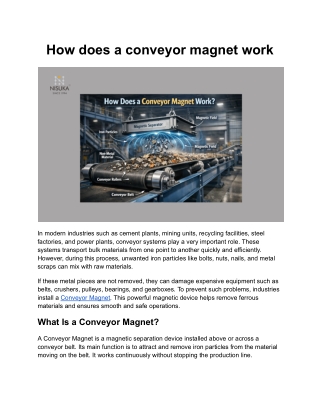
How does a conveyor magnet work In modern industries such as cement plants, mining units, recycling facilities, steel factories, and power plants, conveyor systems play a very important role. These systems transport bulk materials from one point to another quickly and efficiently. However, during this process, unwanted iron particles like bolts, nuts, nails, and metal scraps can mix with raw materials. If these metal pieces are not removed, they can damage expensive equipment such as belts, crushers, pulleys, bearings, and gearboxes. To prevent such problems, industries install a Conveyor Magnet. This powerful magnetic device helps remove ferrous materials and ensures smooth and safe operations. What Is a Conveyor Magnet? A Conveyor Magnet is a magnetic separation device installed above or across a conveyor belt. Its main function is to attract and remove iron particles from the material moving on the belt. It works continuously without stopping the production line.
Industries often depend on an experienced Suspension Magnet supplier in Tamil Nadu to provide durable and high-strength magnetic systems suitable for heavy industrial environments. How Does a Conveyor Magnet Work? The working principle of a Conveyor Magnet is based on magnetic force. It is simple but very effective. Step 1: Material Movement Bulk materials move on the conveyor belt as part of the production process. Step 2: Magnetic Field Creation The Conveyor Magnet creates a strong magnetic field across the belt surface. Step 3: Attraction of Iron Particles As materials pass under the magnet, iron and other ferrous particles are attracted upward toward the magnet. Step 4: Clean Material Continues Non-magnetic materials continue moving forward without any interruption. Step 5: Removal of Collected Metal In automatic systems, a self-cleaning mechanism removes the collected metal. In manual systems, workers clean the magnet at regular intervals. This continuous process protects the conveyor system from sudden breakdowns and damage. Types of Conveyor Magnets Used in Industries Different industries use different types of Conveyor Magnets based on their needs: Suspension Magnet Installed above the conveyor belt, it lifts iron particles directly from the material flow. Many companies prefer buying from a trusted Suspension Magnet supplier in Tamil Nadu for reliable performance.
Overband Magnet Mounted across the conveyor belt, this type is suitable for heavy-duty and high-volume material handling. Magnetic Drum Separator Installed at the discharge end of the conveyor, it separates iron when material passes over a rotating magnetic drum. Choosing the correct type ensures better efficiency and long-term performance. Why Is a Conveyor Magnet Important? Installing a Conveyor Magnet provides several benefits: ● Prevents belt damage ● Protects crushers and processing machines ● Reduces downtime ● Improves product purity ● Extends equipment life ● Lowers maintenance costs Without proper magnetic separation, even high-quality systems from a shaft-mounted gearbox manufacturer in Ahmedabad can face damage due to metal impact. Protection for Gearboxes Gearboxes are essential for controlling speed and torque in conveyor systems. They ensure smooth and stable movement of materials. A reliable SMSR Gearbox manufacturer in Ahmedabad designs strong gearboxes for heavy-duty applications. Similarly, a trusted shaft-mounted gearbox manufacturer in Ahmedabad provides compact and efficient drive solutions.
If metal contaminants enter the system, they can cause shock loads that damage gears and shafts. A Conveyor Magnet prevents this risk and protects the gearbox investment. Importance of Conveyor Drum Pulleys Conveyor drum pulleys are responsible for driving and guiding the conveyor belt. Metal pieces can scratch or damage the pulley surface, leading to belt misalignment and reduced performance. Industries often source pulleys from a dependable conveyor drum pulley manufacturer in Ahmedabad to ensure durability and proper balancing. By removing metal particles early, a Conveyor Magnet helps maintain pulley performance and belt alignment. Role of UCP Pillow Block Bearings UCP pillow block bearings support rotating shafts in conveyor systems. They reduce friction and help maintain proper alignment. A trusted UCP Pillow Block Manufacturer in Ahmedabad supplies bearing units designed for heavy loads and continuous operation. Metal contamination can cause bearing failure, but a Conveyor Magnet minimizes this risk by removing harmful iron pieces. Industries That Use Conveyor Magnets Conveyor Magnets are widely used in: ● Cement manufacturing ● Mining and mineral processing ● Coal handling plants ● Steel industries ● Recycling units ● Power plants
● Fertilizer and chemical industries These industries require safe and efficient material handling systems to maintain productivity. Choosing the Right Conveyor Magnet Before selecting a Conveyor Magnet, industries should consider: ● Type of material transported ● Conveyor belt width and speed ● Amount of metal contamination ● Required magnetic strength ● Cleaning method preference Working with experienced suppliers ensures proper installation and reliable performance. Conclusion A Conveyor Magnet works by creating a powerful magnetic field that attracts and removes iron particles from moving materials. This simple yet effective device protects conveyor belts, gearboxes, pulleys, and bearings from serious damage. When combined with high-quality components from a SMSR Gearbox manufacturer in Ahmedabad, a shaft-mounted gearbox manufacturer in Ahmedabad, a conveyor drum pulley manufacturer in Ahmedabad, and a UCP Pillow Block Manufacturer in Ahmedabad, a Conveyor Magnet helps build a complete and efficient conveyor system e.