Understanding E-Waste: How EPR is Shaping Sustainable Waste Management
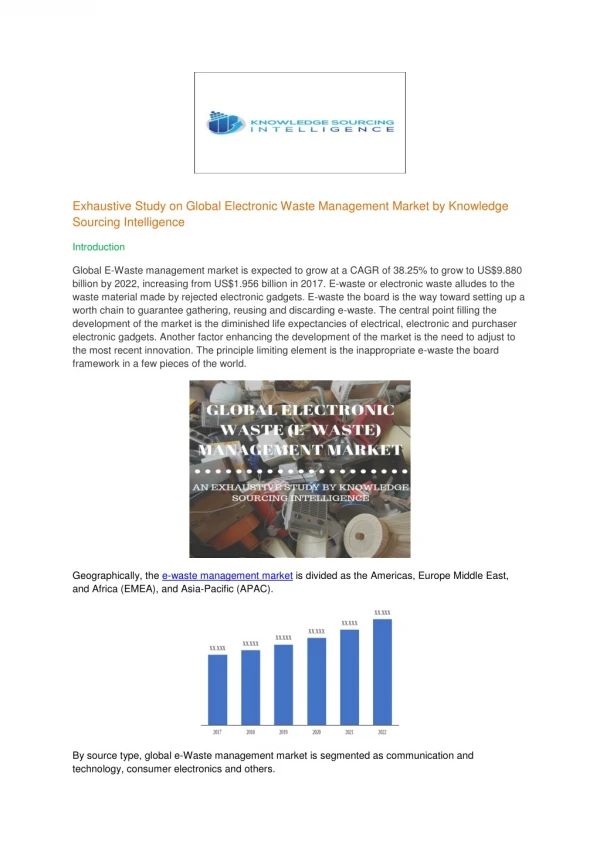
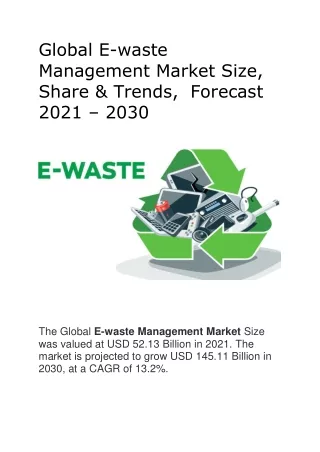
With rapid tech advancements and shorter product life cycles, electronic waste (e-waste) is rising globallyu2014from old phones and computers to TVs and appliances. Improper disposal releases harmful substances like lead, mercury, and cadmium, posing serious environmental and health risks.<br>EPR (Extended Producer Responsibility) is a key policy approach that makes producers responsible for managing their productu2019s waste, even after its end-of-life. In India, EPR for e-waste ensures proper collection, recycling, and disposal, promoting sustainable waste management and reducing environmental harm.


Understanding E-Waste: How EPR is Shaping Sustainable Waste Management
E N D
Presentation Transcript
Role of EPR in Waste Management
EPR in waste management isn't merely needed to help make the rules—it's a move towards circular economy goals. These are the ways by which EPR makes an impact: Encourages Eco-Design: If a firm has to be accountable for after-use, it will try to product-design in a way so that it can be repaired, refurbished, or recycled. Reduces Dump Site and Landfill Waste: EPR for e-waste encourages electronic waste collection in an appropriate way and not dump site and landfill. Increases Recycling Economy: The recycling economy is given a boost with unbroken supply of recyclable material through EPR arrangements. Increases Producer Responsibility: Ecological levers of organisations put them on their toes, keeping them accountable for cleaner habits. Assists Consumer Consciousness: The citizens are more conscious of their disposal behavior when manufacturers make a point to incorporate awareness campaigns in EPR. Stay updated and Stay compliant with SKMC Global +91 989-125-5499 info@skmcglobal.com www.skmcglobal.com